

A water heater pilot light that keeps going out is most often a failing thermocouple, the small sensor that tells the gas valve the flame is lit. If that part is fine, the usual causes are a draft, a starved air supply, or a built-in safety system shutting the heater down on purpose, and once a relight has failed more than once the right move is to stop and have it diagnosed.
What the Pilot and Thermocouple Are Actually Doing
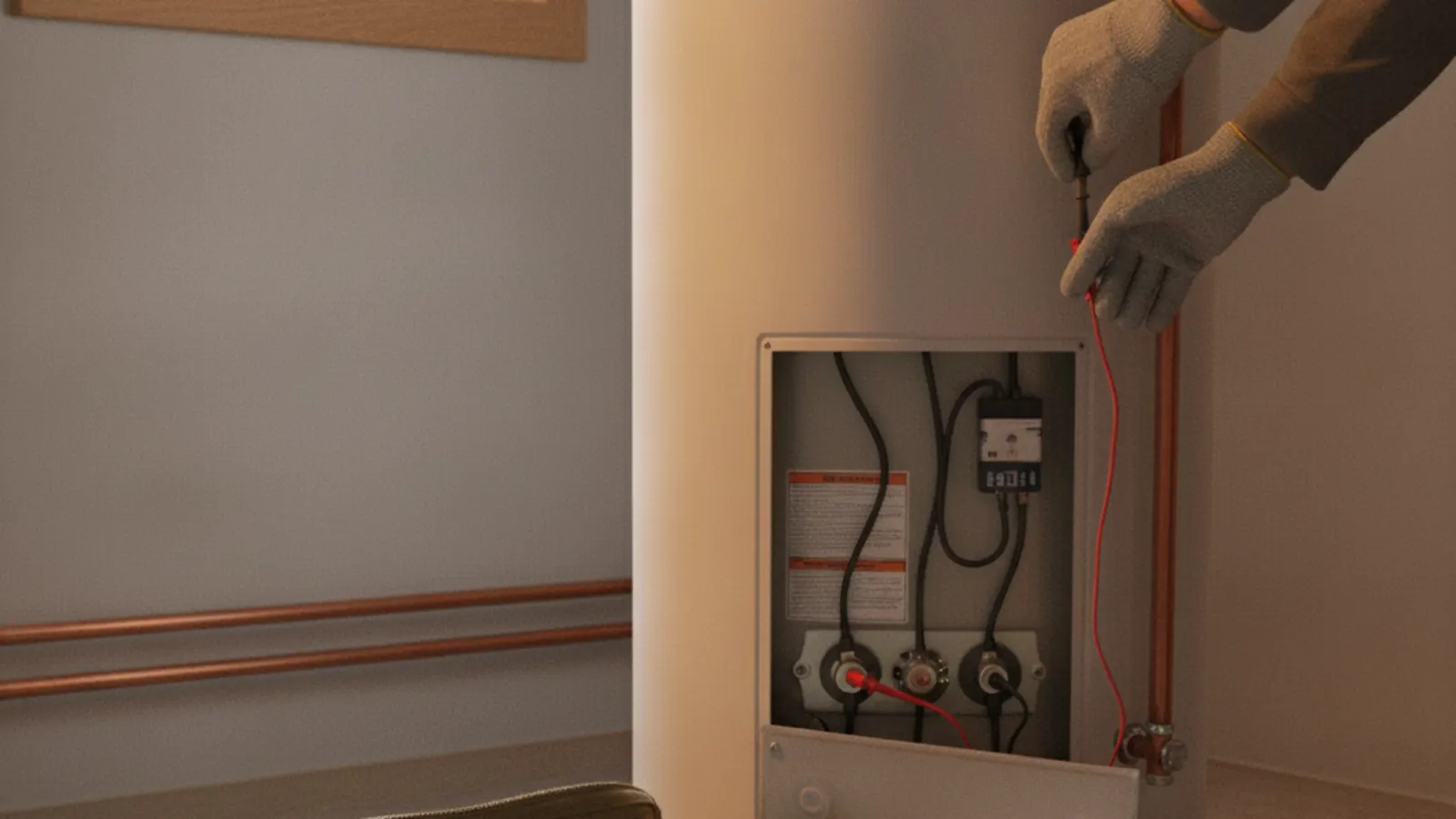
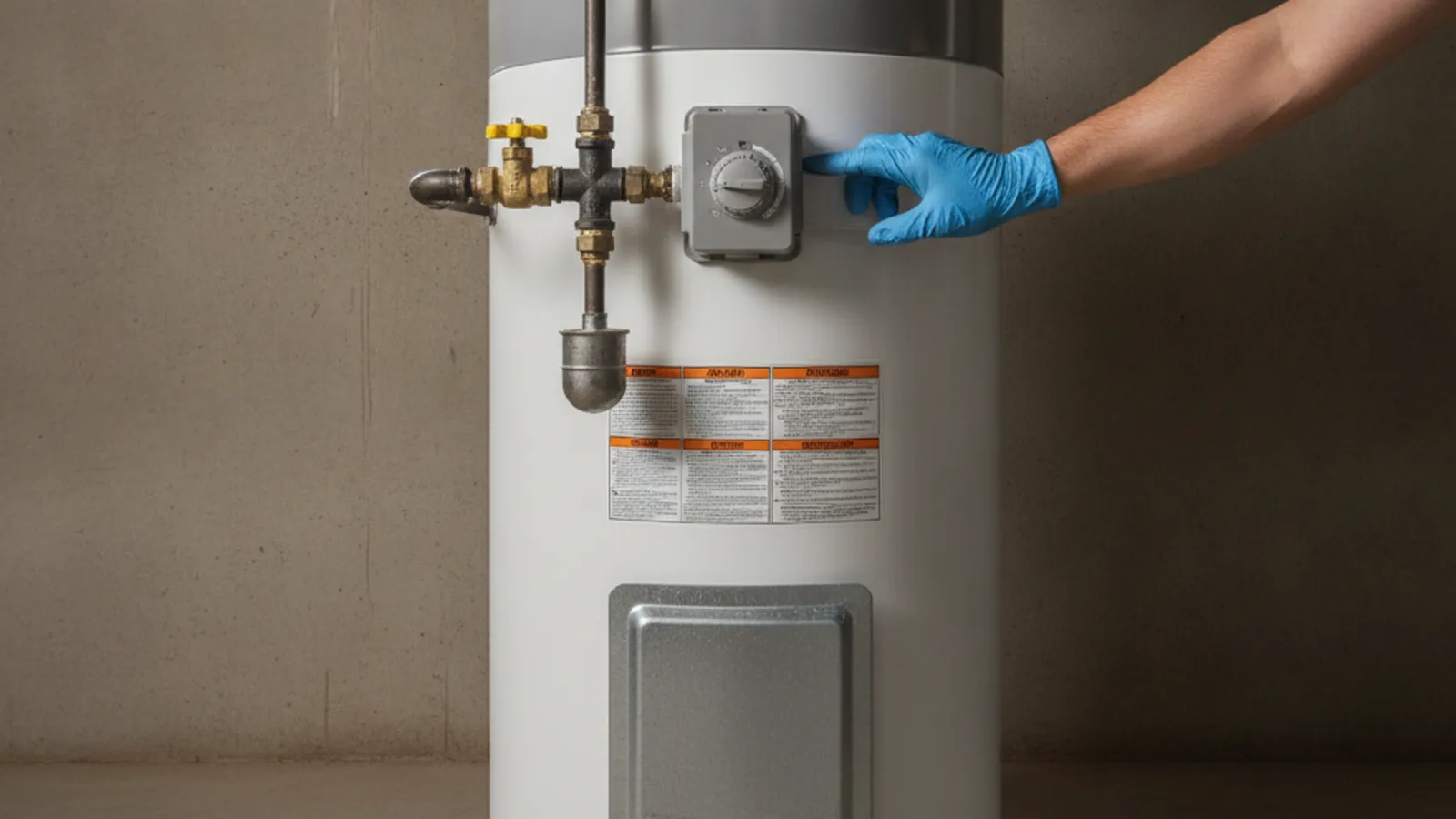
On a tank-type gas water heater, the pilot is a small, constant flame that lights the main burner when the thermostat calls for heat. Sitting in that flame is a thermocouple (or a thermopile), which turns the pilot's heat into a tiny electrical signal that holds the gas valve open. Lose the flame and the valve closes.
A.O. Smith puts it plainly: if the thermocouple is broken, "the pilot safety valve in the gas valve will not receive power, and the pilot will not remain lit once the pilot knob is released."
That is the most useful clue there is. If the pilot lights, stays lit while you hold the knob down, and dies the instant you let go, the thermocouple or its connection at the gas valve is the prime suspect. If it runs for hours or days and then goes out, the cause is usually somewhere else.
One note: not every gas water heater has a standing pilot. As A.O. Smith points out, "sometimes, electronically lit water heaters don't have a pilot light at all." If yours has a blinking status light rather than a window with a visible flame, start with the code label on the gas control.

Why Pilots Go Out More Once the House Is Closed Up
Pilot problems follow the weather. In a New Castle County home the windows close in October, and the dryer, bath fans and kitchen hood keep pulling air out of a house far tighter than it was in July. A gas water heater needs a steady supply of combustion air, and it needs its exhaust to go up the flue rather than back down it.
When A.O. Smith's technical support guide covers a heater that has shut itself off, the likely causes read like a description of a sealed-up winter house: "the water heater's air supply may be restricted, there may be negative air pressure in the home, the vent system may be blocked, or there may be flammable vapors or liquids near the unit."
Worth checking in a Delaware basement or utility room this time of year:
- A door that now stays shut. A heater closet or utility room closed off for warmth can run short of air.
- A new draft. An open basement window, a gap at a bulkhead door, or a fan blowing across the heater can snuff a pilot directly.
- Dust at the base. Many newer tank heaters draw air through a screen or filter ring around the bottom, and lint from a nearby dryer clogs it.
- The vent. Plenty of older Wilmington homes still vent a gas water heater into an aging masonry chimney. If exhaust is spilling back into the room, a pilot going out may be the first sign, and that is a carbon monoxide question rather than a comfort one.

The Safety System That Shuts the Heater Off on Purpose
This is the part most troubleshooting guides skip. According to the U.S. Consumer Product Safety Commission, an industry safety standard called for "conventional tank-type gas water heaters manufactured after July 1, 2003, to be equipped with new safety technology" that "prevents flashback fires by trapping and burning dangerous gas vapors inside of the heater, while preventing ignition of the vapors in the room."
On many of these heaters, that protection can shut the pilot and burner down by itself, and a thermal switch trips when combustion goes wrong. When that happens, relighting is the wrong response. A.O. Smith's instruction is unambiguous: if flammable vapors or liquids are found near the heater, "remove them and do not relight the unit," and have a service technician inspect the flame arrestor.
This matters more in autumn than people expect. The mower's gas can gets joined by one for the snow blower, paint moves indoors ahead of the cold, and the space around the water heater becomes storage. The CPSC's advice is that gasoline "should never be stored or used indoors (in a basement or garage) where vapors can ignite." If your pilot started going out after the fall clean-up, look at what is sitting next to the heater before anything else.

Need water heater service in Wilmington?
Serving Wilmington with same-day availability and flat-rate pricing confirmed before work begins.
When to Stop Relighting and Call
Relighting a pilot is a normal homeowner task if you follow the lighting instructions on your heater's label, which on A.O. Smith units include turning the gas off and waiting ten minutes for residual gas to dissipate. But relighting is not a repair, so do not keep doing it.
Stop and call if:
- You smell gas. "Do not continue if you smell gas," as A.O. Smith puts it. Leave the area and contact your gas company or a professional.
- The pilot dies the moment you release the knob, more than once. That is almost always the thermocouple or its connection, and it needs replacing, not coaxing.
- The flame is weak, yellow, or lifting away from the thermocouple instead of burning a steady blue.
- A reset button has tripped, or the status light is flashing a code you do not recognize. A tripped safety system is telling you something.
- You see soot or scorching around the burner access or the top of the heater. That points to a combustion or venting problem.
- It keeps happening. Twice in a week is a pattern, not bad luck.
If the pilot stays lit but the water still comes out lukewarm, the problem is elsewhere. See gas water heater not heating for what to check next.
Get It Sorted Before the First Hard Freeze
A pilot that goes out once in September is an inconvenience. The same fault in January means cold showers in the months when water heater work across the Mid-Atlantic is at its busiest.
Water Heater Now handles gas water heater problems across Wilmington and New Castle County, plus Chester County in Pennsylvania and Cecil County in Maryland. If your pilot will not stay lit, see what a water heater repair visit covers, or call (302) 240-2818. We answer 24 hours a day, and we will tell you whether it is a thermocouple, an air problem or something more.
---
Sources, verified September 12, 2026: U.S. Consumer Product Safety Commission, New Technology in Gas Water Heaters Can Save Lives (July 8, 2003); A.O. Smith, How to Relight a Water Heater's Pilot Light and Status Light Does Not Blink (technical support guide).