
If your water heater is leaking, shut off the cold water supply valve above the unit first, then cut power at the breaker for an electric unit or turn a gas unit's control to the pilot or off position. Do not keep using it. Call a licensed technician, because a leak from the tank body means replacement rather than repair.
Why This Matters to Wilmington Homeowners
A leaking water heater is one of the few household failures where the first ten minutes materially change the outcome.
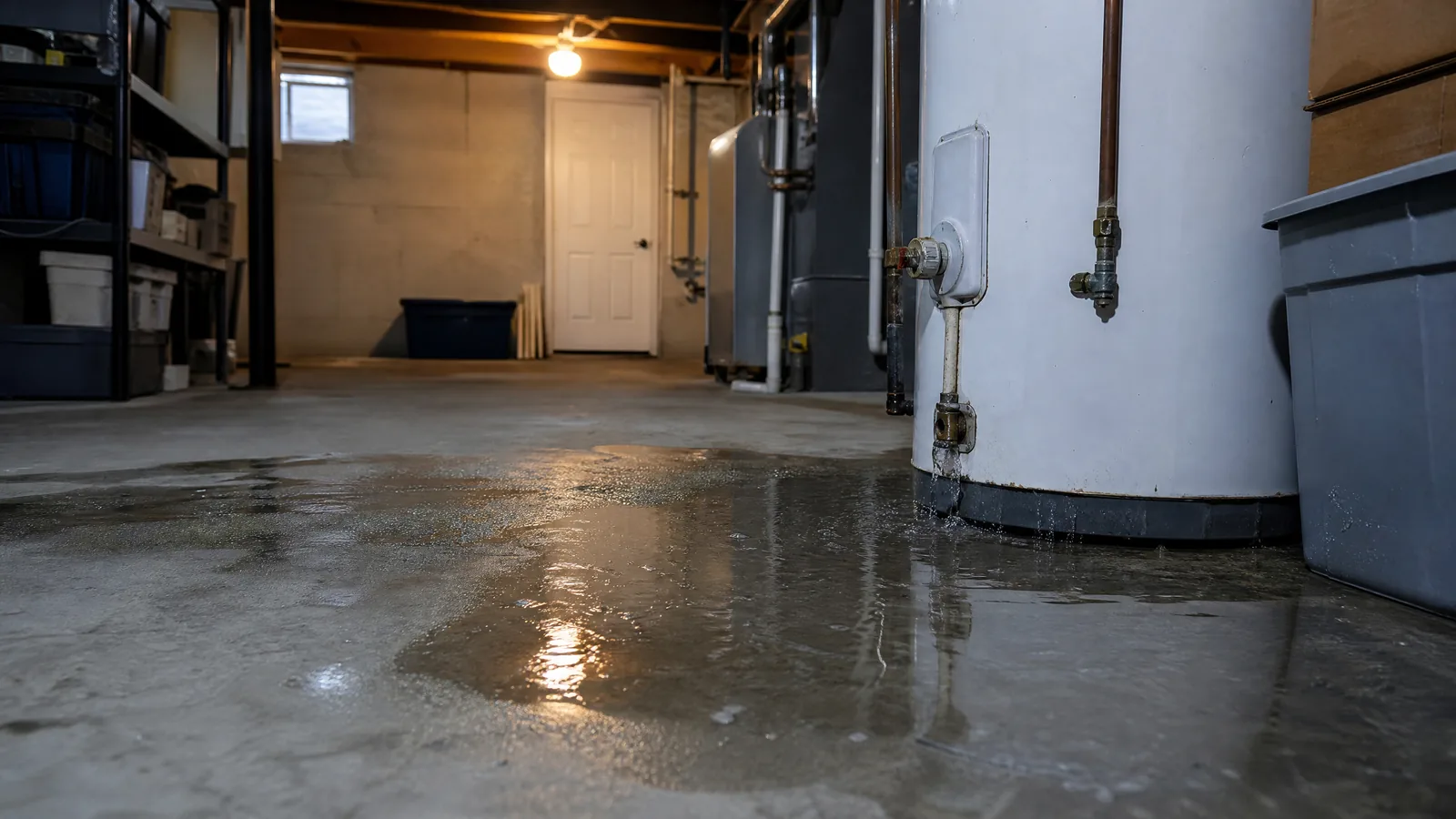
A fifty gallon tank holds fifty gallons. When a corroded tank goes from seeping to releasing, that entire volume lands on whatever floor it sits above, and it keeps coming because the supply line continues feeding it. In Wilmington rowhomes and older New Castle County houses where the heater sits in a basement alongside stored belongings, a furnace, and often finished space, the damage compounds quickly. Flooring, drywall, insulation, and stored possessions are frequently more expensive than the water heater itself.
The homeowner who knows where the shutoff valve is and turns it within minutes usually ends up with a wet floor. The homeowner who calls a plumber and waits without shutting anything off can end up with a remediation project.
This guide covers the exact sequence, in order, for both gas and electric units, plus how to work out what is actually leaking and which leaks are repairable.
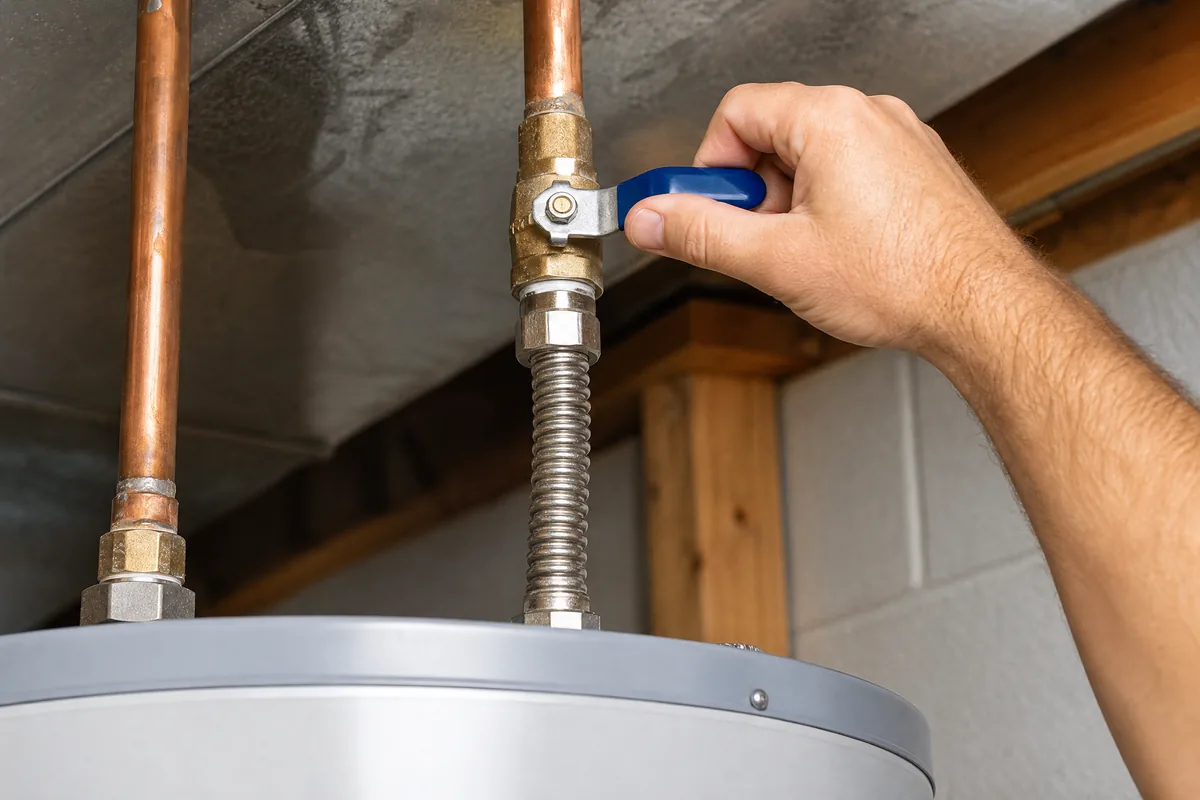
Step One: Shut Off the Cold Water Supply
This is the first action, before anything else, because it stops the tank from being refilled as it empties.
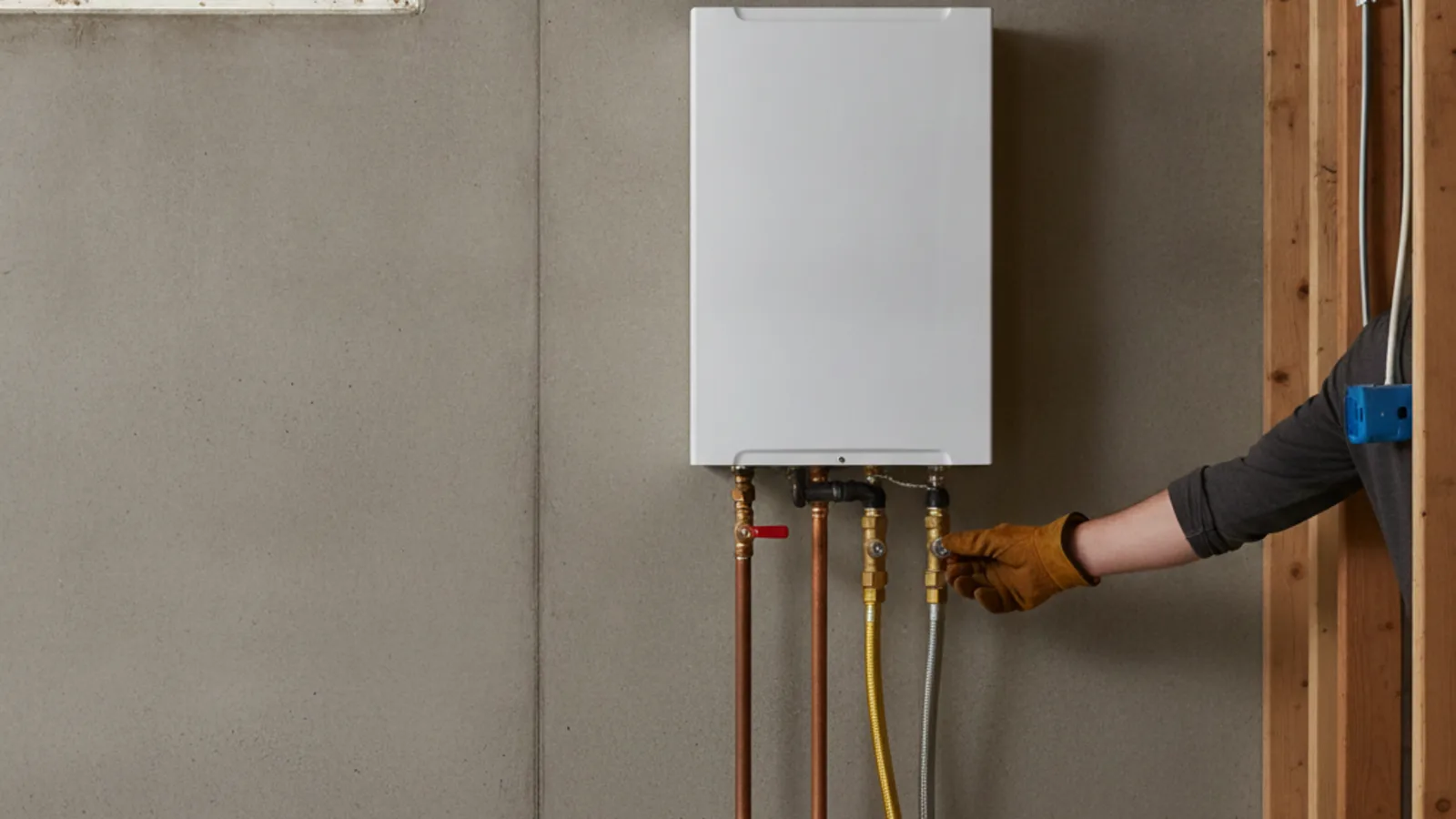
Look at the top of the water heater. Two pipes enter it. The cold water inlet has a shutoff valve on it, usually within a foot or two of the tank. It will be either a lever-style ball valve, which you rotate a quarter turn until it sits perpendicular to the pipe, or a round gate valve, which you turn clockwise until it stops.
If the valve is seized, corroded, or you cannot find it, go to the main water shutoff for the house. In most Wilmington homes that is in the basement near where the supply enters the building, often close to the meter. Shutting off the main stops water to the entire house, which is inconvenient and far better than an unlimited feed into a failing tank.
Do not skip this step to go looking at the leak first. Identify the source afterward. The priority is stopping the volume.
A note worth having in advance: locate and test your shutoff valve before you ever need it. A valve that has not been operated in fifteen years frequently will not turn when it matters. That is a two-minute check on a calm afternoon that saves a basement.
Step Two: Shut Down the Heat Source Safely
Once water supply is stopped, shut down the energy source. The correct procedure differs by fuel type, and getting it wrong is dangerous.
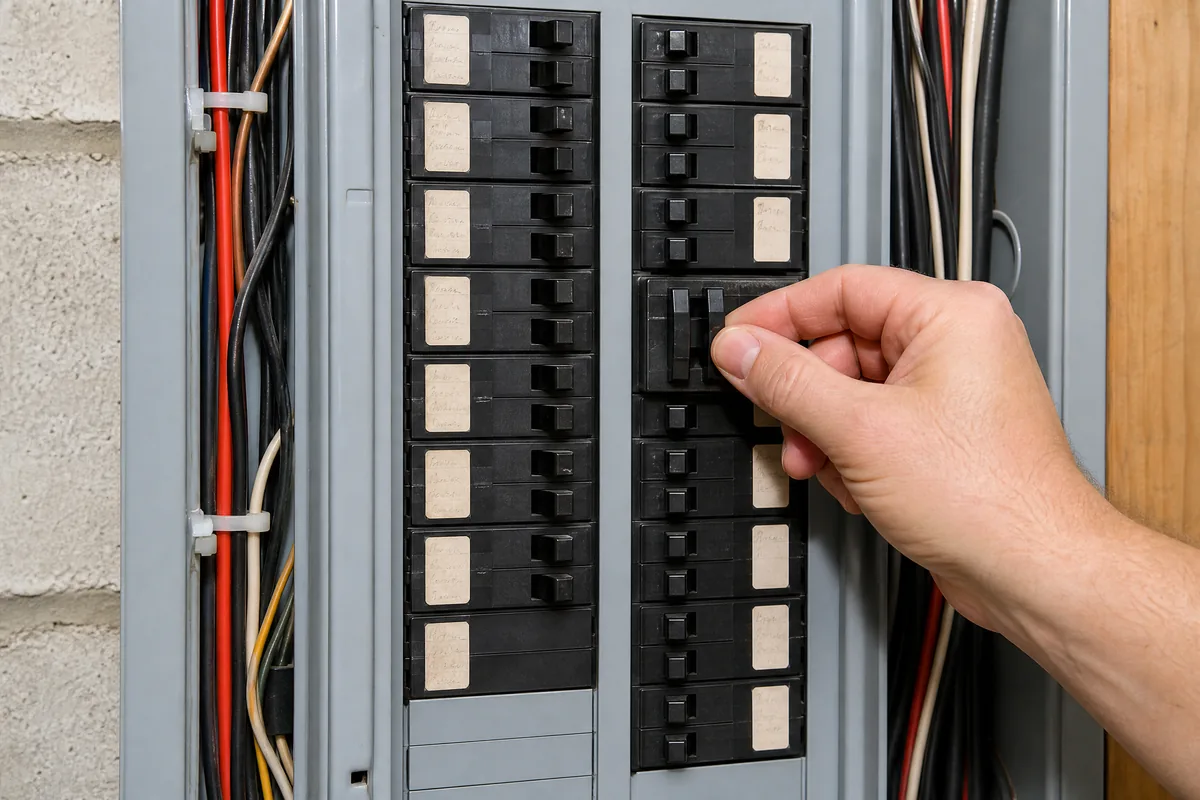
For an electric water heater, go to your electrical panel and switch off the dedicated breaker for the water heater, typically a double-pole breaker. Do this at the panel, not by pulling anything at the unit. This matters because a leaking tank can drop the water level below the heating elements, and an energised element in air overheats and fails, occasionally destructively. If you cannot identify the correct breaker and water is spreading toward the panel or any electrical equipment, do not approach the panel. Leave the area and call for help.
For a gas water heater, locate the gas control valve on the front of the unit near the bottom. Turn the dial to the pilot setting, or to off if the leak is significant. If you prefer to isolate the gas fully, there is a shutoff valve on the gas supply line entering the unit, which is turned a quarter turn perpendicular to the pipe. Do not attempt to relight anything, and do not use a flame near the unit.
If you smell gas at any point, stop. Do not operate switches, do not use your phone inside the building, leave immediately, and call your gas utility from outside. A gas odour takes precedence over the water leak entirely.
Step Three: Work Out Where the Leak Is Coming From
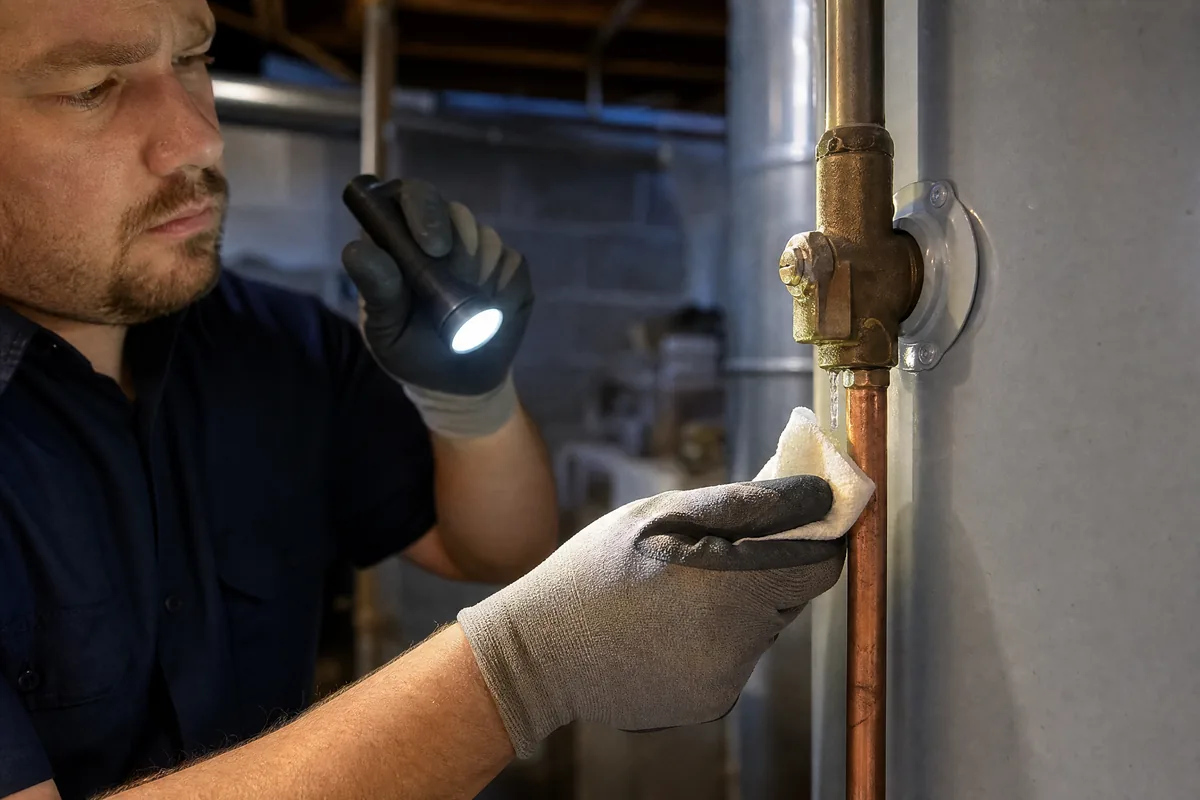
Once the unit is isolated, the source determines whether you are facing a repair or a replacement. There are four common origins, and they are worth distinguishing.
Fittings and connections at the top of the tank are the most repairable. The cold inlet and hot outlet connections, and the nipples they thread into, can corrode and weep. Water then runs down the outside of the tank and collects at the base, which makes it look like a bottom leak. A leak that is visibly wet at the top and dry below the midpoint is almost certainly a connection issue.
The drain valve at the base is the second common source. These are frequently plastic on builder-grade units, and they crack with age or fail to reseal after a flush. This is an inexpensive repair.
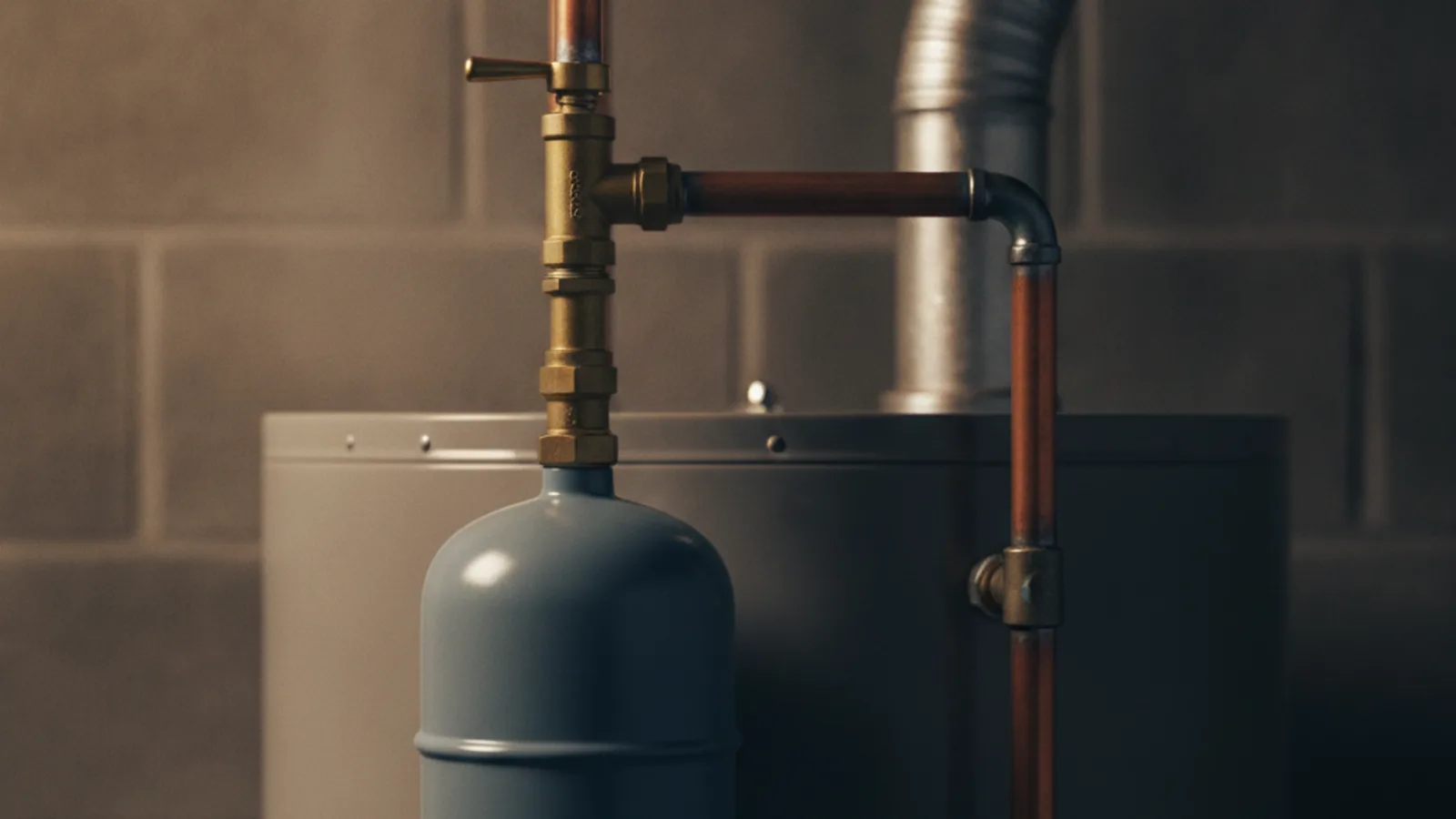
The temperature and pressure relief valve is the third. If this valve is discharging, it is either faulty or, more importantly, doing its job because the tank is over-temperature or over-pressure. A relief valve discharging is a warning about system conditions, not just a leaking part. It should never be plugged or capped, and it needs professional assessment.
The tank body itself is the fourth, and it is the one that ends the conversation. When the inner steel vessel has corroded through the glass lining, water emerges from the tank shell rather than from any fitting. No repair addresses this. There is no patch, sealant, or clamp that restores a corroded tank, and any suggestion otherwise should be rejected outright. This is a replacement.
One thing to rule out before assuming the worst: condensation. In a humid Wilmington basement during summer, a cold tank surface can bead moisture. Condensation appears as uniform surface dampness that does not accumulate. A leak produces a growing puddle.
Step Four: Contain and Document
While you wait for a technician, two things are worth doing.
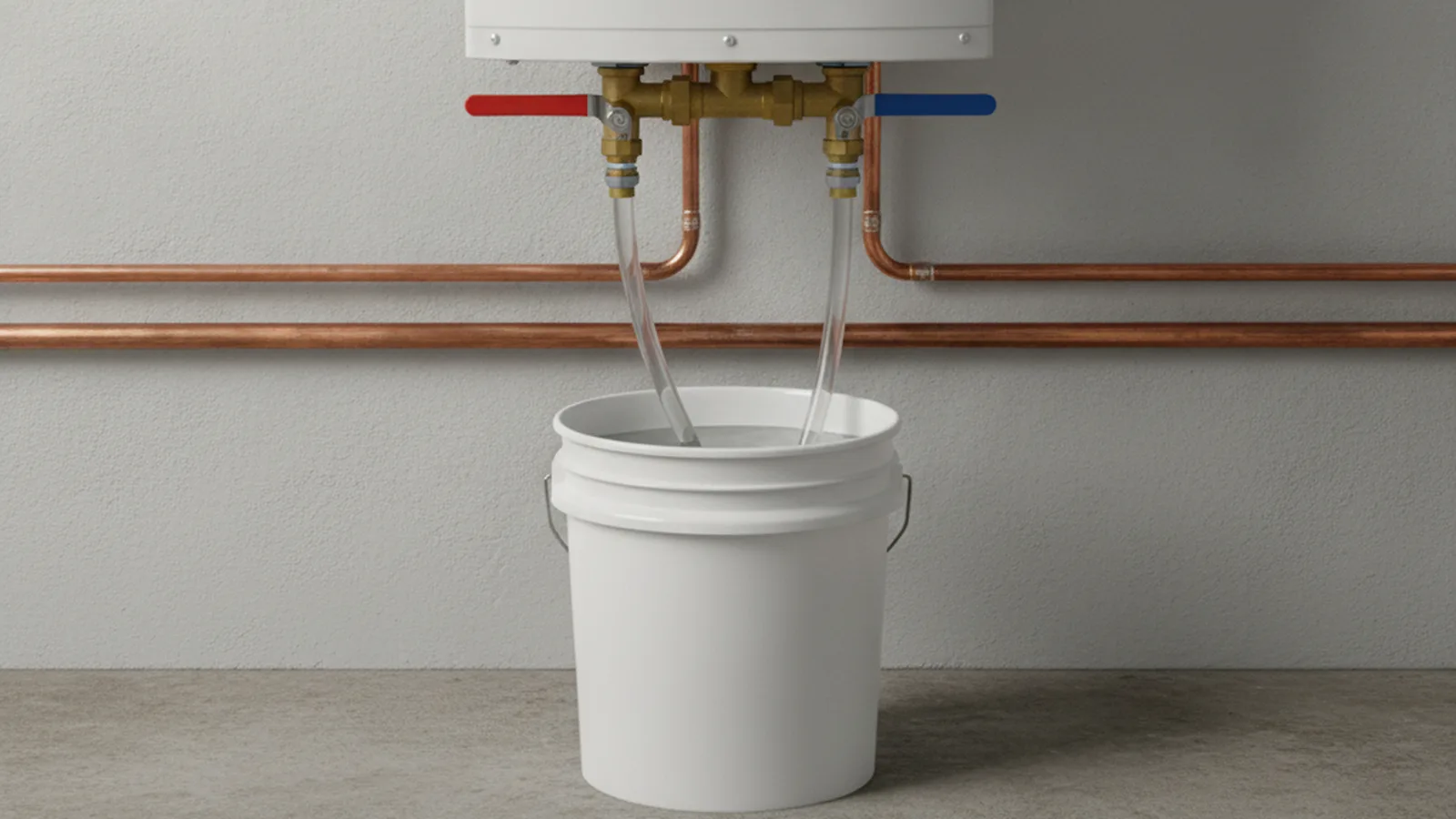
Contain and remove water. Move stored items away from the area, especially anything on the floor near the unit. Use towels, a wet vacuum, or a mop to limit spread, and pay attention to which direction the water is travelling, since floors are rarely level and water finds its way to the lowest point, sometimes into a finished room.
Document the situation with photographs before cleaning up. Photograph the unit, the water, the affected area, and any damaged belongings. If you end up making an insurance claim, contemporaneous photographs of the source and extent are considerably more useful than a description after the fact. Also photograph the data plate on the unit, which carries the model and serial number, because that tells a technician the age and specification before arrival.
If the water has reached carpet, drywall, or insulation, note that clearly when you call. Materials that have absorbed water need attention on a different timeline than a wet concrete floor.
Need water heater service in Wilmington?
Serving Wilmington with same-day availability and flat-rate pricing confirmed before work begins.
What Happens When the Technician Arrives
A leak call follows a defined sequence.
The technician confirms the unit is properly isolated, then traces the leak to its actual source rather than working from where water has collected. That means inspecting the top connections and nipples, the drain valve, the relief valve and its discharge line, and the tank shell itself, including behind and beneath the unit where corrosion often starts out of sight.
Where the source is a fitting, valve, or connection, the repair is quoted and completed, usually on the same visit since these are common parts. Where the source is the tank body, the honest answer is replacement, and the technician should tell you that plainly with the reasoning rather than proposing an interim fix.
If replacement is required, the assessment continues. Fuel type and venting are confirmed, household demand is reviewed for correct sizing, the existing shutoff and relief discharge are inspected, and expansion control is checked, since most Wilmington homes on municipal water operate as closed systems requiring it. That assessment produces a flat-rate price you approve before any work begins.
Because we stock common gas and electric tank sizes, most standard replacements in Wilmington and New Castle County can be completed the same day rather than leaving the household without hot water. Where the scope involves venting corrections or a tankless conversion, we say so upfront instead of compressing work that should not be rushed.
What This Costs and How to Avoid the Worse Version
Repair costs for fitting, drain valve, and relief valve leaks are modest, and these are the outcomes you want.
Emergency replacement costs more than planned replacement. After-hours labor is part of it, but the larger factor is everything surrounding the failure. Water damage remediation for flooring, drywall, and belongings frequently exceeds the cost of the water heater. Loss of negotiating position matters too, because a homeowner with water spreading across a basement accepts whatever is available today.
This is the entire argument for acting on early warning signs. A unit that is rumbling, producing rust-tinted hot water, delivering less hot water than it used to, or has passed ten years of service is telling you what is coming. Replacing on your schedule costs the price of the installation. Replacing after a tank failure costs the installation plus whatever the water touched.
If your unit is past ten years old, the practical move is replacing it before winter, when cold inlet water pushes marginal equipment into failure.
When to Call a Professional
Two homeowner actions are appropriate in a leak situation, and they are the two in this guide: shutting off the cold water supply, and shutting down power at the breaker or setting a gas control to pilot or off. Those are safe, they are decisive, and they prevent the majority of damage.
Everything after that requires a licensed technician.
Do not attempt to repair a leaking tank. Do not cap, plug, or restrict a discharging relief valve, which converts a pressure warning into a pressure hazard. Do not relight a gas unit that has been sitting in water. Do not replace a water heater yourself, because venting, relief discharge routing, expansion control, and permitting all have to be correct, and an uninspected installation can affect insurance coverage after a loss.
If you smell gas, or if water has reached electrical equipment or the panel, leave the building and call from outside. Those situations are not water heater problems anymore.
Need a Plumber in Wilmington? Water Heater Now Is Ready to Help
A leaking water heater is time-sensitive, and we answer calls around the clock for exactly this reason. Shut off your cold water supply, isolate the power or gas, then call us. We will trace the leak to its real source, tell you honestly whether it is a repair or a replacement, and quote a flat rate before any work begins. Water heaters are the entire business, across Wilmington and the surrounding Delaware, Pennsylvania, and Maryland communities.
For immediate diagnosis, see same-day water heater repair in Wilmington. If the tank has failed, see water heater installation for correctly sized replacement.
Call us at (302) 240-2818 or contact us today to schedule service in Wilmington and surrounding areas.