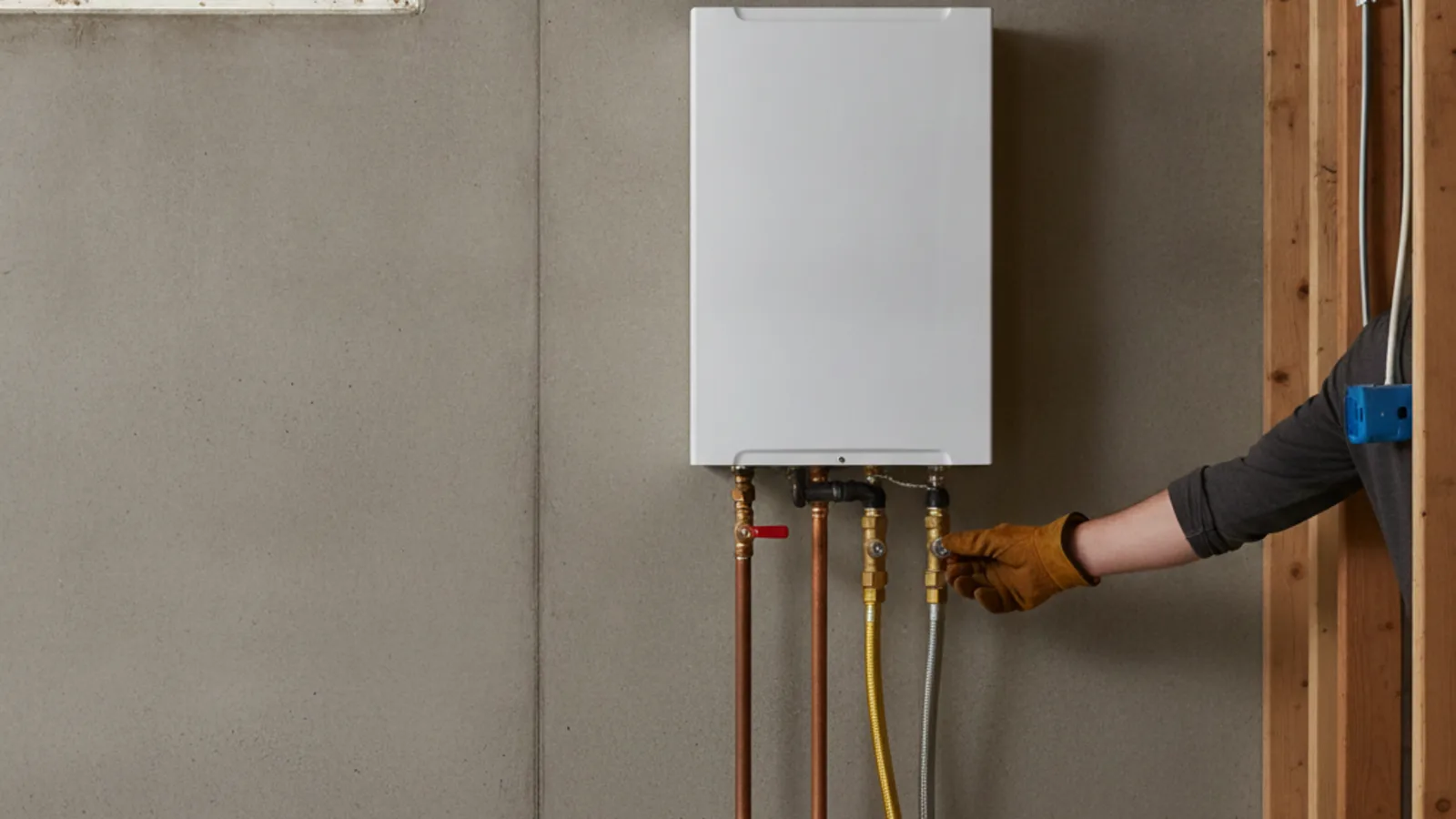

Replace your water heater when the tank leaks from its body, hot water runs rusty, the unit is past ten years old with declining performance, or repairs are becoming repetitive. Fitting leaks, pilot failures, and single element faults are usually repairable instead. In Wilmington, sediment from mineral-heavy water is the leading cause of early failure.
Why This Matters to Wilmington Homeowners
A water heater almost never fails without warning. It gives you weeks or months of declining performance first, and the homeowners who catch those signals replace on their own schedule for a planned price. The ones who ignore them replace at six in the morning in January with water spreading across a finished basement floor.
The financial gap between those two scenarios is significant. A planned replacement is a scheduled appointment with a flat-rate price you approve in advance. An emergency replacement adds urgency, potential water damage to flooring and stored belongings, and in the worst cases, drywall and insulation work. The equipment cost is identical. Everything around it is not.
There is also a safety dimension that gets overlooked. Older gas water heaters in Wilmington homes frequently vent through aging masonry chimneys or deteriorating flue connectors. A unit degrading toward failure often develops draft problems at the same time, and poor draft on a combustion appliance is a carbon monoxide concern rather than just an efficiency one.
This guide covers the seven signals that matter, which ones still allow a repair, and the local conditions that shorten water heater life in this part of Delaware.
Sign One: Water Pooling Around the Base of the Tank
This is the most decisive signal, and it needs a precise distinction.
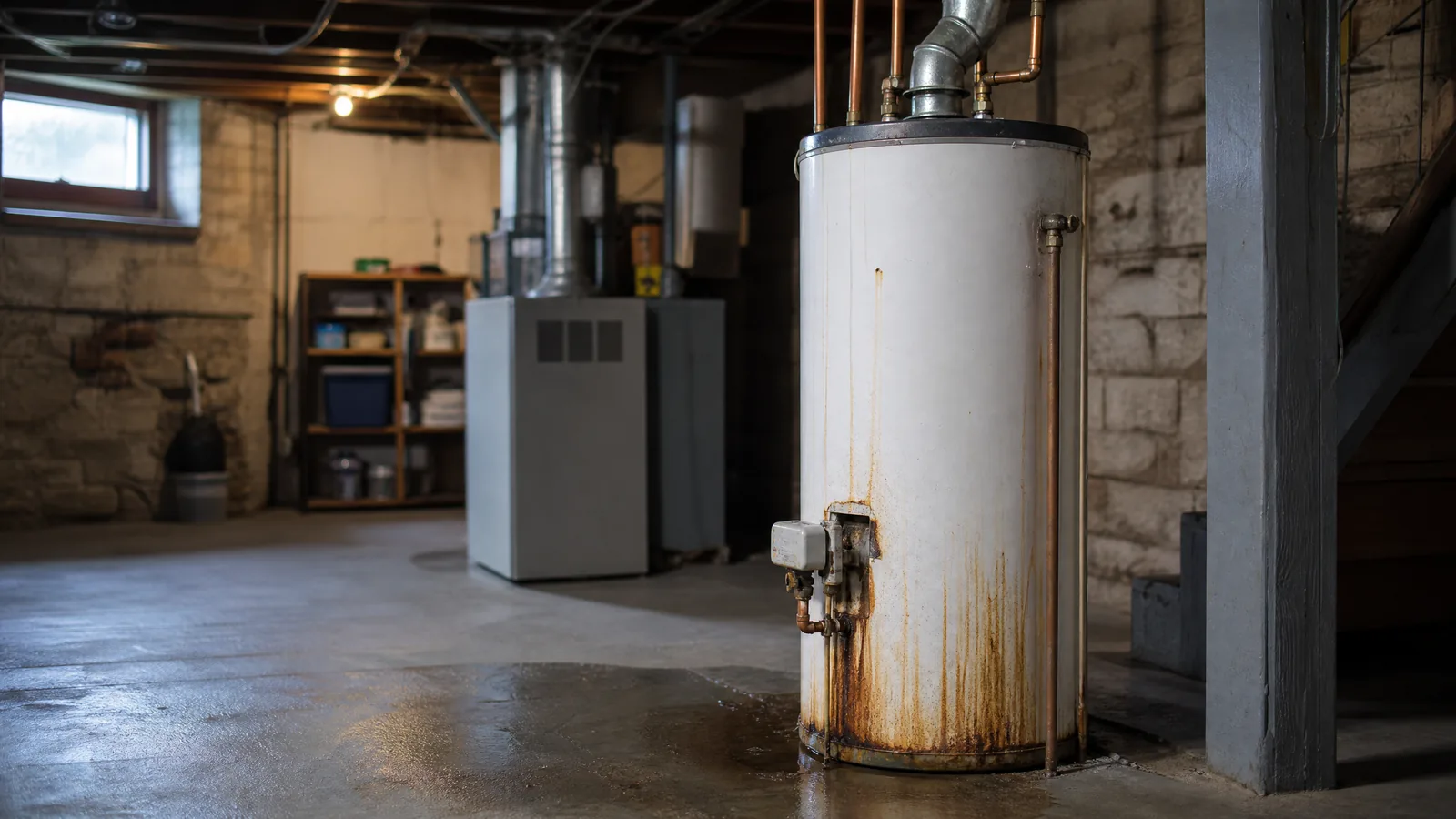
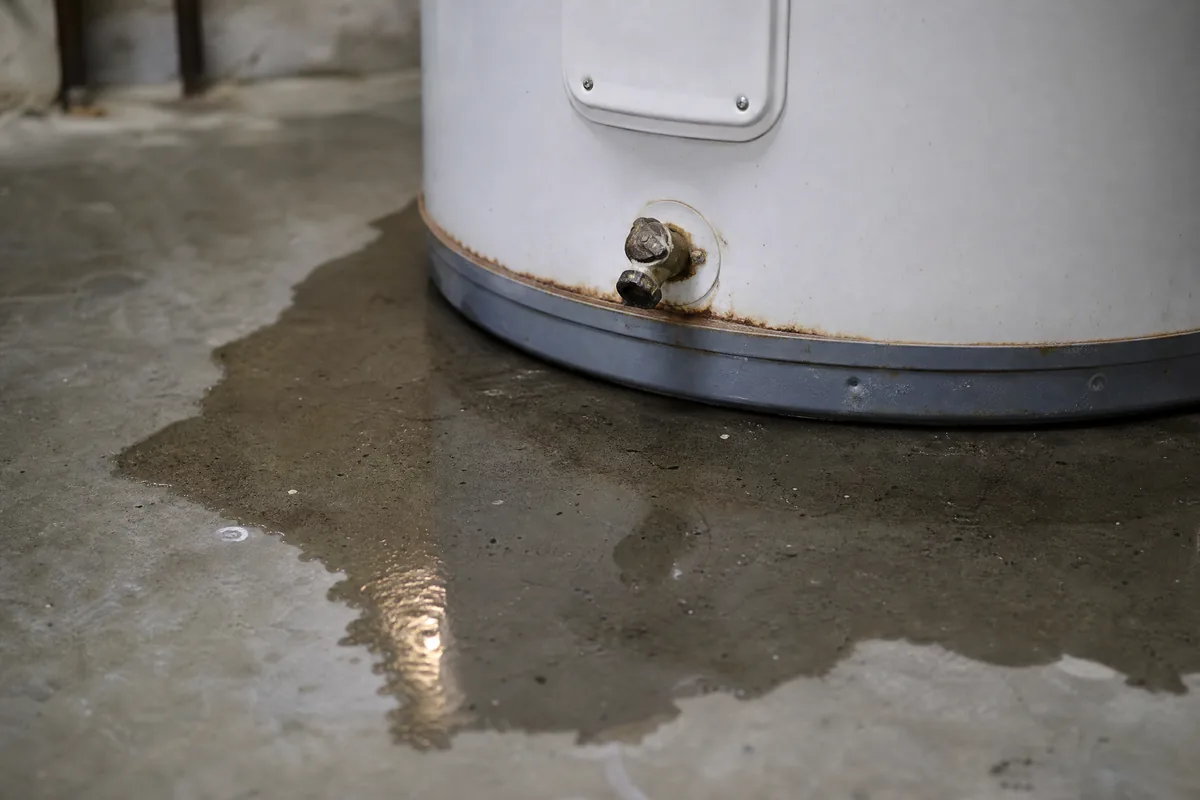
Water at the base of a water heater comes from one of two sources. The first is a fitting, connection, drain valve, or the temperature and pressure relief valve. All of these are repairable, sometimes inexpensively. The second is the tank itself, meaning the inner steel vessel has corroded through the glass lining. No repair addresses that. A tank leaking from its body is finished, and no epoxy, sealant, or clamp changes that outcome.
The distinction cannot be reliably made by looking at a puddle. Water runs down the exterior of a tank and collects at the base regardless of where it originated. That is why a technician traces the source rather than guessing.
What matters more is your immediate response. A tank leaking from the body can progress from seeping to full release without further warning, and a fifty gallon tank empties onto whatever floor it sits above. If you see standing water, shut off the cold water supply valve above the unit, then cut power at the breaker for an electric unit or move a gas unit to the pilot or off position. Then call. Those two steps prevent the majority of property damage in a tank failure, and they cost nothing.
One clarification worth making, because it causes unnecessary panic: a small amount of moisture on the exterior of a tank in a humid Wilmington basement during summer can be condensation rather than a leak. Condensation appears as uniform surface beading, not as a growing puddle. If the water accumulates, it is a leak.
Sign Two: Rusty or Discolored Hot Water
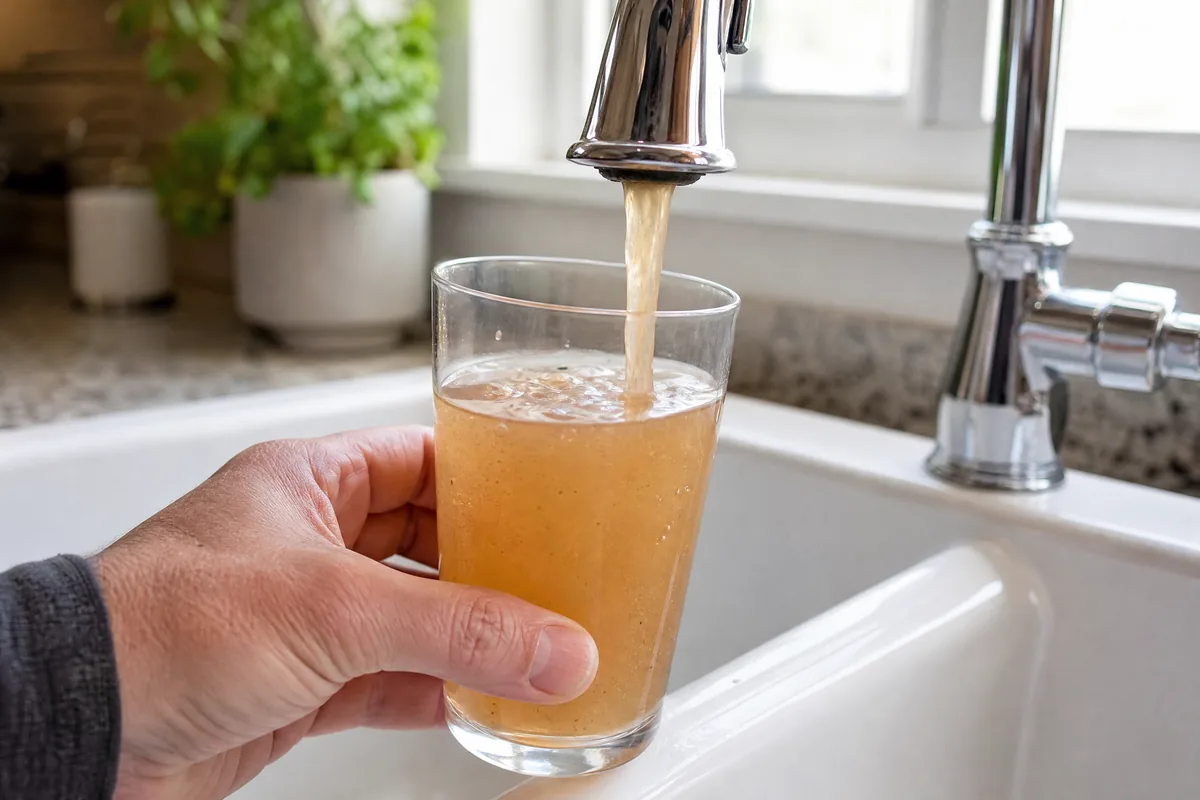
Turn on a hot tap and watch the water. If it runs rust-tinted, brown, or cloudy on the hot side while the cold side runs clear, the problem is inside your water heater rather than in the municipal supply.
Inside every tank water heater is a glass lining protecting the steel from constant contact with hot water, and a sacrificial anode rod designed to corrode in place of that steel. The rod is consumed over years of service. Once it is depleted and the glass lining has developed faults, corrosion attacks the tank wall directly. Rust in your hot water is the visible product of that process.
This matters because it tells you where the unit sits in its lifecycle. Corrosion does not reverse. A rusting tank is on a defined countdown, and the sensible response is planning replacement rather than waiting to see how long it holds.
There is a related symptom worth mentioning. A rotten egg or sulphur odour in hot water usually indicates a depleted anode rod reacting with sulphate-reducing bacteria in the water supply, which is more common on well systems in Chester County and Cecil County than on Wilmington municipal water. Caught early, that is often an anode replacement rather than a tank replacement, which is precisely why inspection before symptoms escalate saves money.
Sign Three: Rumbling, Popping, or Banging During Heating
A water heater should run quietly. Rumbling or popping during a heating cycle has a specific mechanical explanation.
Water carries dissolved minerals. When it is heated, those minerals precipitate out and settle at the bottom of the tank as a sediment layer. Over years, that layer thickens. In a gas unit, the burner fires beneath it, so water trapped within and under the sediment superheats and forces its way out in bursts. That is the popping and rumbling you hear.
The noise itself is not the damage. The damage is what the sediment does. It insulates the burner from the water above it, so the unit must run longer to reach the same temperature, which wastes fuel and applies additional thermal stress to the tank bottom, exactly where corrosion is already most likely. It also physically occupies volume the tank was designed to store, which is why a fifty gallon tank with heavy sediment delivers noticeably less hot water than it did when new.
Here is the important nuance. If the unit is relatively young and has never been flushed, this is a maintenance problem rather than a replacement decision, and a flush usually resolves it. If the unit is ten years old with a decade of accumulation and reduced capacity alongside the noise, the sediment has likely already done structural damage. Age determines which conversation you are having.
Sign Four: Age Past Ten Years
Age alone does not mean a water heater must be replaced, but it changes how every other symptom should be read.
A conventional tank water heater in the Wilmington area typically delivers eight to twelve years of service. Units on well water in Chester County and Cecil County often fall at the lower end of that range because mineral load is heavier. A well-maintained unit that has been flushed annually and had its anode replaced can exceed it. Tankless equipment is different, commonly reaching fifteen to twenty years with regular descaling.
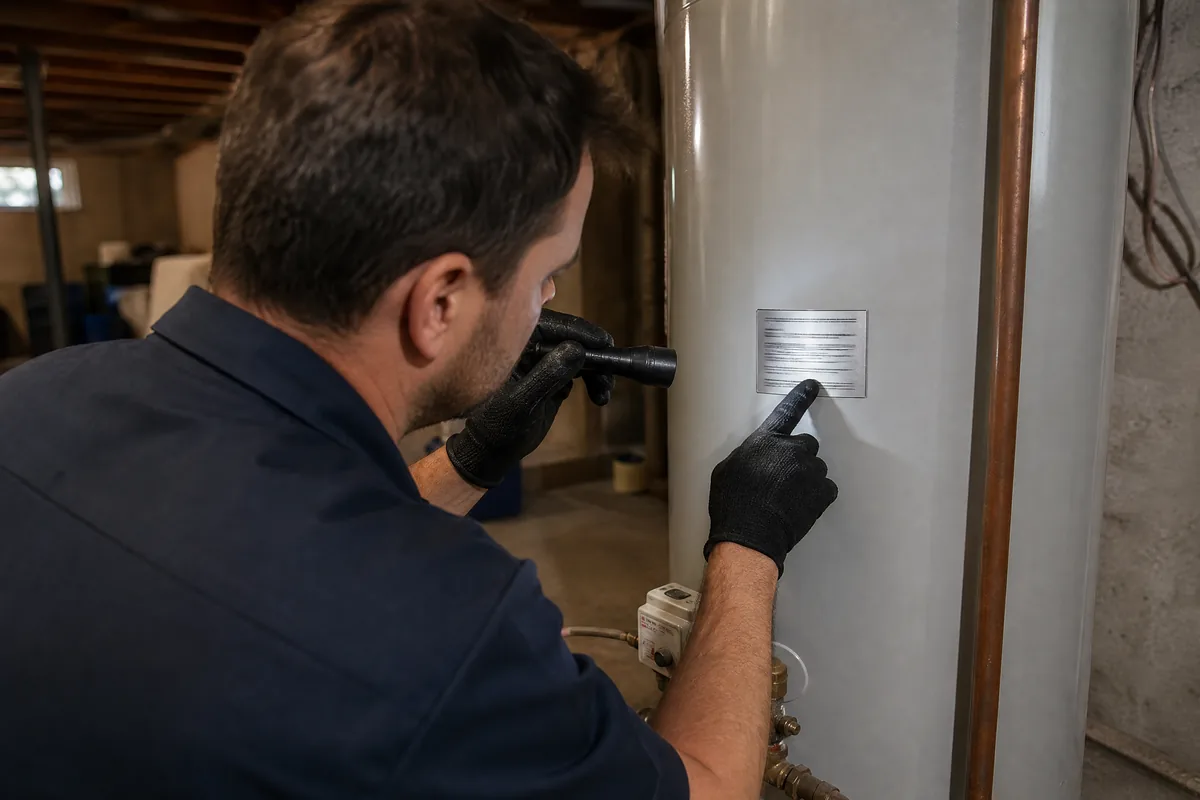
Find the manufacture date rather than guessing. It is encoded in the serial number on the data plate, and most manufacturers place the year and week in the first four characters. If you cannot decode it, a technician can.
Why the threshold matters practically: at eight years old with a single component failure, repair is usually good value because the tank has remaining life to protect. At twelve years old, the same repair is an investment in a vessel that could fail from corrosion within months. The repair cost is the same. The value received is entirely different.
Once a unit passes ten years, replacement becomes a timing question rather than an if question. Homeowners who accept that early get to choose the timing.
Sign Five: Not Enough Hot Water, or It Runs Out Too Fast
This symptom is the most frequently misdiagnosed, because it has three completely different causes with three different solutions.
The first cause is sediment, covered above. A tank with a thick sediment layer has less usable volume and slower recovery, so it runs out faster than it used to. A flush often restores meaningful capacity.
The second cause is a component failure. Electric water heaters have two heating elements. When the lower element fails while the upper continues working, you get a short burst of hot water followed by cold, because only the top portion of the tank is being heated. This is a repair, frequently an inexpensive one, and it does not mean the unit is finished.
The third cause is not a fault at all. If your household has grown, added a bathroom, or installed a larger tub or higher-flow shower, a tank correctly sized years ago may simply be too small now. Nothing is broken. Replacing it with the same capacity reproduces the problem exactly. The fix is correct sizing based on occupants, simultaneous fixture use, and recovery rate rather than matching the old tank by default.
The distinction is worth insisting on. A homeowner who is told to replace a healthy, correctly functioning unit when the real issue was a failed lower element has been sold the wrong job. A homeowner who replaces an undersized tank with another undersized tank has spent installation money and solved nothing.
Need water heater service in Wilmington?
Serving Wilmington with same-day availability and flat-rate pricing confirmed before work begins.
Sign Six: Repairs Are Becoming Repetitive
One repair on a water heater is normal. Thermocouples fail, elements burn out, thermostats drift out of calibration. These are serviceable parts with finite lifespans and they get replaced.
Two or three repairs within a short period on the same unit tell a different story. Repeated failures usually indicate that the underlying conditions inside the tank have deteriorated: heavy sediment stressing the bottom, corrosion working through fittings, or a unit running beyond its design life where multiple components are aging simultaneously. Continuing to replace individual parts on that unit is buying time at an escalating rate.
The arithmetic is straightforward. Track what you have spent on repairs over the past eighteen months. If it approaches a meaningful share of a new installation and the unit is past eight years old, further repairs are poor value. Any honest technician will tell you that directly rather than accepting the recurring service revenue.
Sign Seven: Rising Energy Bills Without a Change in Usage
Water heating accounts for a substantial share of household energy use, so degradation in water heater efficiency shows up on your bill.
The mechanism is the one already described. Sediment insulates the burner or elements, so the unit runs longer to deliver the same result. Failing insulation on an aging tank increases standby loss. A thermostat drifting out of calibration causes overheating and unnecessary cycling. Individually these are gradual. Together on a ten-year-old unit, they are measurable.
Rising bills alone are not a reason to replace a water heater, because plenty of other factors drive utility costs. But a bill increase alongside two or three of the earlier symptoms strengthens the case, and it is worth factoring into the replacement decision rather than treating equipment cost in isolation.
What Water Heater Replacement Costs in Wilmington
Cost is driven by four variables: capacity, fuel type, the condition of the existing installation, and what must be corrected to meet code.
Electric tank installations generally cost less than gas, because there is no combustion venting to evaluate or repair. Gas installations require flue and draft assessment, and older Wilmington homes with atmospheric-vent units occasionally need vent repair identified during assessment. High-efficiency and tankless equipment carries higher equipment and installation cost, offset by lower operating cost across a longer service life.
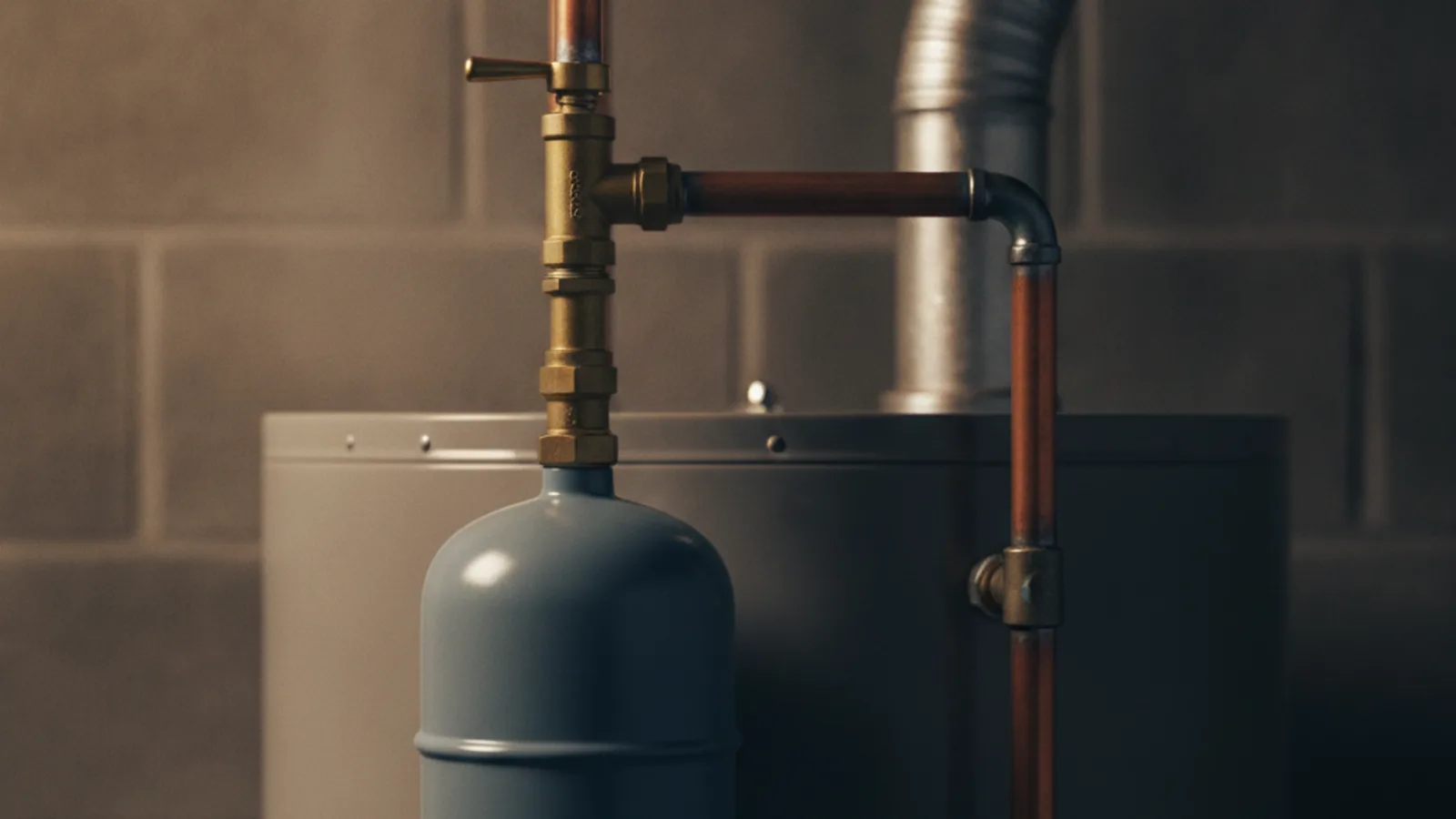
The variable that surprises homeowners most is code compliance work. A replacement is the point at which deficiencies from previous installations get corrected: a missing expansion tank on a closed system, an incorrectly routed relief valve discharge line, a shutoff valve that no longer holds, or an absent drain pan. These are not upsells. They are the difference between an installation that passes inspection and one that does not.
Be cautious with quotes given over the phone without any assessment, and be especially cautious with a number that is dramatically below every other quote. On water heater work, the corners that get cut to reach a low price are usually venting, expansion control, and relief discharge, which are precisely the safety-critical details you cannot see once the job is finished.
When you request a quote, expect to be asked how many people live in the home, whether the unit is gas or electric, the current capacity, where the heater is located, and whether you are seeing water. Those answers determine both the equipment and the labor.
We quote flat-rate. You approve a fixed price before the work begins, and that number holds regardless of how the job unfolds.
When to Call a Professional
Some water heater tasks are reasonable for a homeowner. Adjusting the thermostat setting, visually inspecting for moisture and corrosion, testing the relief valve, and attempting a basic tank drain are all within reach for someone comfortable with basic maintenance.
Everything past that point requires a licensed technician, and the reasons are specific rather than protective of the trade.
Gas work is the clearest line. Anything involving the gas control valve, burner assembly, thermocouple, or venting carries combustion and carbon monoxide risk. A unit that appears to work while venting improperly is more dangerous than one that has stopped working.
Electrical work on water heaters involves high-amperage circuits. Element and thermostat replacement requires confirming the circuit is de-energised, and the consequences of getting that wrong are severe.
Any leak from the tank body requires professional assessment, both to confirm the source and because a compromised tank is a flooding risk that should not be left in service.
Installation and replacement should not be DIY. Beyond the physical handling of a heavy tank, a compliant installation requires correct venting, proper relief valve discharge routing, thermal expansion control, appropriate drain pan provisions, and in most Delaware jurisdictions, a permit and inspection. An uninspected DIY installation can also create problems with insurance coverage after a water loss.
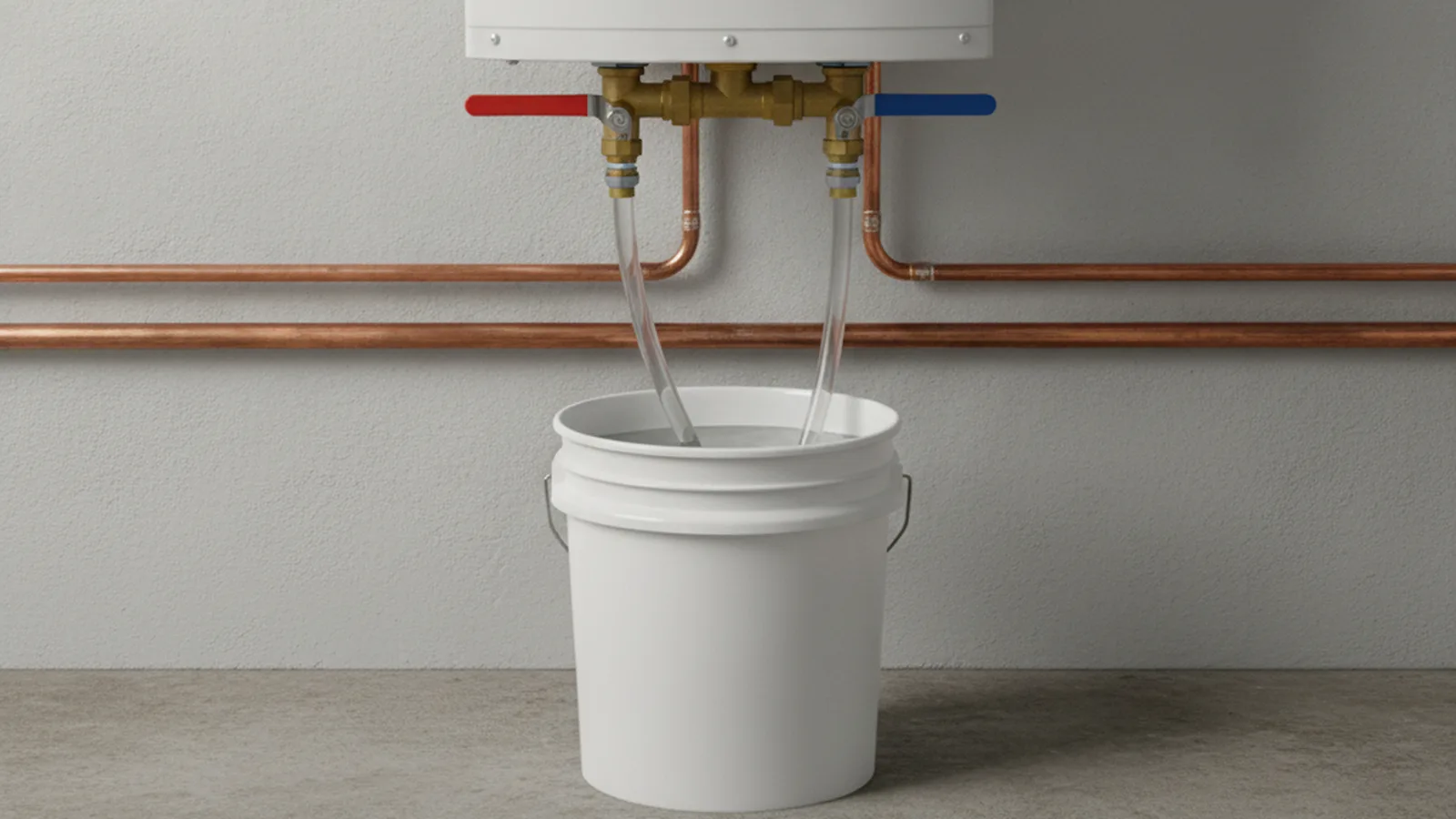
One practical note on the DIY flush: on a unit that has never been flushed, the drain valve frequently fails to reseal afterward or is blocked entirely by hardened sediment. A homeowner who starts that job can end up with a leaking valve and no way to stop it. We carry replacement valves for exactly this reason.
Need a Plumber in Wilmington? Water Heater Now Is Ready to Help
If your water heater is showing any of the signs above, you are better off knowing now than finding out on the coldest morning of the year. We diagnose the actual condition of your unit, tell you honestly whether it needs repair or replacement, and give you a flat-rate price before any work starts. Water heaters are what we do, across Wilmington and the surrounding Delaware, Pennsylvania, and Maryland communities.
For a unit that has already failed, see same-day water heater repair in Wilmington. For replacement sized to your household, see water heater installation.
Call us at (302) 240-2818 or contact us today to schedule service in Wilmington and surrounding areas.