
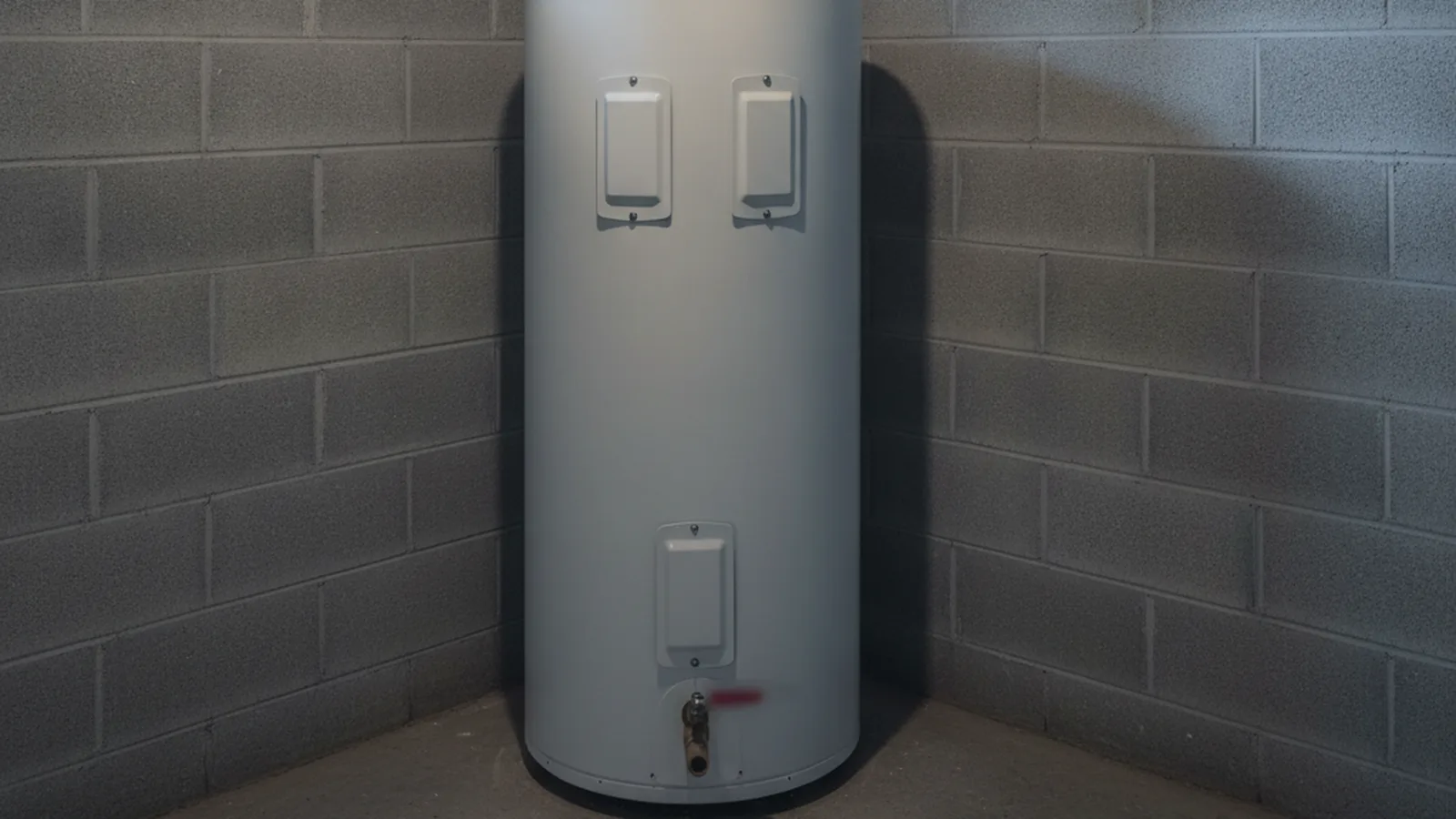
When an electric water heater is not heating, check the breaker first and then the red reset button behind the upper access panel, because those two cover the quick fixes. If the breaker is on and the reset holds but the water stays cold or runs out fast, a heating element or thermostat has almost certainly failed, and that is a repair for a licensed plumber rather than a weekend project.
Start at the Breaker, Not the Tank
An electric tank has no pilot to look at, so the first check is at the electrical panel. A.O. Smith's own troubleshooting guide names a tripped circuit breaker as the most common reason an electric water heater stops heating.
Find the water heater's breaker, usually a double-pole breaker labeled for the heater, switch it fully off, then back on. Then give the tank time to recover before you judge the result.
Pay attention to what the breaker does next. A breaker that trips again straight away, or within a few hours, is not a panel problem. Bradford White's service manual for technicians notes that a heating element with a short circuit to ground "will in most cases cause the circuit breaker in the service panel to open or shut off." Resetting it repeatedly does not fix that, so leave it off and call.
What the Red Reset Button Is Telling You
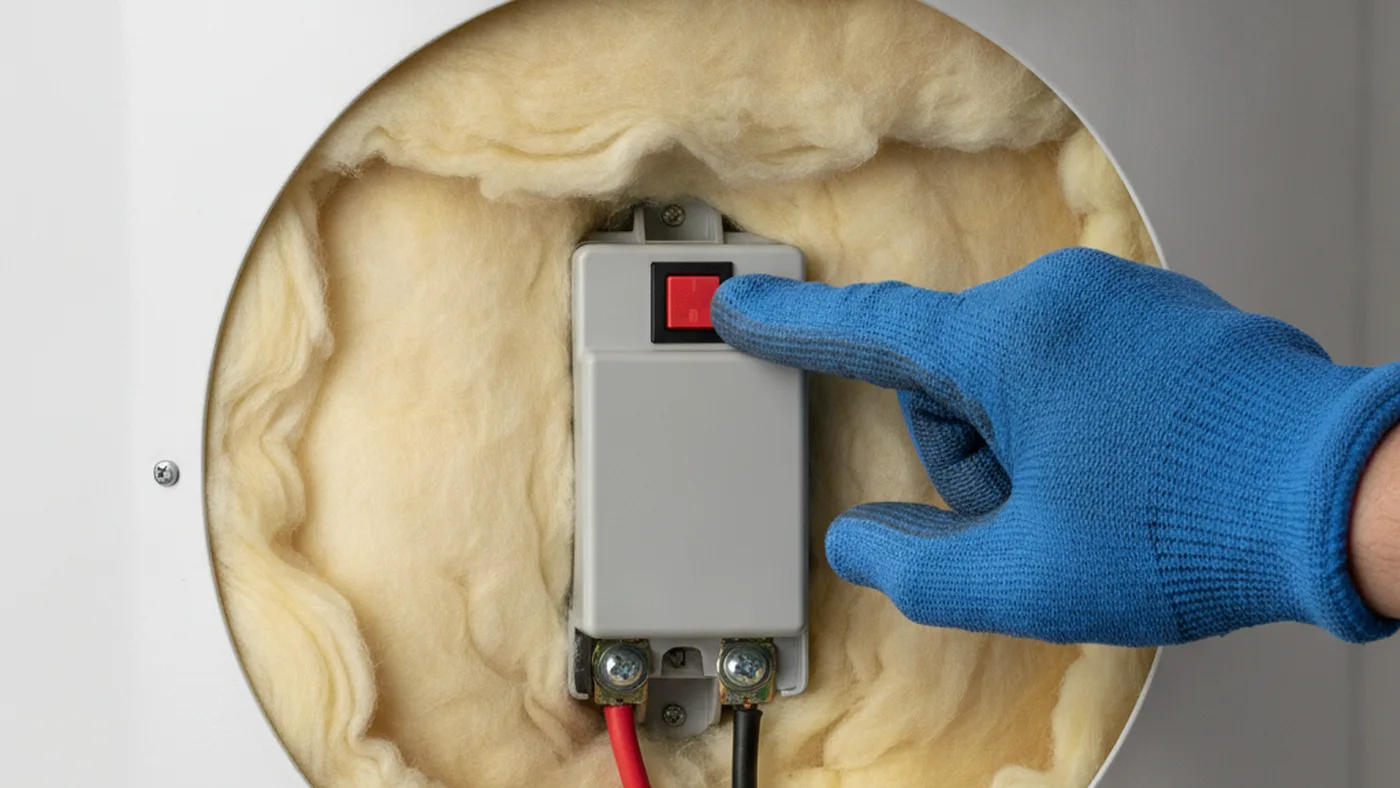
Behind the upper access panel and its insulation is the upper thermostat, and on it a red reset button, often labeled Energy Cut Off. It is a high-limit safety switch that cuts power when the water gets too hot.
Before any panel comes off, the power has to be off. A.O. Smith's instruction is direct: "Before working on the water heater, use a non-contact circuit tester or volt meter to make sure power is off." The terminals behind that panel carry 240 volts.
Then press the button firmly. According to A.O. Smith, "If it clicks, your water heater overheated and tripped the safety switch."
That click is information, not a fix. Something made the water overheat, and A.O. Smith points to "a grounded heating element or a faulty lower thermostat" as causes. A reset that holds for months may have been a one-off. A reset that trips again within days means the fault is still there, and every further reset lets it overheat again.
Upper Element or Lower Element
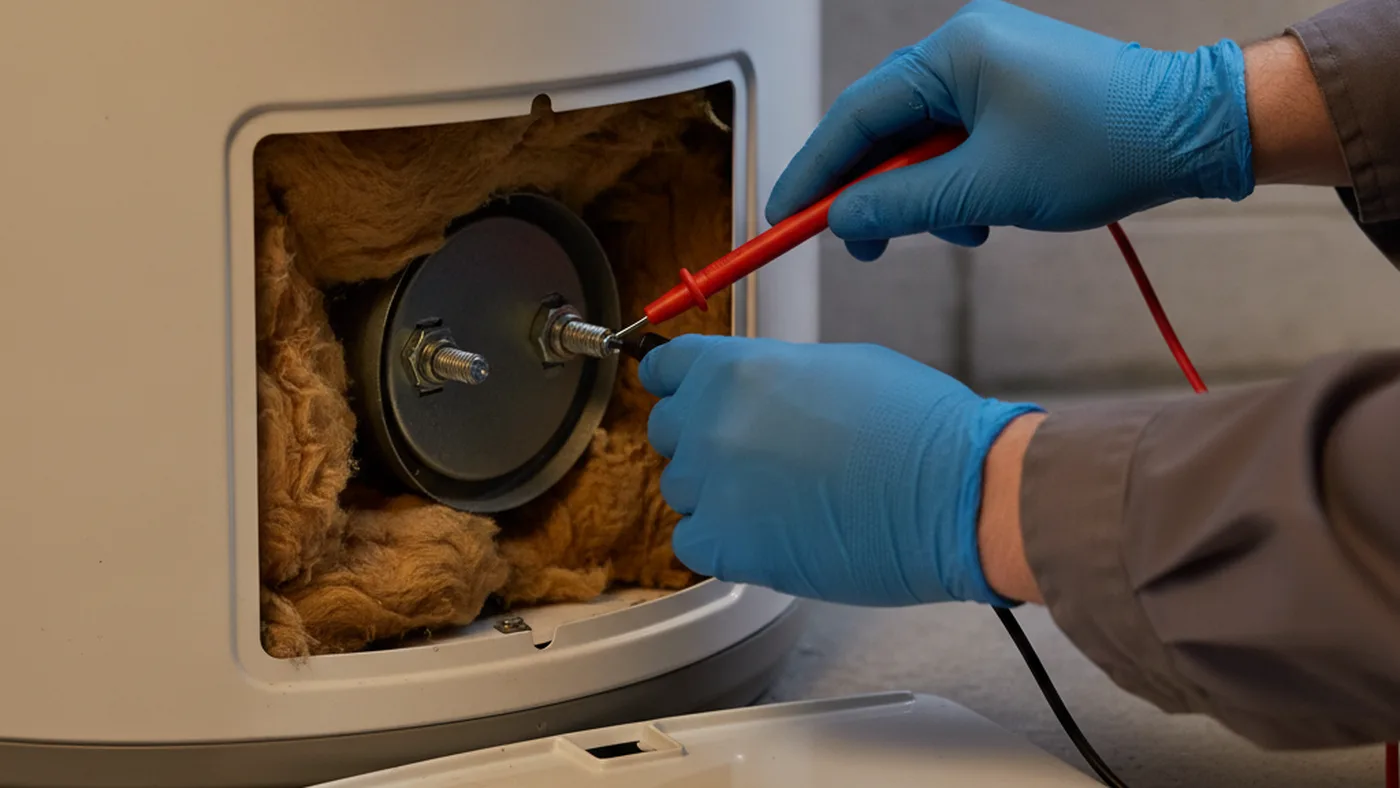
Most residential electric tanks have two heating elements, an upper and a lower, each with its own thermostat. Bradford White tells technicians that with "No Hot Water" or "Insufficient Amount of Hot Water," it is "always a good idea to check the heating elements first." The symptom tells you roughly where to look:
- No hot water at all. Once the breaker and reset are ruled out, the usual suspects are the upper element or the upper thermostat. Bradford White lists an inoperative upper thermostat among the causes of no hot water.
- A short burst of hot water, then cold. In our experience this is most often the lower element. The top of the tank still heats, so you get a few minutes and nothing more.
- Lukewarm water that takes forever to recover. One element or thermostat is doing the work of two.
Hot water that runs out fast can also be a tank that is simply too small or near the end of its life. Our guide to the signs you need a water heater replacement covers that side.
Confirming which part has failed means testing with a meter behind open panels, and that is where homeowner troubleshooting should stop.
Need water heater service in Wilmington?
Serving Wilmington with same-day availability and flat-rate pricing confirmed before work begins.
Why Sediment and Hard Water Burn Out Elements
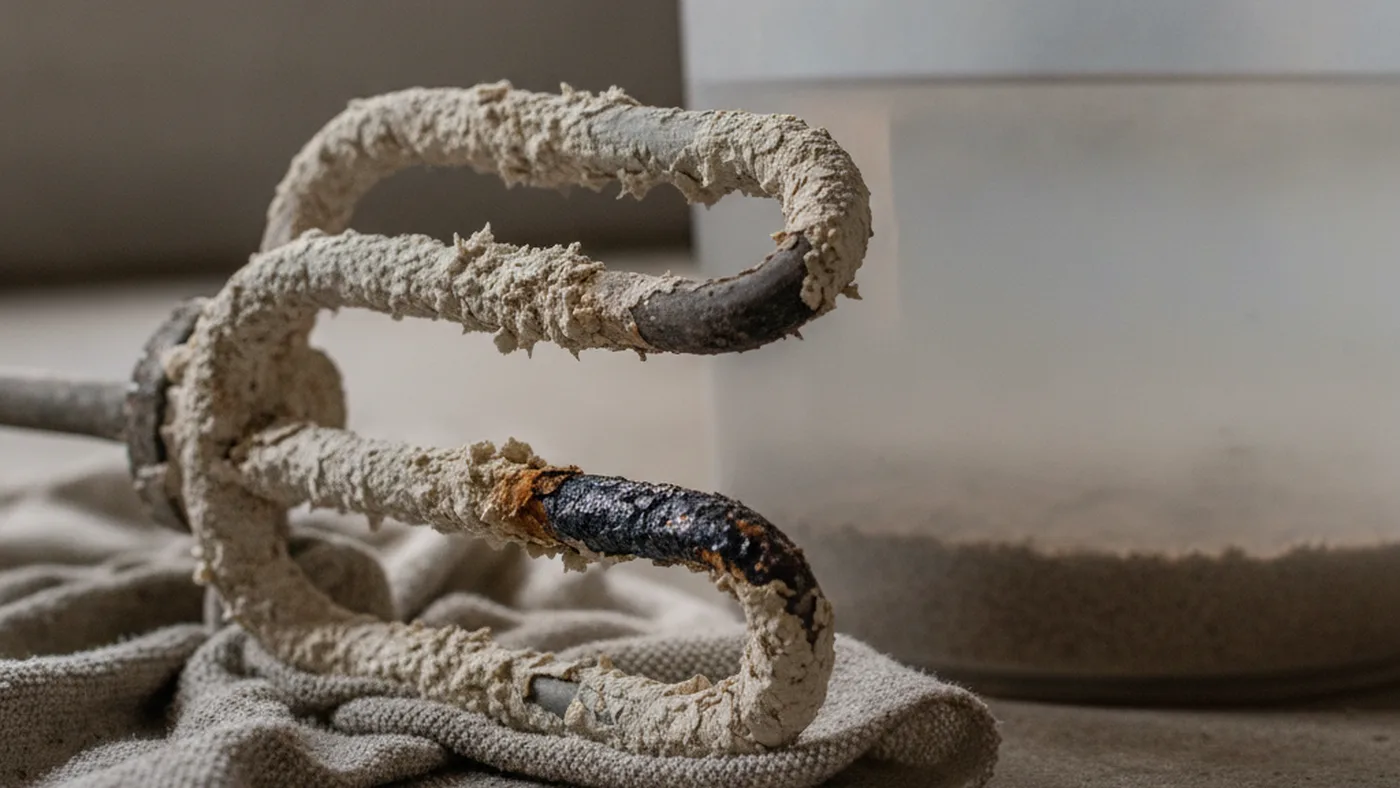
Elements rarely fail for no reason. Bradford White's manual explains the most common one plainly: "sediment or lime build up around an element can eventually cause an air pocket, and within seconds, result in a dry fired element."
That matters across our service area. Most homes outside the boroughs in Chester County, Pennsylvania are on private wells, and so are most addresses in Cecil County, Maryland, where plenty of older electric tanks sit in unheated utility spaces. Hard well water lays down scale faster, and a tank that has never been flushed buries its lower element in it.
This is why replacing an element without dealing with the sediment often means replacing it again. Flushing the tank on a regular schedule is the prevention, and our guide to preventing water heater sediment buildup explains how often.
It is also why an electric tank must be completely full before the power goes back on after draining. A.O. Smith notes that a new heater with no hot water may have had its upper element "burned out during installation (dry fire)."
Where Homeowner Checks Stop
Checking the breaker and pressing the reset once are reasonable homeowner steps. Stop and call if:
- The breaker trips again. That usually points to a grounded element.
- The reset button trips a second time. Something is overheating the water.
- You see scorch marks, melted wire insulation, or smell burning at either access panel.
- The fix means removing an element or testing with a meter. As A.O. Smith puts it, if simple checks don't solve it, "you likely have faulty heating elements or thermostats requiring professional replacement."
- There is water on the floor. Turn the breaker off and shut the cold water supply first.
Get Hot Water Back Before the Cold Months
A failing element in September is an inconvenience. The same fault in January, when incoming water is at its coldest, means a tank that cannot keep up at all.
Water Heater Now repairs electric water heaters across Wilmington and New Castle County, Chester County in Pennsylvania, and Cecil County in Maryland. See what a water heater repair visit covers, or call (302) 240-2818. We answer 24 hours a day, and we test the actual part before we replace anything.
---
Sources, verified September 16, 2026: A.O. Smith, Is Your Hot Water Not Getting Hot? Common Causes & What To Do About Them; A.O. Smith, What to do if you have no hot water; Bradford White, Residential Electric Water Heater Service Manual 238-51544-00.


