
Water heater installation cost in Wilmington is driven by capacity, fuel type, venting condition, and required code-compliance work rather than the tank alone. Electric installations price below gas because there is no combustion venting to evaluate. Tankless conversions cost the most because they need dedicated venting and adequate gas capacity. Flat-rate quotes remove the uncertainty.
Why This Matters to Wilmington Homeowners
Homeowners collecting water heater quotes in Wilmington regularly receive numbers that differ by a wide margin for what sounds like identical work. That variance is confusing, and it pushes people toward the lowest figure by default.
That instinct is expensive on this specific type of work. The variance almost never comes from the equipment, because tank water heaters are commodity products and every contractor buys them from the same manufacturers at similar cost. The variance comes from what each quote includes, what it silently excludes, and whether the installation will actually meet code when it is finished.
Understanding the cost structure lets you compare quotes on substance instead of picking the smallest number and discovering the exclusions afterward. This guide breaks down the six factors that genuinely move installation cost, what legitimate code-compliance work looks like, and the specific signals that a quote has been underpriced by omitting necessary work.
Cost Driver One: Fuel Type, Gas Versus Electric
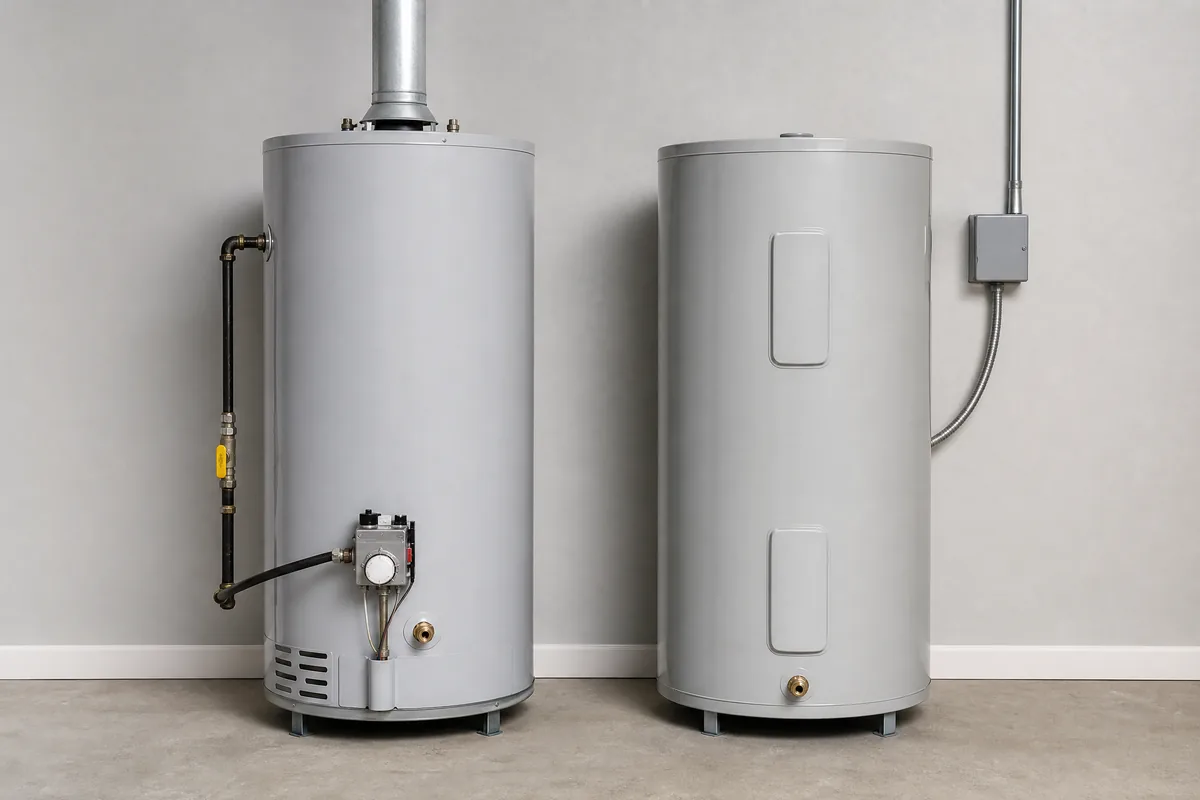
Fuel type is the largest single factor in a standard tank installation, and the gap is about labor and risk rather than equipment.
Electric water heaters install for less. There is no combustion process, which means no flue, no draft to verify, and no venting to inspect or repair. The installation involves water connections, electrical connection at the existing circuit, and the standard code requirements around relief valve discharge and expansion control. The scope is predictable.
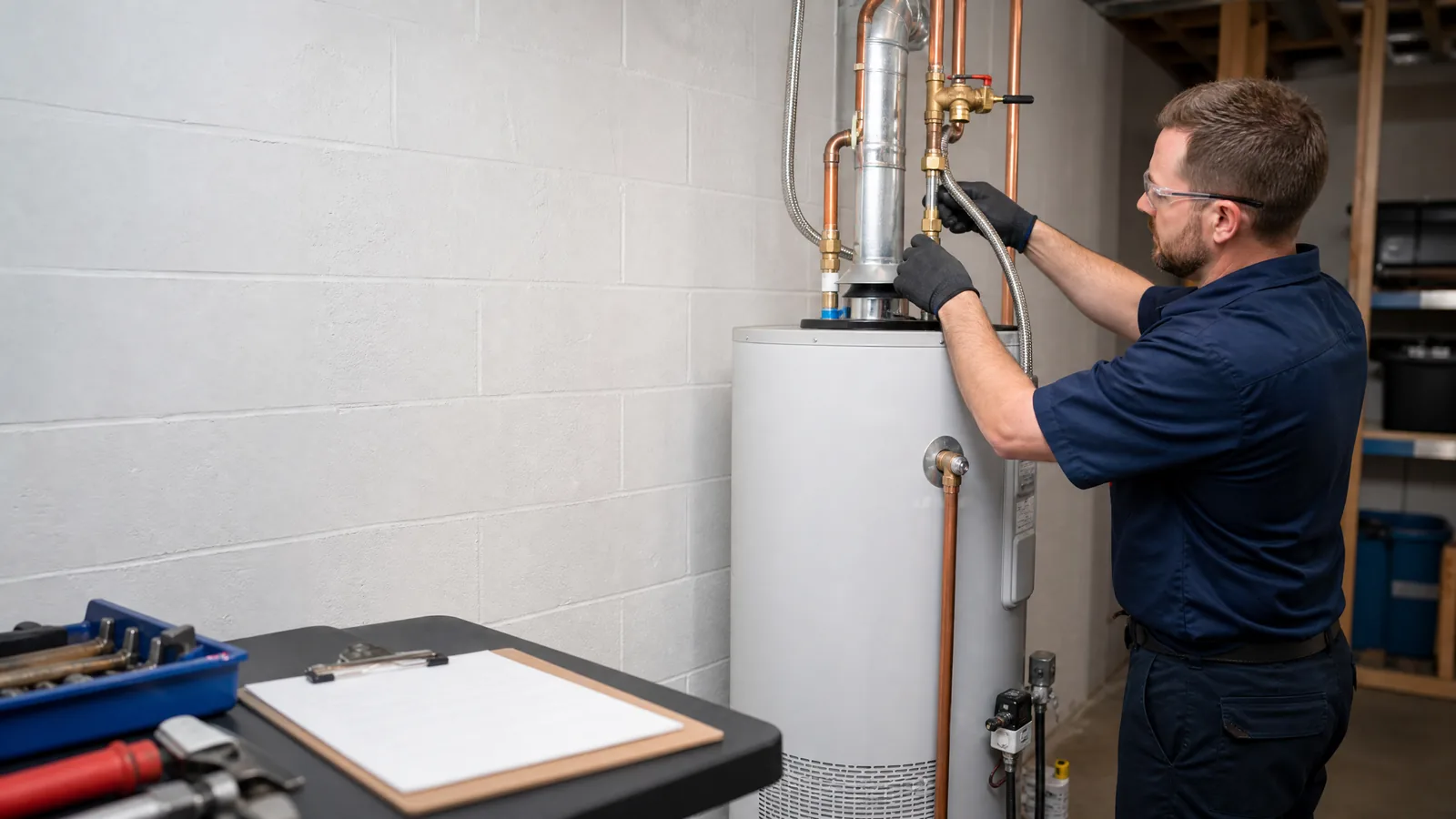
Gas water heaters cost more to install because combustion introduces a whole category of work. On an atmospheric-vent unit, the flue and vent connector must be inspected and confirmed to draft properly. In older Wilmington homes, that vent connector is frequently corroded, undersized for the new unit, or improperly pitched, and a chimney serving both a furnace and a water heater has to be evaluated as a system. Gas connections must be leak-tested at every joint. Combustion air supply in a confined utility space has to be adequate.
This is the reason a gas quote that matches an electric quote should raise questions. Either the venting is being assumed rather than assessed, or the vent work is excluded and will appear as an addition once the old unit is out and the technician has your basement floor open.
Propane, which is common in rural western Chester County and parts of Cecil County, requires equipment configured for that fuel. It is not interchangeable with a natural gas unit, and burner assemblies differ.
Cost Driver Two: Capacity and Correct Sizing
Tank capacity affects both equipment cost and, in some cases, installation cost.
A larger tank costs more to buy, occupies more space, and on electric units may require verifying that the existing circuit and breaker are adequate for the new unit's demand. Physical fit also matters in older Wilmington homes, where a taller replacement can conflict with low basement ceilings or the vent connector routing above the unit.
The point homeowners should focus on is sizing accuracy rather than sizing minimisation. Buying a smaller tank to reduce the quote is a false economy if the household consistently exhausts it. Correct sizing depends on occupant count, how many fixtures run simultaneously in a typical morning, and the unit's recovery rate, which is how quickly it reheats after depletion. Recovery rate is why a gas unit and an electric unit of the same nominal capacity do not deliver the same practical performance.
A four-person Wilmington household typically lands at a fifty gallon gas unit or a comparably specified electric unit. Larger households, homes with multiple bathrooms in simultaneous use, or homes with a large soaking tub need more. A contractor who quotes capacity without asking a single question about how your household uses hot water is quoting a product, not solving your problem.
Cost Driver Three: Code-Compliance Work on the Existing Installation
This is where most quote variance actually originates, and it is the category homeowners are least equipped to evaluate.
A water heater replacement is the moment when deficiencies from previous installations get corrected, because the new unit has to meet current code even if the old one predated it. Several items come up repeatedly in Wilmington and New Castle County homes.
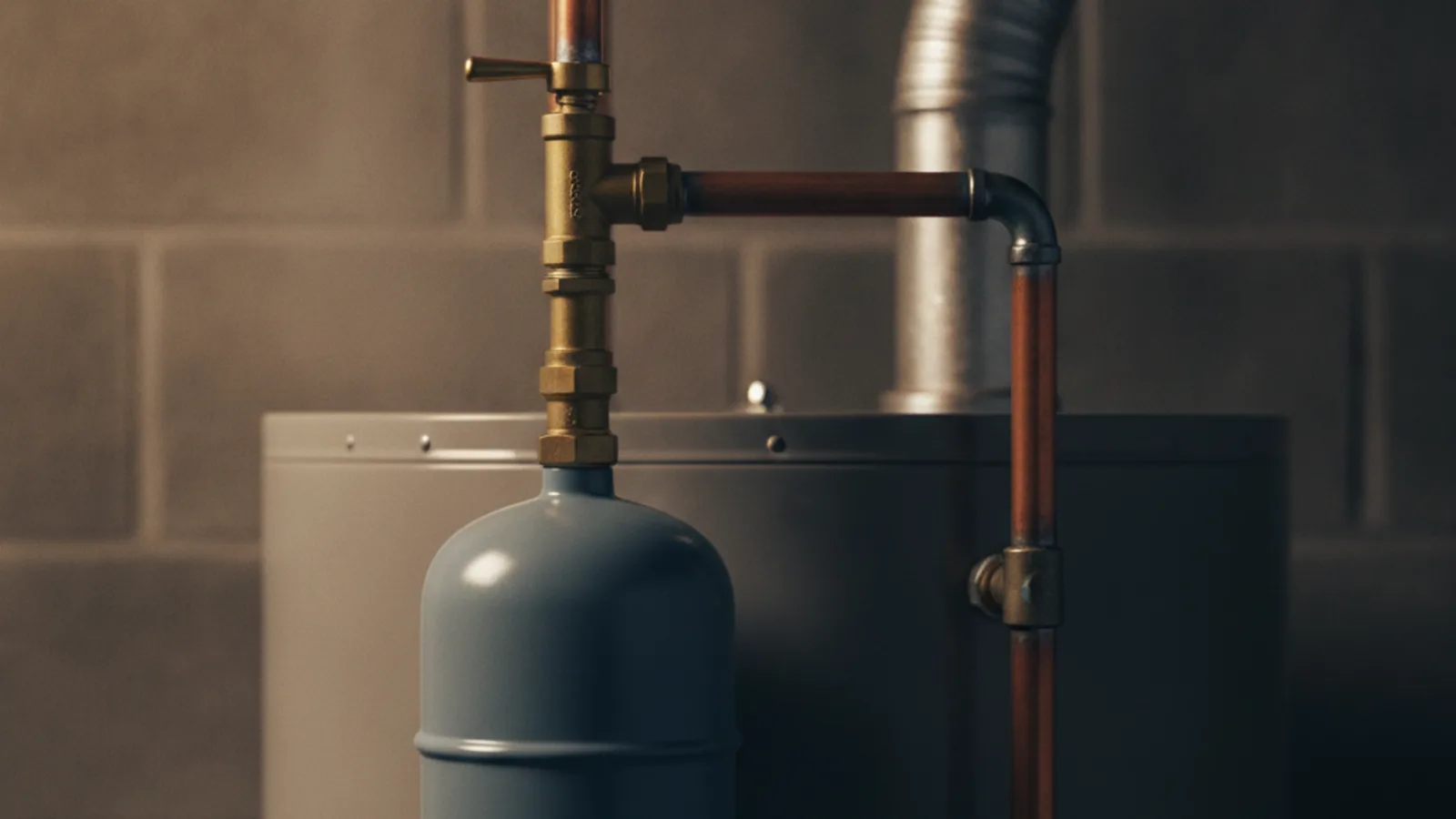
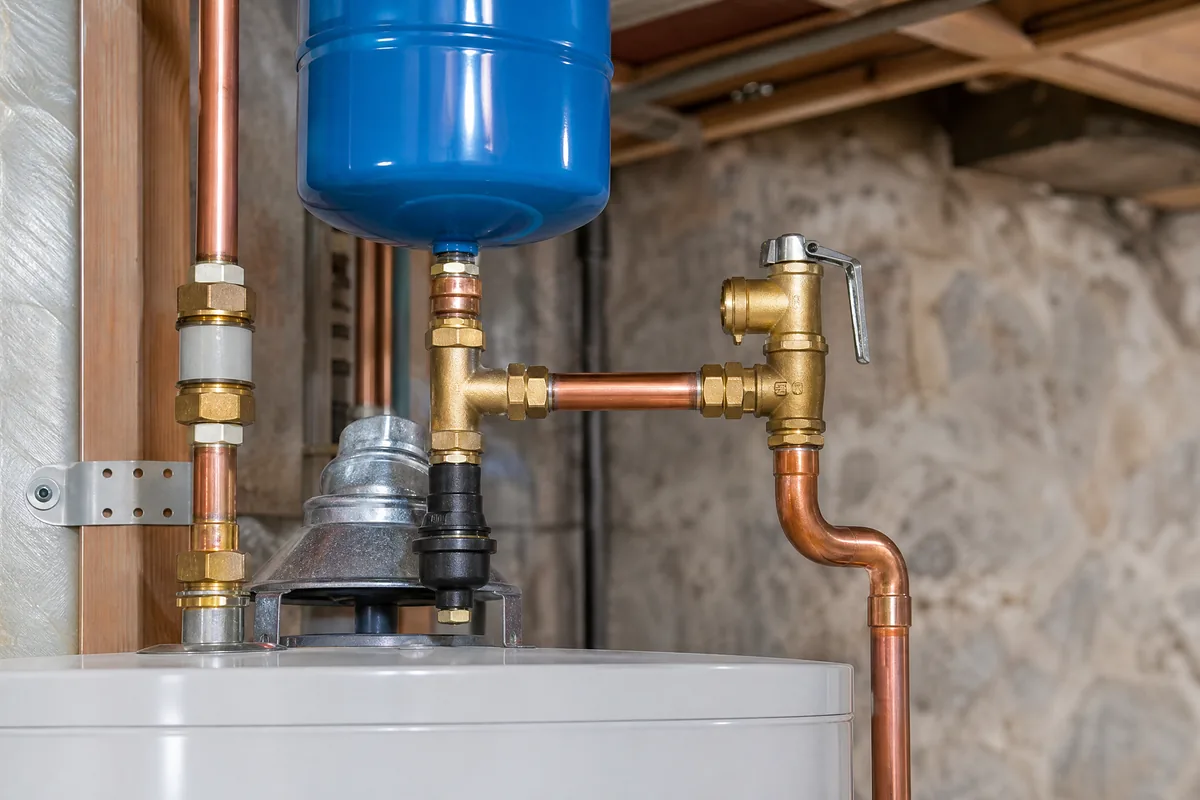
Thermal expansion control is the most common. Most homes on municipal water with a pressure-reducing valve or backflow prevention device operate as a closed system. When water is heated it expands, and in a closed system that expansion has nowhere to go, which raises pressure against the tank and the plumbing. An expansion tank absorbs it. Where one is required and absent, installing it is not optional and not an upsell.
Relief valve discharge piping is second. The temperature and pressure relief valve has to discharge to a safe location, at the correct pipe size, without a reduction or a valve in the line, and terminating properly. Older installations frequently fail one of these conditions.
Shutoff valves are third. A decade-old shutoff that no longer seals fully has to be replaced, because the alternative is a new water heater with no reliable way to isolate it.
Drain pans and drain routing come up on units in finished spaces or above living areas. Venting corrections come up on gas units. Access work, such as protecting stairs and flooring or dealing with a genuinely difficult removal path in a narrow city rowhome, occasionally adds labor.
A quote that includes none of these items on a twenty-year-old installation has either assessed the situation and confirmed everything is compliant, which is uncommon, or it has not looked.
Cost Driver Four: Tank Versus Tankless
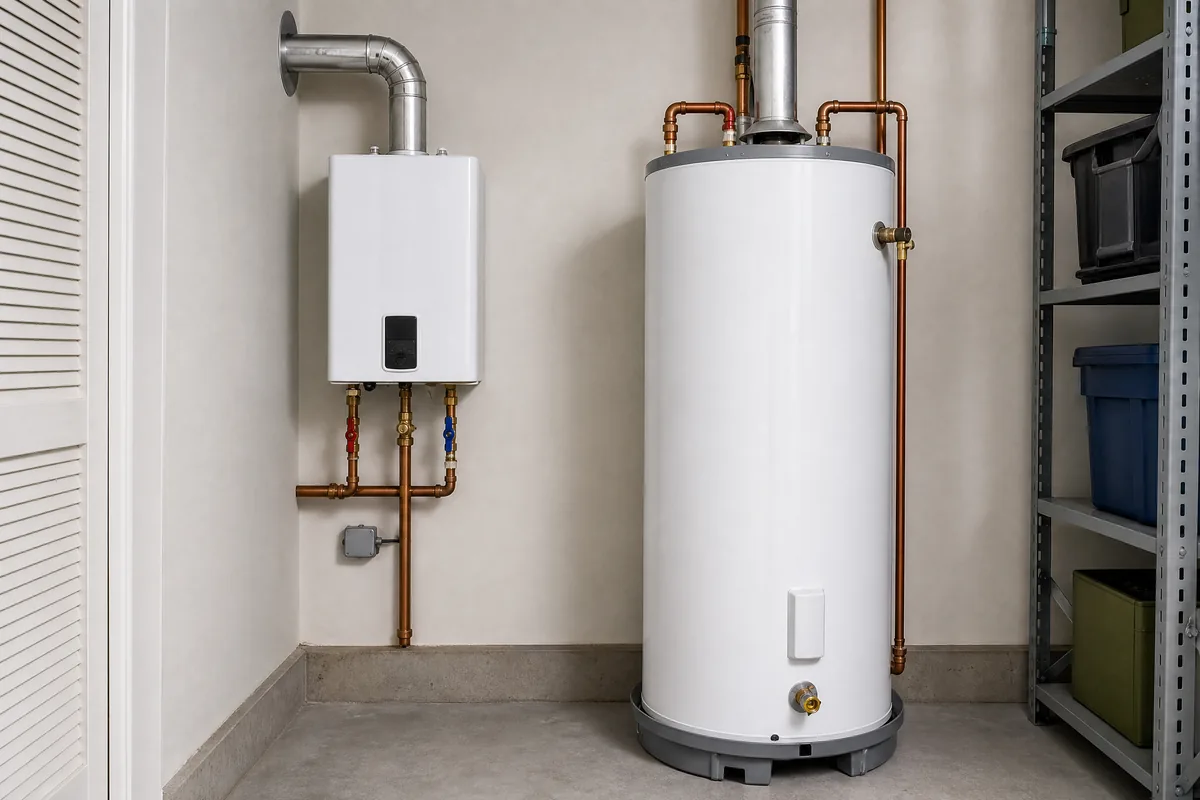
Tankless conversion is a different scope of work, and the cost gap is substantial and legitimate.
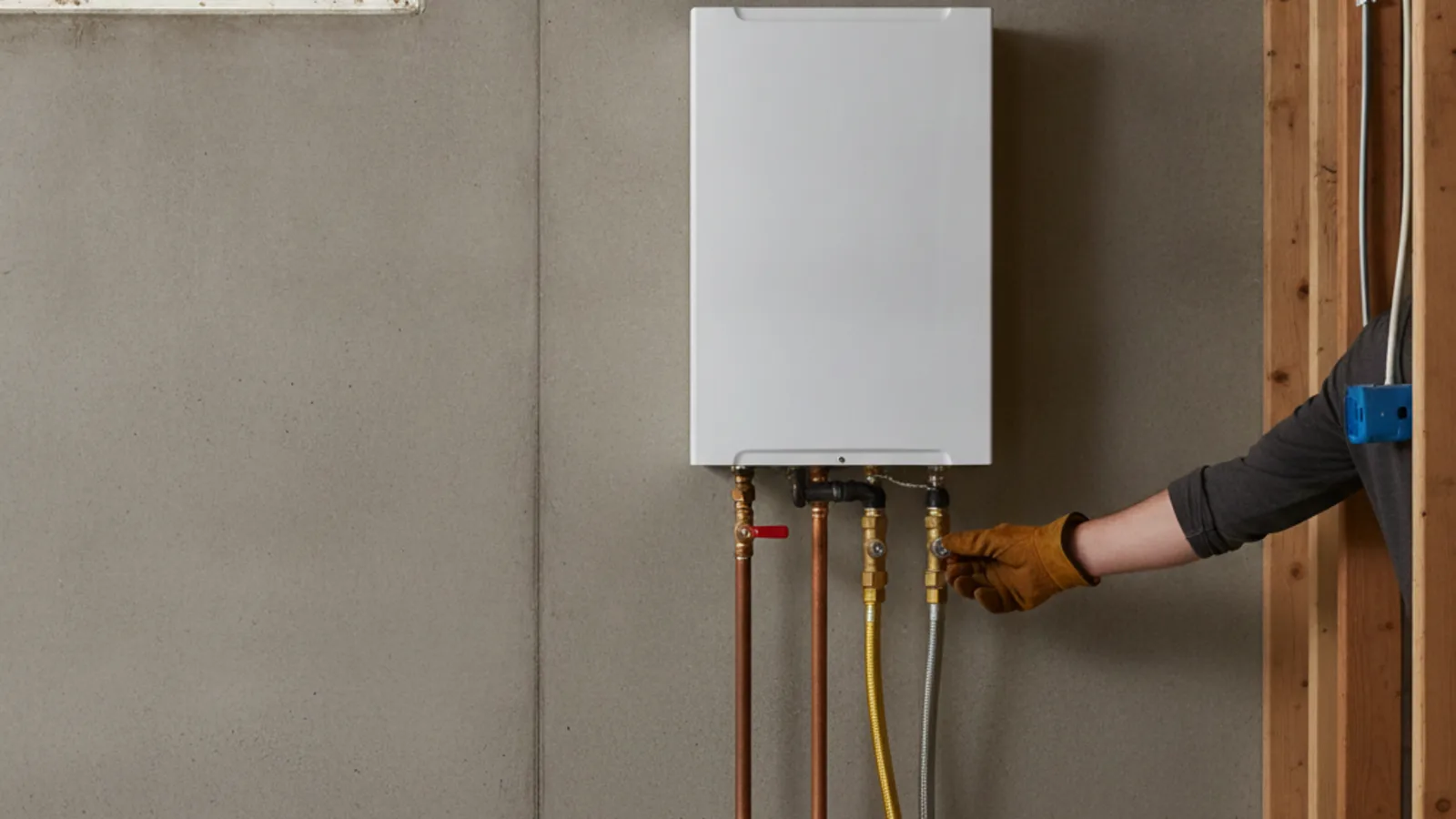
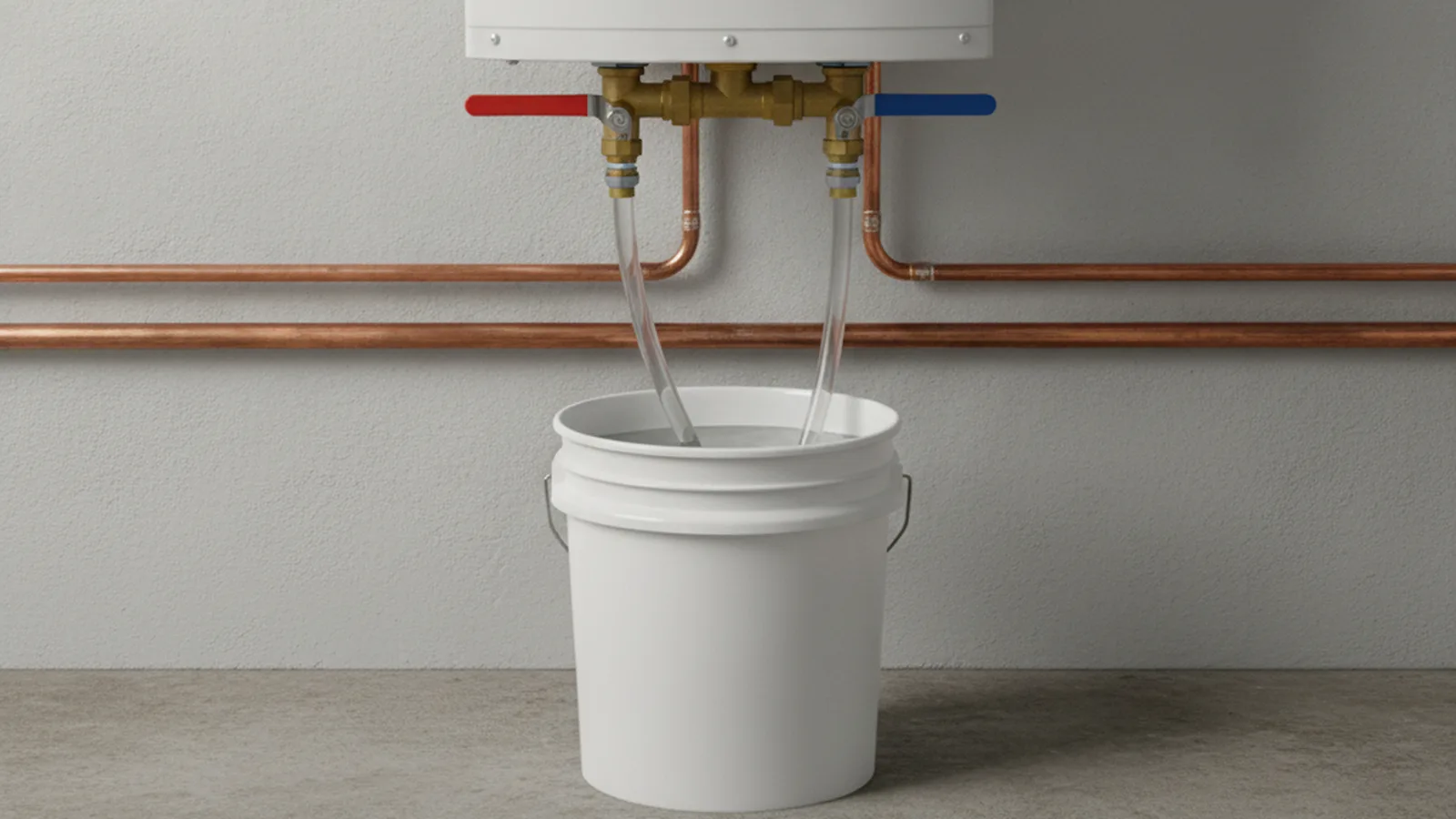
Equipment costs more. Beyond that, a tankless unit fires at a much higher input rate than a tank heater, so the existing gas line and meter capacity frequently need upgrading, calculated against total household gas load including furnace, range, and dryer. Tankless units require dedicated venting rather than sharing an existing flue. Condensing models produce acidic condensate that must be drained and neutralised appropriately. Isolation valves should be installed so annual descaling is straightforward, and their absence on an existing tankless unit is a common installation deficiency.
The offsetting case is real. A tankless unit eliminates standby loss because it heats only on demand, removes the volume ceiling that causes tanks to run out, reclaims the floor space a tank occupies, and commonly reaches fifteen to twenty years of service against eight to twelve for a tank.
Whether that trade favors you depends on your gas supply, your venting options, your water hardness, and whether you will commit to annual descaling. A contractor should tell you when a tank is the better choice for your specific home, even though the tankless job is the larger sale.
Need water heater service in Wilmington?
Serving Wilmington with same-day availability and flat-rate pricing confirmed before work begins.
Cost Driver Five: High-Efficiency Equipment
High-efficiency tank units sit between standard tanks and tankless equipment on both cost and operating economics.
They carry higher equipment cost and, on condensing models, additional installation requirements including condensate management and different venting. In return, they consume less fuel to deliver the same hot water, which compounds over the life of the unit.
The honest assessment depends on how long you intend to stay in the home and how much hot water your household uses. A high-usage household planning to stay ten years recovers the premium comfortably. A low-usage household planning to sell in two years does not. That calculation should be presented to you rather than assumed on your behalf.
Cost Driver Six: Timing and Urgency
Emergency replacement costs more than planned replacement, and it is worth understanding why so you can avoid it.
Emergency work carries after-hours and weekend labor rates. It also removes your ability to compare options, because a homeowner standing in a flooding basement accepts whatever can be done today. Worse, an emergency replacement often arrives after water damage has already occurred, and remediation of flooring, drywall, and stored belongings frequently exceeds the cost of the water heater itself.
Planned replacement inverts all of this. You schedule during normal hours, you compare quotes properly, you choose the equipment deliberately, and there is no water damage because nothing failed.
If your unit is past ten years old and showing symptoms, replacing it before winter is the straightforward financial decision. Cold incoming water in December and January forces the unit to work harder, which is exactly when marginal equipment fails.
How to Read a Quote That Looks Too Low
Low quotes on water heater installations usually achieve their price by omitting something, and there are specific things to check.
Ask whether removal and disposal of the old unit is included. Ask whether an expansion tank is required for your system and whether it is in the price. Ask whether the relief valve discharge line will be brought to current code. Ask whether the shutoff valve is being replaced or reused. Ask whether venting has been assessed on a gas unit and whether vent work is included or excluded. Ask whether permitting and inspection are handled.
Then ask the question that clarifies everything: is this a flat-rate price you will honour, or an estimate subject to change once work begins? Hourly billing with an optimistic estimate is where water heater jobs escalate, because this work reliably produces complications, a seized drain valve, a crumbling vent connector, a shutoff that will not hold.
Also confirm licensing and insurance. In Delaware, water heater work should be performed by a licensed plumber, and replacement is permitted work in most jurisdictions. An unpermitted installation is undocumented, uninspected, and can complicate an insurance claim after a water loss.
We quote flat-rate after assessing the actual installation. You approve a fixed number covering the unit, labor, and required components before anything is disconnected, and that number holds.
When to Call a Professional
Water heater installation is not appropriate DIY work, and the reasons are concrete.
Gas connections require leak testing and correct venting, and an improperly vented combustion appliance is a carbon monoxide hazard that gives no obvious warning. Electric installations involve high-amperage circuits where an error is dangerous rather than inconvenient. A relief valve discharge line routed incorrectly creates a scalding and pressure risk. A closed system without expansion control stresses the tank and plumbing continuously. Beyond the technical requirements, tanks are heavy and awkward, and Wilmington rowhome basement stairs are unforgiving.
Permitting and inspection are also part of doing this correctly. That documentation protects you at resale and after a water loss.
Homeowners can reasonably handle thermostat adjustment, visual inspection for corrosion and moisture, and relief valve testing. Installation, gas work, venting, and anything involving a leaking tank belong with a licensed technician.
Need a Plumber in Wilmington? Water Heater Now Is Ready to Help
Water heater pricing should be a fixed number you approve in advance, not an estimate that grows once your basement floor is open. We assess the actual installation, tell you exactly what your home requires to meet code, and quote flat-rate before any work starts. Water heaters are the entire business, across Wilmington and the surrounding Delaware, Pennsylvania, and Maryland communities.
For correctly sized replacement, see water heater installation in Wilmington. If you are weighing an upgrade, review tankless water heater installation.
Call us at (302) 240-2818 or contact us today to schedule service in Wilmington and surrounding areas.