
If your home is in Delaware, is served by public water, and has a tank-style water heater, yes: the State of Delaware Plumbing Code requires an expansion tank on the cold side, between the heater's shutoff valve and the heater. Outside Delaware the answer turns on one question, whether a check valve, backflow preventer or pressure reducing valve has made your plumbing a closed system, and if it has, the model plumbing code calls for thermal expansion control too.
What Delaware's Plumbing Code Actually Says
Delaware adopts the 2021 International Plumbing Code with its own amendments, and one of those amendments is unusually direct. It adds to Section 607.3: "All public water installations shall be required to have an expansion tank on storage water heaters installed between the water heater shut off valve and the water heater on the cold side."
That covers homes in Wilmington and across New Castle County that are on a city or utility water supply. It does not depend on whether a previous installer fitted one. If your tank is replaced and there is no expansion tank on the cold line, adding one is part of doing the replacement to code, and it is one of the items an honest quote should list rather than leave out.
What Thermal Expansion Does in a Closed System
Water expands when it heats. A.O. Smith's technical bulletin on the subject puts it simply: "The water in a water heating system expands when it is heated and has a greater volume."
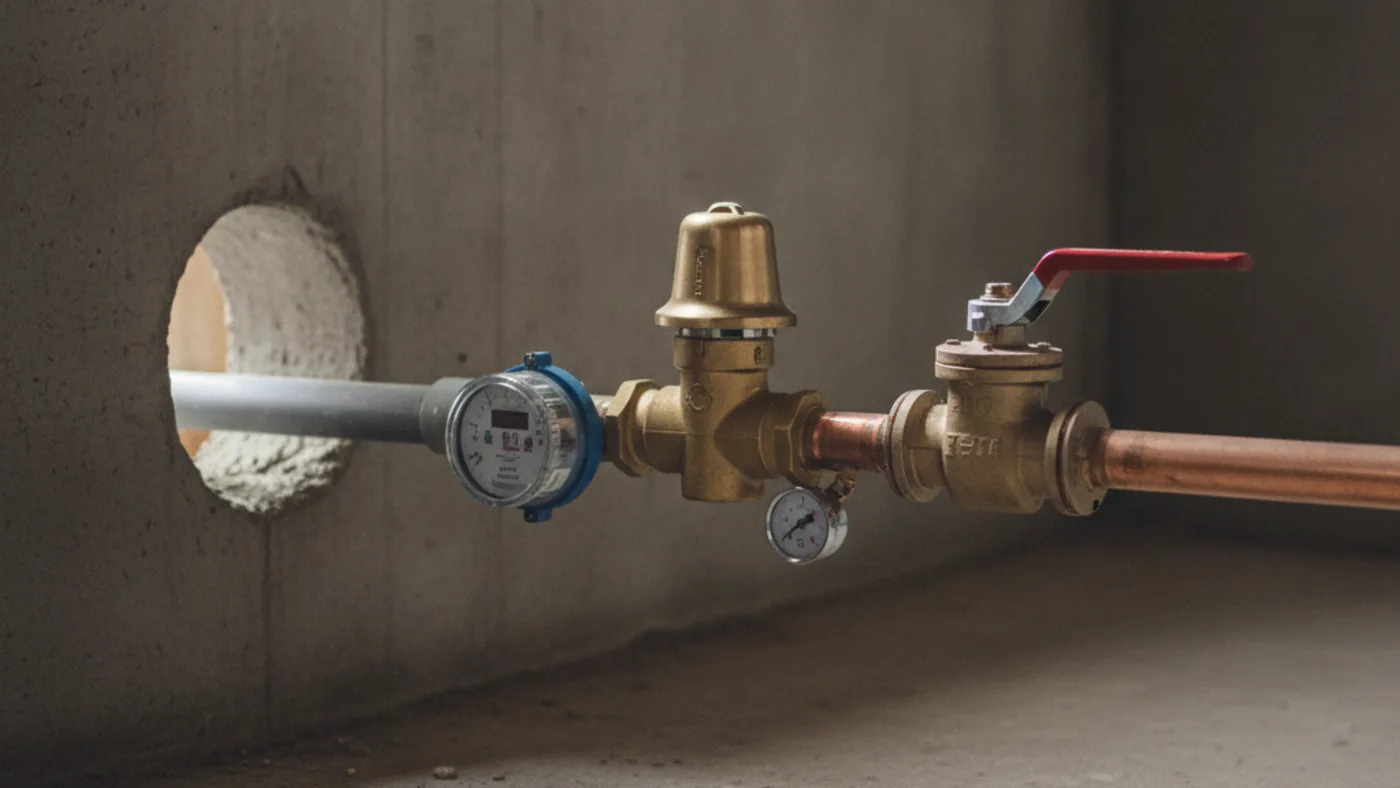
In older plumbing, that extra volume pushed back out into the street main and nobody noticed. The change came with devices that stop water flowing backwards. A.O. Smith notes that "many water supply systems have check valves at the water meter" to protect the public supply from contamination, and that pressure reducing valves are another cause, because many of them "also act as very effective check valves."
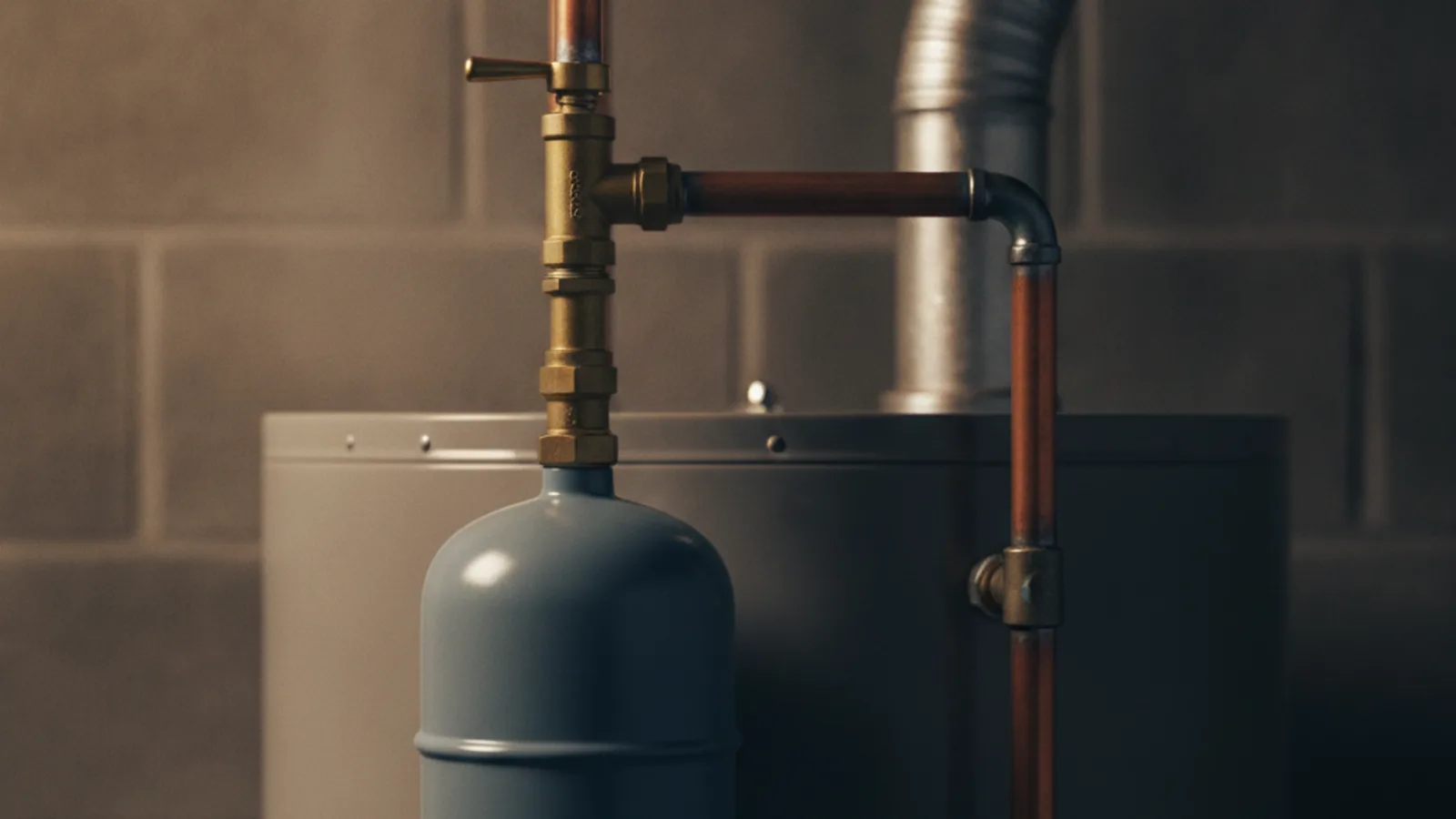
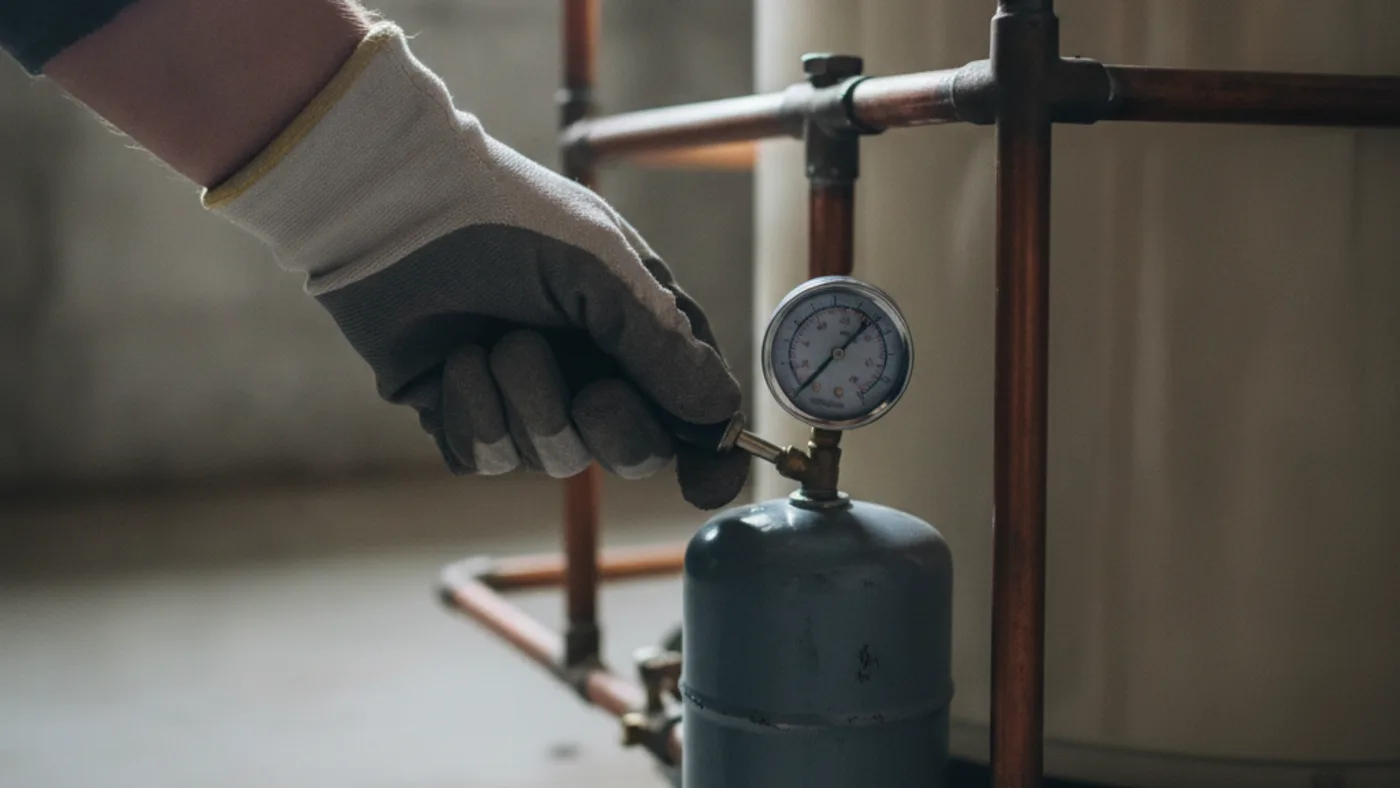
Once the water cannot go back the way it came, each heating cycle raises the pressure inside every pipe, fitting, faucet and appliance in the house. The same bulletin gives a sense of scale: water in a closed tank at 50 psi, "when heated just 10 degrees, will reach a pressure of 250 psi." An expansion tank gives that water somewhere to go. It is a small steel tank with an air cushion on one side of a rubber diaphragm, and it absorbs the expanded water as the heater runs, then returns it as the system cools.
Why a Dripping Relief Valve Is Often the First Clue
The most common sign of uncontrolled expansion is a temperature and pressure relief valve that weeps. A.O. Smith describes the classic pattern: the "relief valve drips during any recovery cycle when no hot or cold water is used," meaning while the tank is reheating and nothing is running.
The temptation is to replace the valve. A.O. Smith's advice runs the other way: "Control water pressure and install a thermal expansion tank before replacing a dripping T&P relief valve." Its bulletin is blunter still: "DO NOT DEPEND ON THE T&P VALVE TO HANDLE THERMAL EXPANSION!" The relief valve is an emergency safety device, not a pressure regulator, and the bulletin notes that damage caused this way is not covered by the manufacturer's warranty.
Other signs we see in the field: toilets that run briefly on their own after the heater cycles, faucets that spit when first opened, and banging in the pipes. If water is already on the floor, start with our guide on what to do when a water heater leaks.
Getting the Air Charge Right
An expansion tank is not a fit-and-forget part. It arrives from the factory with a preset air charge, and A.O. Smith's installation manual says "the expansion tank air charge must be adjusted to match the incoming water pressure." A tank with the wrong charge cannot absorb expansion the way it was designed to. The same manual recommends inlet water pressure of 60 psi or less, and says that above 80 psi a pressure reducing valve is required.
Tanks also wear out. If the diaphragm fails, the tank fills with water and stops working, and the relief valve starts dripping again. A quick check is to tap the tank: the top should sound hollow. A tank that sounds solid all the way up, or that spits water from its air valve when the valve core is pressed, needs replacing.
Need water heater service in Wilmington?
Serving Wilmington with same-day availability and flat-rate pricing confirmed before work begins.
Pennsylvania, Maryland and Private Wells
Across the state line the wording changes but the logic is the same. Pennsylvania's plumbing code, based on the 2018 International Plumbing Code, says that where a storage water heater "is supplied with cold water that passes through a check valve, pressure reducing valve or backflow preventer, a thermal expansion control device shall be connected to the water heater cold water supply pipe." Maryland counties and Pennsylvania townships adopt and amend model codes on their own schedules, so the local inspector for your address in Chester County or Cecil County has the final word.
Homes on private wells are a separate case, because the Delaware amendment refers to public water installations. A well system has its own pressure tank and pump controls, and whether it also needs thermal expansion control depends on how that system is plumbed. That is a question to settle on site, not from a blog post.
When This Usually Comes Up
In our experience, most homeowners find out about expansion tanks on replacement day. It is one of the code items that separates a low quote from a complete one, which is why our water heater installation cost guide counts code-compliance work as its own cost driver.
Get It Right on the Next Install
Water Heater Now installs tank and tankless water heaters across Wilmington and New Castle County, Chester County in Pennsylvania, and Cecil County in Maryland. On every water heater installation we check how the cold supply is plumbed, fit or replace the expansion tank where it is required, and set its air charge to your home's actual water pressure. Call (302) 240-2818, 24 hours a day, and you get the price before any work starts.
---
Sources, verified September 23, 2026: State of Delaware, 16 Del. Admin. Code 4455, State of Delaware Plumbing Code (Section 2.21, amending IPC 607.3); A.O. Smith, Technical Bulletin #45: Thermal Expansion; A.O. Smith, Water Heater Maintenance Guide; A.O. Smith, Water Heater Thermal Expansion Tanks installation manual; UpCodes, Pennsylvania Plumbing Code 2018, Section 607.3.