

Set a residential water heater to 120°F. That is the setting the U.S. Consumer Product Safety Commission urges households to use, and it prevents the great majority of tap water scalds. The exception is a household where someone is immunocompromised or where the plumbing has long runs that sit unused, in which case storing hotter and installing a thermostatic mixing valve to bring the delivered temperature back down is the safer arrangement.
Why the Dial Gets Turned Up Every October
Almost nobody adjusts a water heater in July. The calls come once the weather turns, and the reason is worth understanding before you touch anything.
In summer, the water entering your home is relatively mild. By January in New Castle County it is dramatically colder. Your thermostat still holds the tank at whatever you set it to, but two things change at the fixture: you need a much larger share of hot water in the mix to reach the same comfortable shower temperature, and the tank refills with far colder water, so it depletes faster and recovers more slowly.
The experience is "the hot water ran out sooner," and the instinct is to turn the dial up. Sometimes that is a reasonable adjustment. Often it is treating a capacity or a maintenance problem with a temperature change — and doing it right at the point where the temperature becomes dangerous.
What 140 Degrees Actually Does to Skin
The CPSC publishes the numbers, and they are not intuitive. From their guidance on avoiding tap water scalds:
"Most adults will suffer third-degree burns if exposed to 150 degree water for two seconds. Burns will also occur with a six-second exposure to 140 degree water or with a thirty second exposure to 130 degree water. Even if the temperature is 120 degrees, a five minute exposure could result in third-degree burns."
Six seconds at 140. That is less time than it takes a toddler to react to a tap they just turned, or than it takes an older adult with reduced sensation and slower mobility to get out of the way. The CPSC is direct about who this affects most: "the majority of injuries and deaths involving tap water scalds are to the elderly and children under the age of five," which is why the agency "urges all users to lower their water heaters to 120 degrees Fahrenheit."
Notice that even 120°F is not "safe" in an absolute sense — five minutes will still burn. It is the setting that buys enough time for a person to react.
The Argument for Hotter, and Why It Is Not Wrong
If you have searched this question before, you have probably run into the counter-argument: bacteria. It is a real consideration, and it deserves to be stated accurately rather than dismissed or exaggerated.
The CDC identifies the favorable growth range for Legionella as "77–113°F, 25–45°C," and notes that it "may grow at temperatures as low as 68°F (20°C)." A tank held at 120°F sits just above that band. A tank held at 110°F sits inside it.
The CDC's guidance for potable water systems is to "store hot water at temperatures above 140°F (60°C)" and to "ensure hot water in circulation does not fall below 120°F (49°C)."
One important qualification: that guidance is written for building water systems — hospitals, hotels, large facilities with long recirculating loops and low-use outlets. A typical Delaware single-family home with a 40 or 50 gallon tank and daily use is a much lower-risk environment, and the CDC framework is not telling every homeowner they have a problem. It matters most where someone in the household is immunocompromised or has chronic respiratory illness, or where parts of the plumbing sit stagnant for long periods — a guest bathroom nobody uses, or a rental unit between tenants.
How Both Things Can Be True at Once
Here is the part almost no article explains, and it is the actual answer to the conflict.
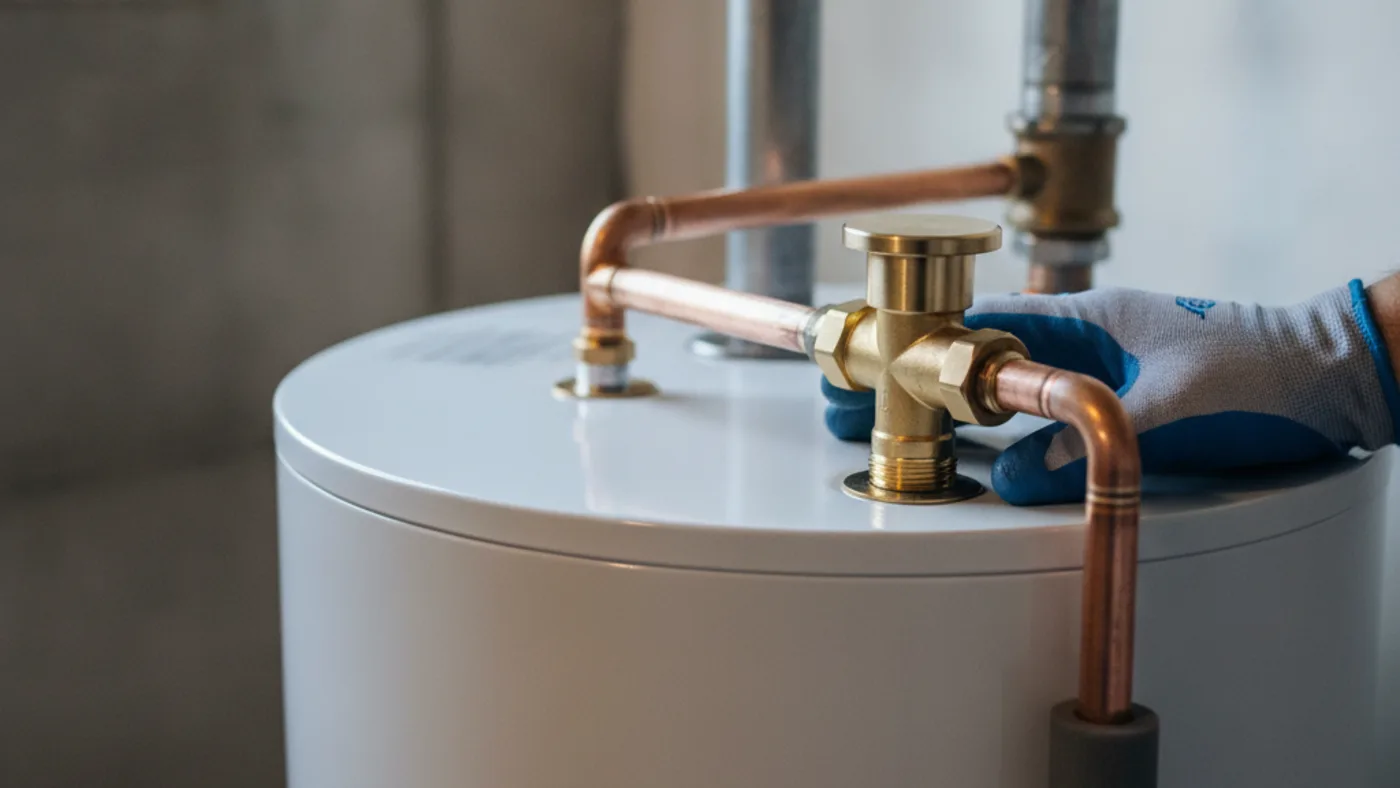
You can store water hot and deliver it warm. A thermostatic mixing valve installed at the tank outlet blends hot tank water with cold before it ever reaches your fixtures. The tank stays at a temperature that suppresses bacterial growth; the water arriving at the tub tap is at a temperature that will not burn a child in six seconds.
The CDC describes exactly this approach, recommending mixing valves be installed "as close as possible to fixtures," which "will prevent scalding while permitting circulating hot water temperatures above 120°F (49°C)."
For a Delaware home the practical upshot is:
- No specific risk factors in the household: 120°F at the thermostat. Simple, and it satisfies the CPSC guidance.
- Someone immunocompromised, or stagnant runs in the plumbing: store hotter and add a mixing valve. Do not simply raise the tank to 140 and leave the fixtures unprotected — that is the arrangement that produces scald injuries.
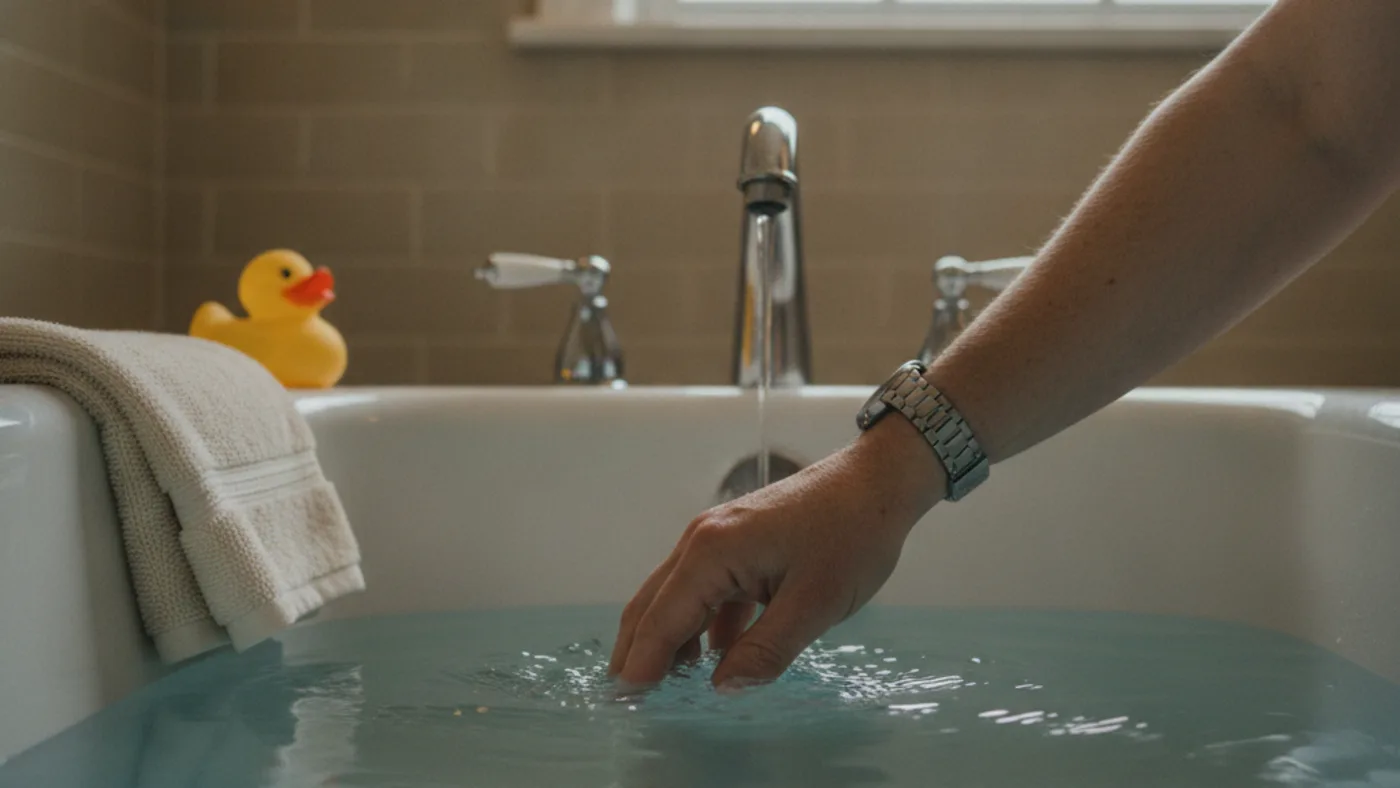
- Young children or older adults in the home: 120°F, plus the CPSC's habit worth keeping: "never take hot water temperature for granted. Always hand-test before using, especially when bathing infants and young children."
A mixing valve is a modest part and a short job on most installations, and it is far easier to add during a water heater maintenance visit or a replacement than as a standalone call-out later.
Need water heater service in Wilmington?
Serving Wilmington with same-day availability and flat-rate pricing confirmed before work begins.
How to Check What You Have Now
Most tanks are not set to what the dial says. Gas thermostats are often marked only with "warm," "hot" and a series of notches, and after ten years of drift the label means very little.
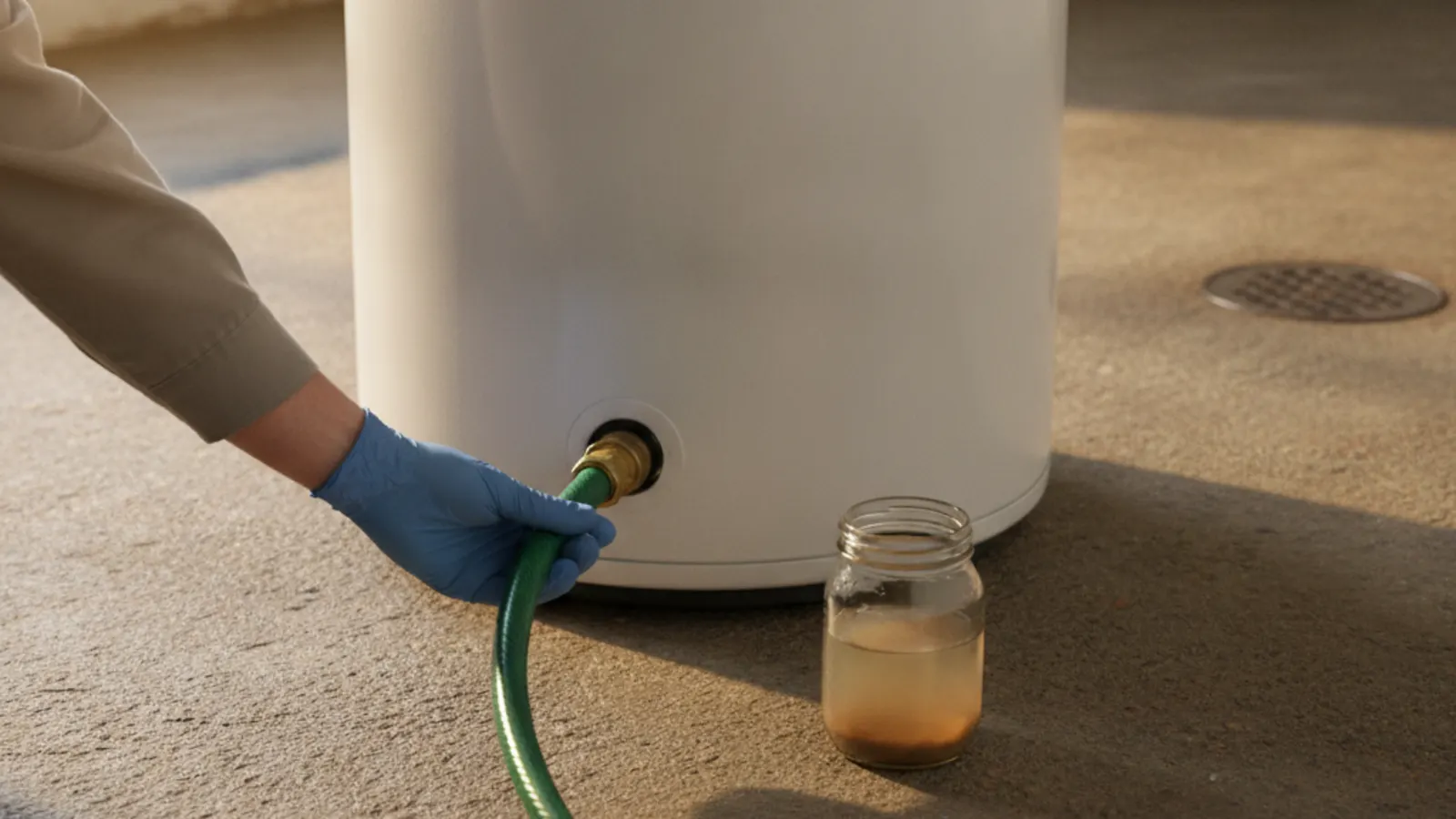
The measurement is simple: run the hot tap nearest the heater for a minute or two, fill a cup, and read it with a cooking thermometer. Do this first thing in the morning or after at least two hours without hot water use, so you are reading the tank rather than a recently reheated slug of water. If the number is far from where you want it, adjust in small increments, wait a few hours, and read it again.
Two cautions. Follow the manufacturer's instructions for your specific unit — electric heaters have two thermostats behind access panels that must be set to the same temperature, and that work involves cutting power at the breaker first. If you are not comfortable with that, it is a five-minute job for a licensed plumber, and it is worth doing properly.
When the Setting Is Not the Problem
If your water was fine last winter and is not fine this one, and the thermostat has not moved, the temperature setting is unlikely to be the cause. Things that produce the same complaint:
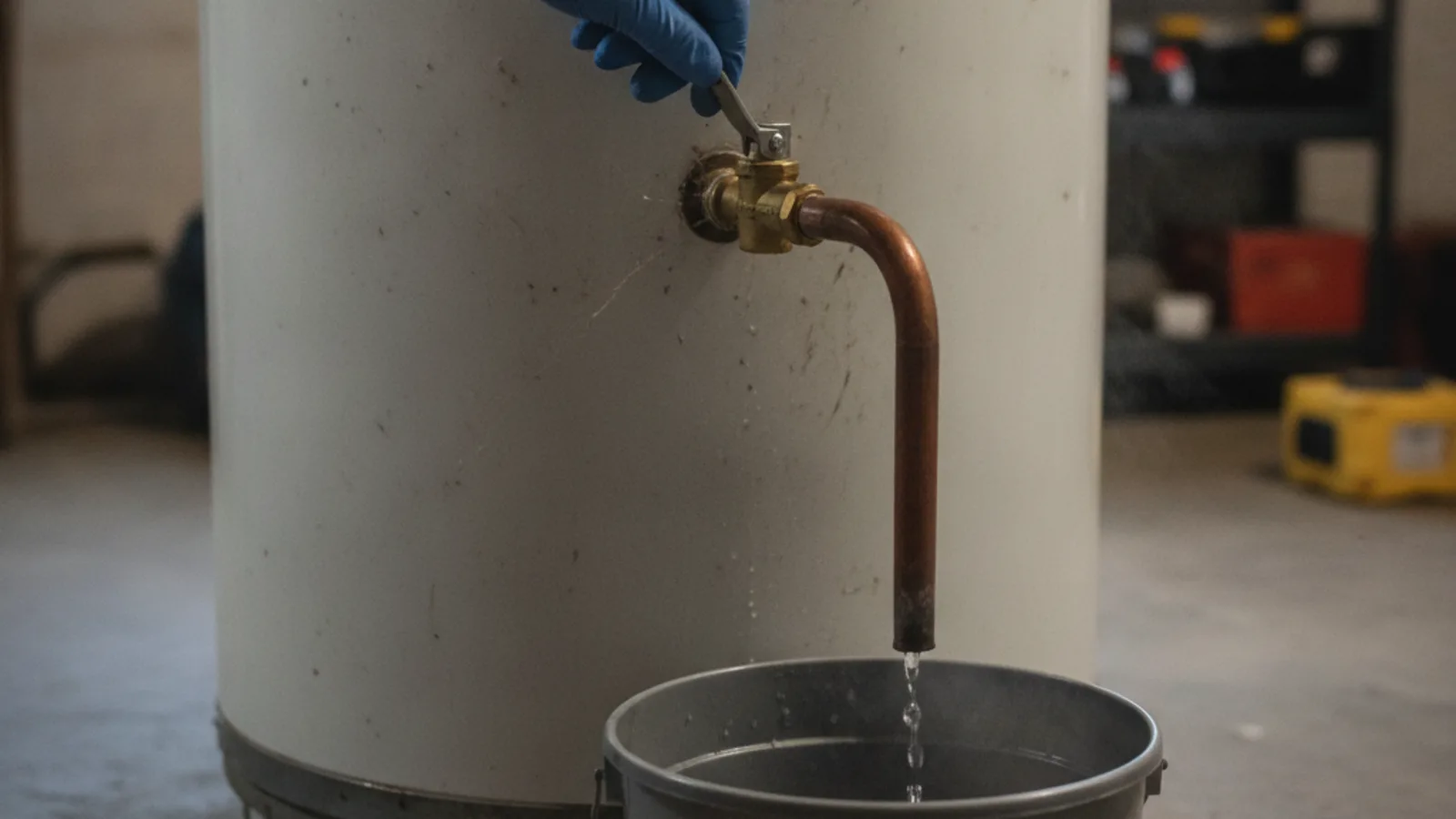
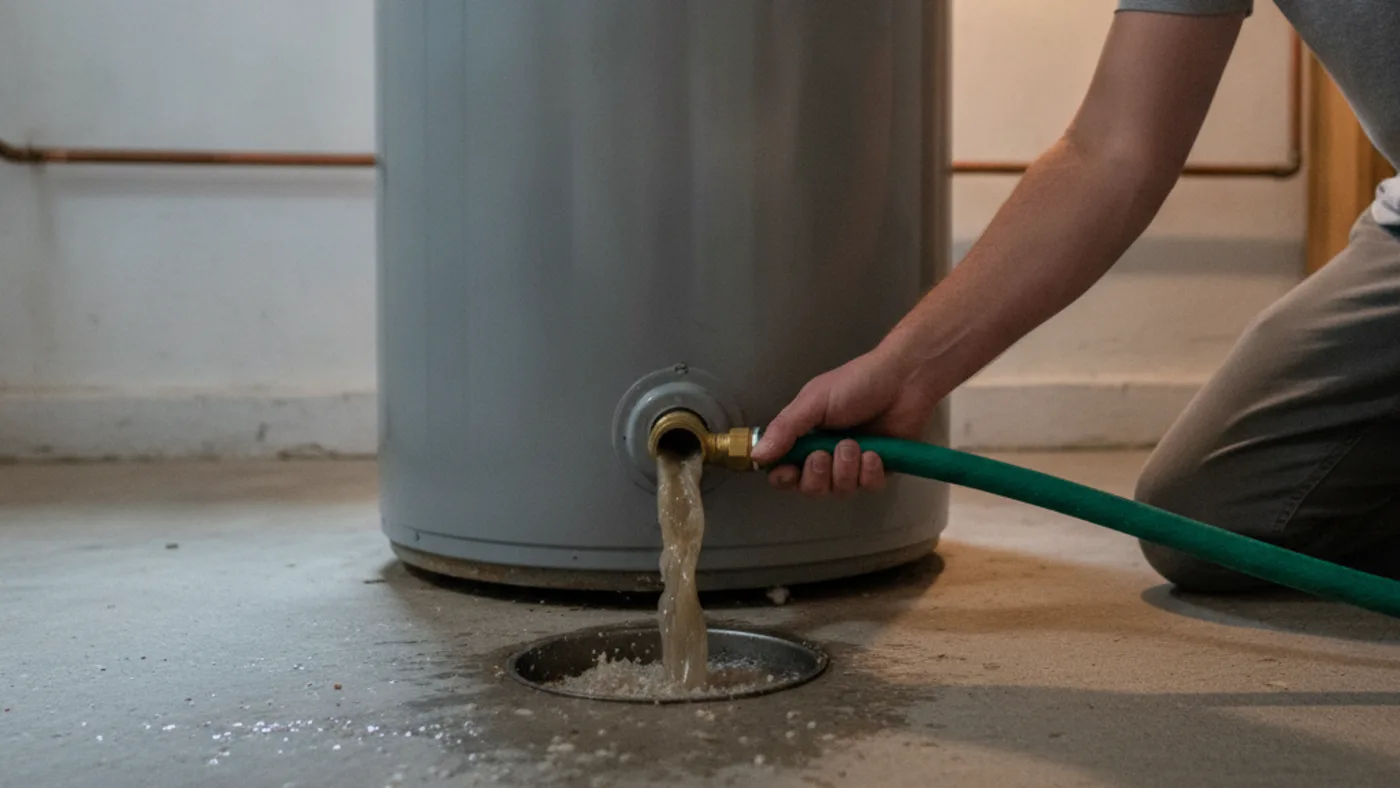
- Sediment on the tank floor, insulating the burner from the water and stretching recovery time. This is the most common cause in our area, and it is preventable with annual flushing.
- A failed heating element on an electric unit — one element out gives you roughly half the hot water at the same setting.
- A failing dip tube, which lets incoming cold water mix straight into the hot outlet.
- A tank that has simply reached the end of its life, which usually announces itself with other signs too — our guide to the signs you need a water heater replacement covers what to look for.
Turning the dial up masks all four for a while, at the cost of running your tank hotter, wearing it faster, and putting scalding water into a house where the underlying fault is still there.
Get It Checked Before the Cold Sets In
September is the right month for this. Demand for water heater work in the Mid-Atlantic climbs steadily from October through March, and a tank that is marginal in mild weather is the one that fails in the first hard freeze.
Water Heater Now serves Wilmington, New Castle County, Chester County in Pennsylvania and Cecil County in Maryland. If you want your setting checked, a mixing valve fitted, or a water heater repair diagnosed properly rather than guessed at, call (302) 240-2818 or get in touch and we will tell you what is actually going on with your unit.
---
Sources, verified September 10, 2026: U.S. Consumer Product Safety Commission, Avoiding Tap Water Scalds (Publication 5098); and Centers for Disease Control and Prevention, Controlling Legionella in Potable Water Systems.