
Flush a tankless water heater at least once a year, which is what both Rinnai and Navien tell their owners. If your water is hard, flush it more often, because the right schedule depends on how quickly mineral scale builds up inside the heat exchanger, and a simple hardness test tells you how fast that is likely to be.
What the Manufacturers Actually Say
Two of the major tankless manufacturers give the same starting point.
Rinnai says "it's important to flush those mineral deposits at least once a year," and warns that without it "a tankless water heater may accumulate mineral build up which can erode the walls inside your tank's heating chamber."
Navien says "Annual maintenance is recommended," then adds the qualifier that matters most: "Your tankless water heater maintenance schedule depends in part on water hardness. If you have hard water, you may need to perform maintenance more often."
So once a year is the minimum, not the target. Your owner's manual has the schedule for your specific model, and it should win over any general rule, including this one.
Why Water Hardness Changes the Schedule
A tank heater warms a large volume of water slowly. A tankless unit fires a burner and heats water in seconds as it passes through a compact heat exchanger. That is why tankless heaters never run out, and it is also why scale hits them hard. If you are still weighing the two, our tankless vs tank comparison covers the trade-offs.
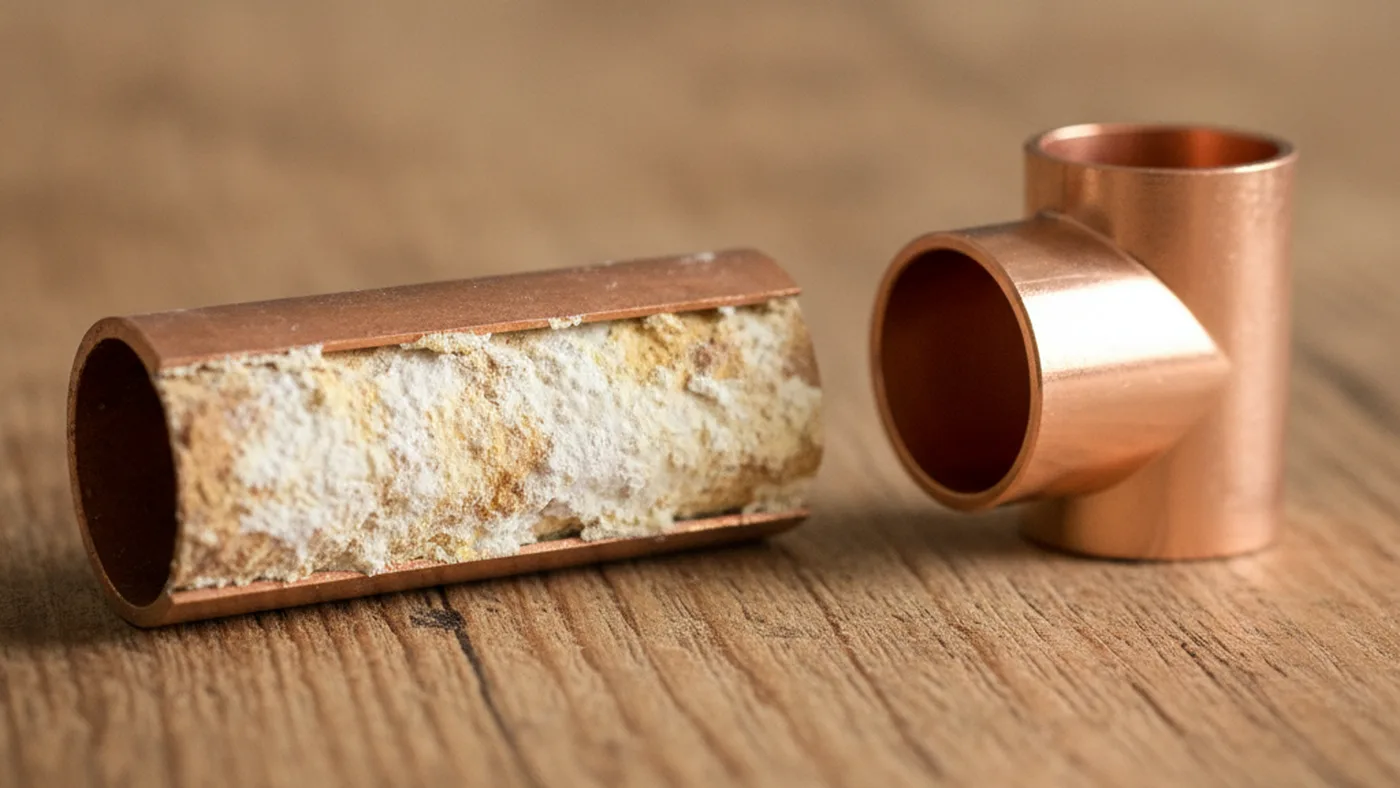
The U.S. Geological Survey explains the chemistry: "When hard water is heated, such as in a home water heater, solid deposits of calcium carbonate can form. This scale can reduce the life of equipment, raise the costs of heating the water..." Navien describes the same thing from the equipment side: mineral deposits on the heat exchanger reduce efficiency.
USGS classifies water hardness, measured as calcium carbonate, like this:
- Soft: 0 to 60 mg/L
- Moderately hard: 61 to 120 mg/L
- Hard: 121 to 180 mg/L
- Very hard: more than 180 mg/L
On soft water, the annual flush both manufacturers call for is usually enough. The further up that scale your water sits, the stronger the case for flushing more often and for treating the water, which Navien also suggests: "You can also install an anti-scale or water softener system to minimize corrosive lime and mineral buildup."
City Water, Well Water, and Where You Live
Across our service area, the answer really does change with the address.
Most homes in Wilmington and eastern New Castle County are on public water. If that is you, your water utility can tell you its hardness, and an annual flush is a sensible default.
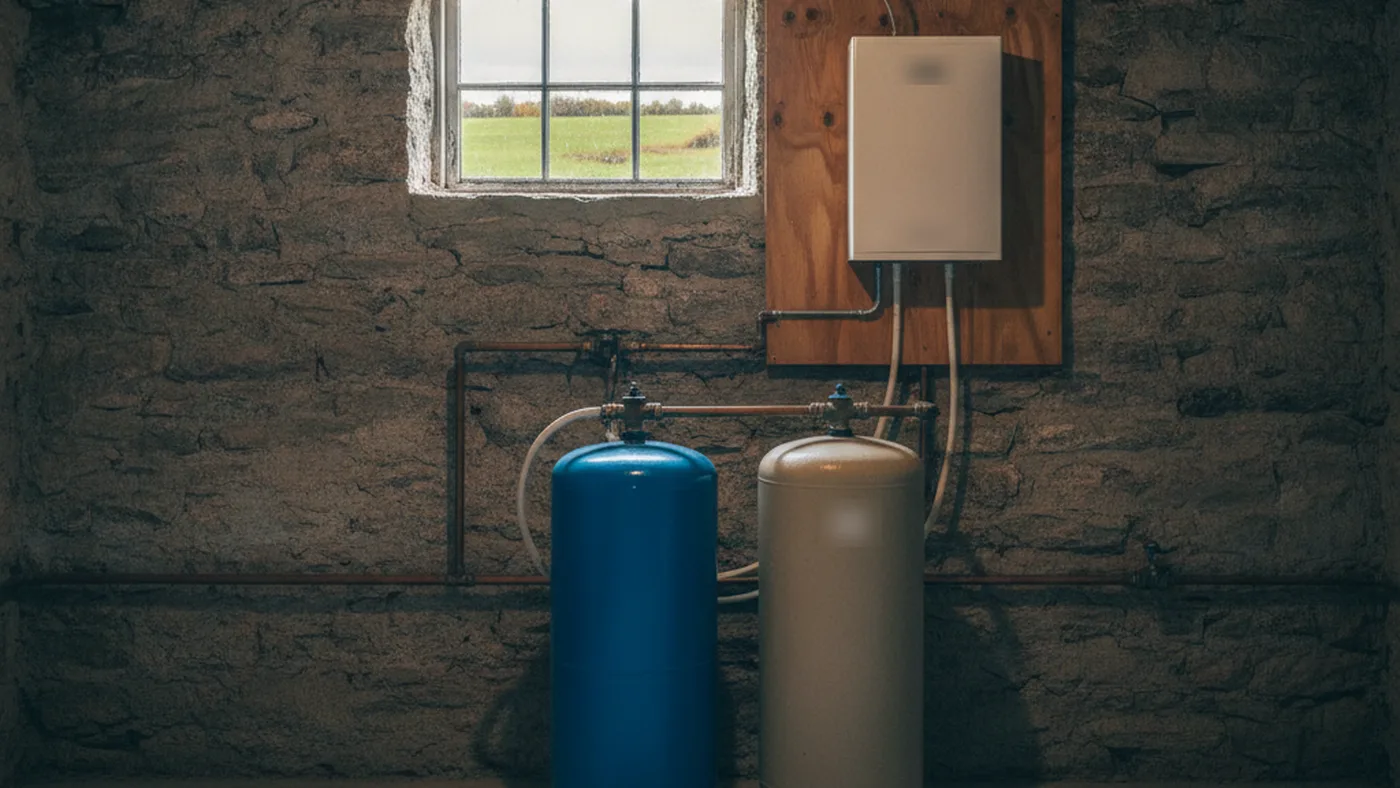
Private wells are a different story. Well water is common on western New Castle County addresses, across Chester County outside the boroughs, and on most Cecil County properties outside Elkton and North East. Well water is not all the same, and it can change over time. A hardness test, from a certified lab or a water treatment professional, is the only way to know where yours sits on the USGS scale. On untreated hard well water we generally recommend flushing a tankless unit more than once a year.
If a softener or scale-reduction system is already installed, keep it maintained. A softener that has run out of salt protects nothing.
Need water heater service in Wilmington?
Serving Wilmington with same-day availability and flat-rate pricing confirmed before work begins.
Signs Your Tankless Unit Is Overdue
Scale builds up quietly, but it does leave clues:
- It has never been flushed. If the unit is more than a year old and nobody has serviced it, it is overdue by the manufacturers' own schedule.
- Hot water temperature swings during a shower, or the water will not get as hot as it used to at the same flow.
- Error codes that clear with a reset and come back. Repeated resets hide a scale or sensor problem rather than fixing it.
- Weaker flow at hot taps than at cold ones, which can mean a clogged inlet filter.
None of these proves scale on its own, but any of them on a unit with no service history is a good reason to book a flush.
What a Proper Flush Involves
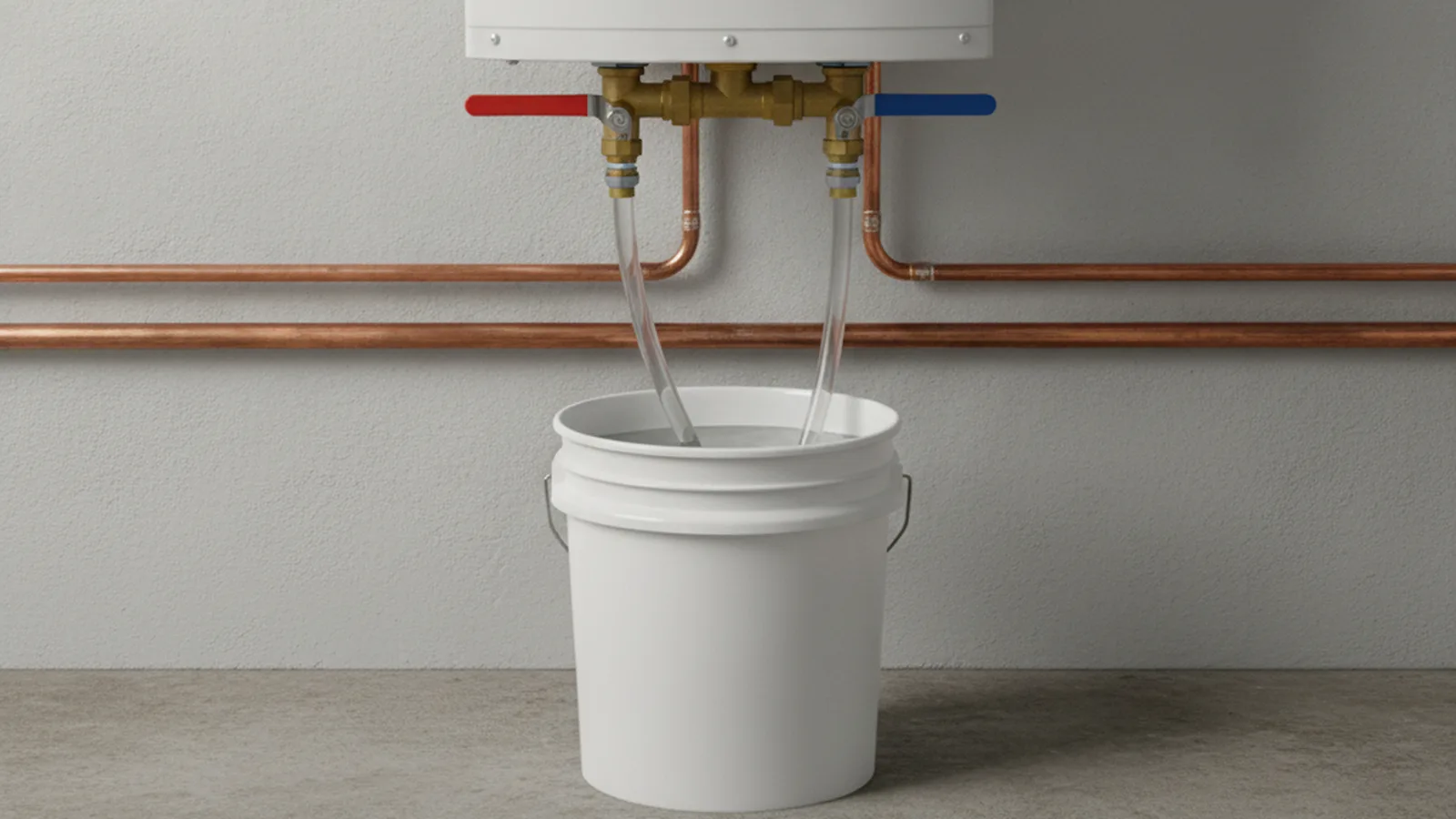
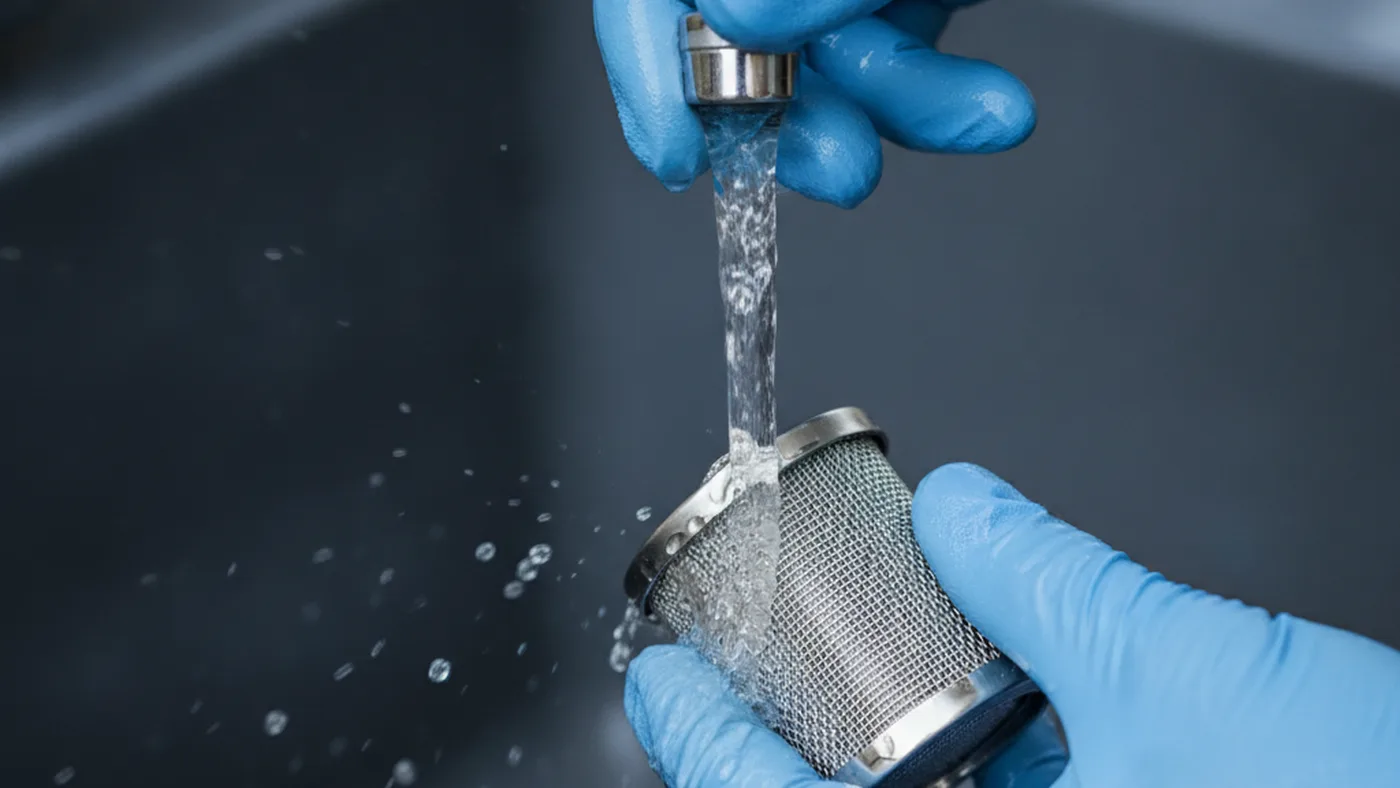
A tankless flush circulates a descaling solution through the heat exchanger and then rinses it out. Navien describes it as "using a pump to circulate a cleaning solution that removes lime and mineral deposits (scale), followed by rinsing," and includes cleaning the inlet water filter.
On a Rinnai, the procedure starts with the isolation valves: "Close (turn off) the three water valves attached to your tankless water heater." Rinnai specifies "4 gallons (15.1 liters) of undiluted white vinegar," and notes "This procedure may take up to 45 minutes."
Those valves are the key detail. A unit installed with proper service valves can be flushed in a single short visit. One installed without them usually needs plumbing work before it can be flushed at all, which is why our sediment prevention guide recommends insisting on them at installation.
A handy homeowner with the right valves and the manual can do it. Many prefer to have it done as part of annual water heater maintenance, where the venting, gas supply and condensate drain get checked at the same visit.
Book a Tankless Flush Before Winter
Water heater demand across the Mid-Atlantic peaks from October through March, which is also when incoming water is coldest and a scaled-up heat exchanger struggles most.
Water Heater Now services tankless water heaters in Wilmington and across New Castle County, Chester County and Cecil County. Call (302) 240-2818 to book a flush. We answer 24 hours a day, and if your unit is on well water we will talk through how often it really needs doing.
---
Sources, verified September 16, 2026: Rinnai, How do I flush clean my Rinnai tankless water heater?; Navien, Tankless Water Heater Maintenance Tips; U.S. Geological Survey, Hardness of Water.