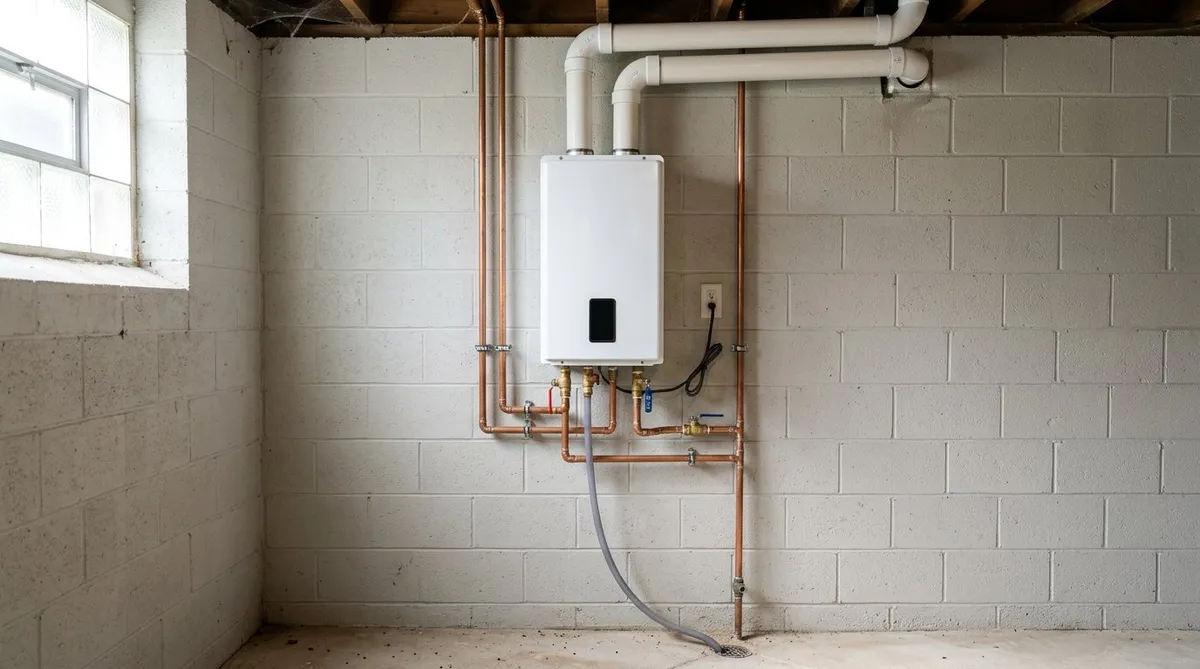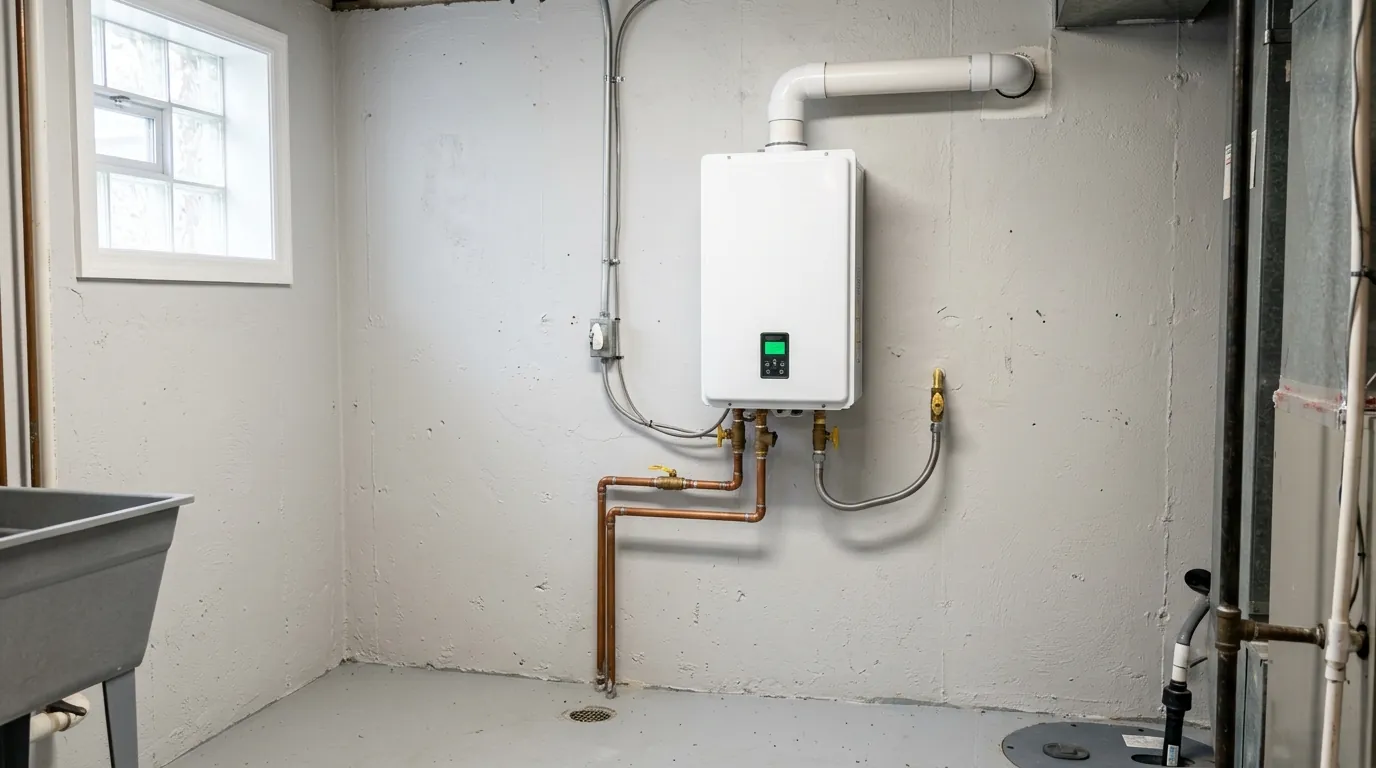

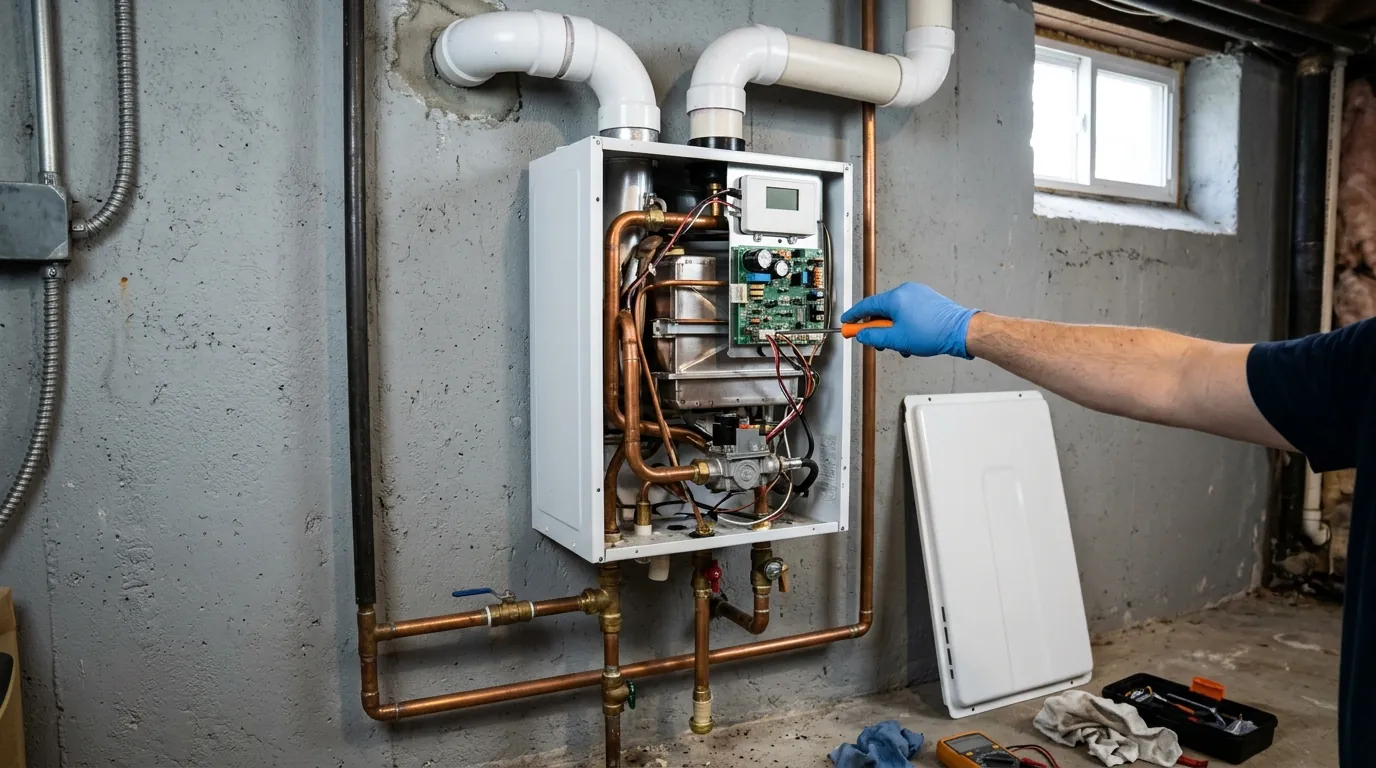
Most tankless water heater problems are worth repairing, because the parts that usually fail, such as the igniter, flame sensor, fan, flow sensor or a valve, can be replaced on their own. Replacement makes more sense when the heat exchanger is leaking or badly scaled, the unit is near the end of its 15 to 20 year life and the faults keep coming back, or the unit was never sized for your home in the first place.
Why Tankless Units Are Usually Worth Fixing
A tank water heater is mostly a steel tank. When the tank rusts through, the heater is finished, whatever else still works. A tankless unit is built differently. It is a cabinet of separate components around a heat exchanger: an igniter, a flame rod, a combustion fan, a flow sensor, a gas valve, a control board and an inlet filter. When one of those parts fails, it can be swapped without touching the rest.
Tankless units also last longer than tanks to begin with. Rheem, which makes both types, puts it this way: "Traditional tank water heaters typically last 8–12 years, while tankless water heaters can last 15–20+ years with proper care." A five-year-old tankless unit with an ignition fault is a young appliance with a small problem.
That is why our first answer on most tankless calls in Wilmington is a repair. The real question is which situation you are in.
Problems That Are Usually a Repair
These faults are common, and on a unit that is otherwise sound they are almost always worth fixing:
- Ignition and flame faults. On Rinnai units these show as codes such as 11 and 12. The cause is often a dirty or failed flame rod, a worn igniter, or a gas supply problem rather than the unit itself.
- A clogged inlet filter. Low flow and lukewarm water can come from a blocked filter screen on the cold inlet, which is a cleaning job, not a part.
- Flow sensor faults. If the unit does not fire when you open a tap, the flow sensor may not be reading the water moving through it.
- Fan and venting faults. A fan that fails or a vent blocked by a bird's nest, leaves or snow shows up as a combustion or venting code.
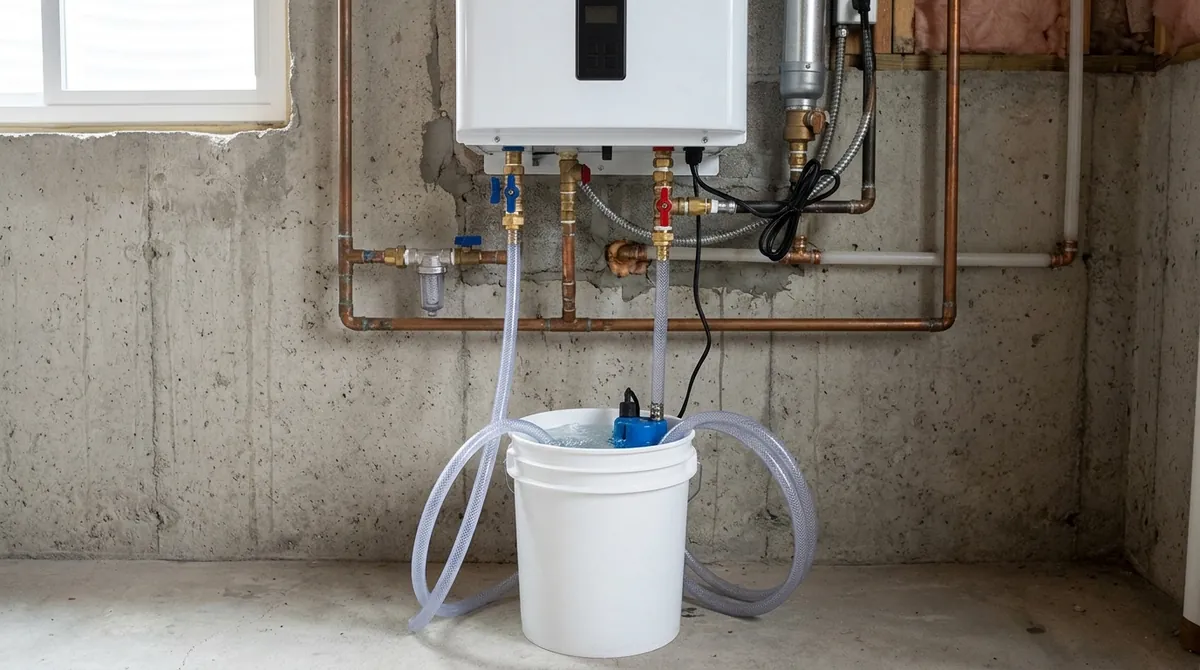
- Scale that has not yet damaged anything. A unit that has gone a few years without a descale may throw overheating codes or run cooler. A thorough descale often brings it back.
Our guide to tankless water heater error codes explains what the common codes mean and what you can safely check yourself before calling. If the water simply is not hot enough, our post on a tankless water heater not producing hot water walks through the usual causes.
When Replacement Makes More Sense
Rheem's rule for any water heater holds for tankless as well: "The right answer depends on your unit's age, the nature of the problem, and how repair costs compare with replacement costs." For a tankless unit, these are the situations where replacement usually wins:
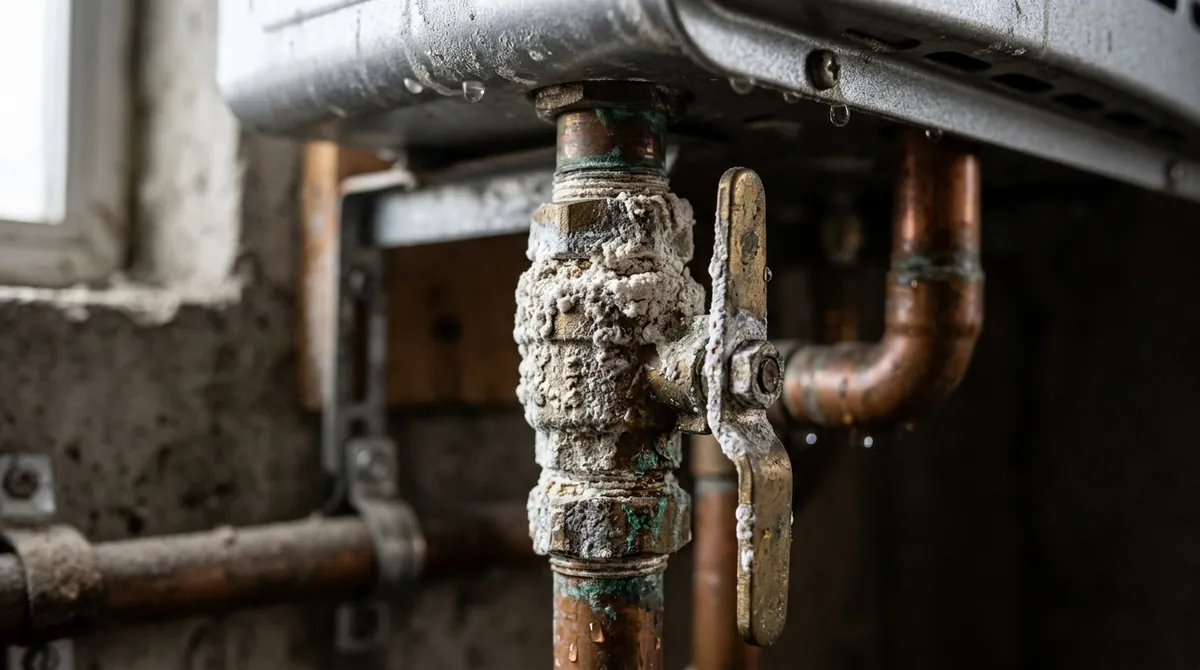
- The heat exchanger is leaking. The heat exchanger is the core of the unit and the most expensive part in it. Water dripping inside the cabinet or out of the bottom, with no loose fitting to blame, usually points there. On an older unit, a heat exchanger leak is usually the point where pricing a new heater makes sense.
- Scale has done lasting damage. Hard water is common across the Wilmington area and on private wells, and it leaves scale inside the heat exchanger. A unit that went years without descaling can have a heat exchanger so restricted, or so overheated, that a descale no longer restores it.
- The unit is old and the faults keep coming. Rheem notes that "If the repair cost is more than 50% of the price of a new unit, replacement is typically the better investment." A tankless unit in its late teens with a second or third major fault in a year is in that territory.
- Parts are no longer available. Manufacturers stop making parts for older models. If the board or heat exchanger for your model cannot be sourced, the decision is made for you.
- It was never the right size. Some homes have a unit that cannot keep up with two showers on a January morning, because it was sized for average water temperature rather than Delaware winter water. Repairing it will not change that. Our post on tankless water heater sizing explains how sizing should be done.
What Replacement Involves
Replacing a tankless unit with another tankless unit is usually simpler than the original conversion. The gas line, venting and water connections are already in place, though a new model may need a different vent size or gas capacity, which we check before giving a price.
Some owners use a failed unit as the moment to go back to a tank. That can be the right call if the household does not want the yearly upkeep, or if hot water use is modest. A standard tank is often a same-day swap, while a tankless replacement usually needs scheduling. Our published installed prices for tanks are $2,198 for a 50-gallon Bradford White electric tank and $2,498 for a 40-gallon Bradford White gas tank, with the expansion tank included and valves priced on site. A tank fitted where a tankless unit was may need its own venting and gas changes, which we price on the visit. Tankless replacements are priced in the home, because the model, venting and gas line all depend on the house. Our comparison of tankless and tank water heaters covers the trade-offs in full.
Need water heater service in Wilmington?
Serving Wilmington with same-day availability and flat-rate pricing confirmed before work begins.
Questions to Answer Before You Decide
Have these answers ready when you call. They make the repair-or-replace conversation short and clear:
- How old is the unit? The date is usually on the rating plate on the side of the cabinet.
- When was it last descaled, if ever?
- Is there any water inside the cabinet or under the unit?
- What error code is showing, and how often has it come back this year?
- Has it ever kept up with your household on a cold winter morning?
How to Keep a Repaired Unit Running
Once a tankless unit is repaired, the cheapest way to keep it out of the replacement column is regular descaling. We recommend a descale every year, and harder water can need it more often. Our post on how often to flush a tankless water heater explains the schedule for Wilmington water. Keeping the inlet filter clean and the outside vent clear of snow and leaves covers most of the rest.
Frequently Asked Questions
How long should a tankless water heater last?
Rheem puts tankless units at 15 to 20 years or more with proper care, against 8 to 12 years for a typical tank. Skipped descaling is the most common reason one falls short.
Is it worth repairing a 10-year-old tankless water heater?
Usually, yes, if the heat exchanger is sound. Ten years is mid-life for a tankless unit. A single failed part on a unit that has been descaled regularly is a normal repair.
Can a leaking tankless water heater be repaired?
It depends on where the water is coming from. A leaking fitting, valve or relief valve is a repair. A leak from the heat exchanger itself usually means replacement on an older unit.
Do you repair all tankless brands?
We repair and descale the tankless units we find in homes across Wilmington and the surrounding area. Tell us the brand and model when you call, and we will confirm.
Do you serve outside Wilmington?
Yes. We cover New Castle County, Chester County, PA and Cecil County, MD.
Get a Straight Answer on Your Tankless Unit
If your tankless water heater is showing a code, running cold or dripping, call Water Heater Now at (302) 240-2818. We answer 24/7, offer same-day appointments, test the unit before we name a part, and tell you plainly whether a repair or a replacement is the better money. You approve a flat price before any work starts. See our tankless water heater service for installation, repair and descaling, or our water heater repair service for gas and electric tanks.
---
Source, verified November 11, 2026: Rheem Manufacturing Company, Water Heater Lifespan: When to Repair vs. Replace. Installed tank prices are Water Heater Now's published flat rate as of November 2026.