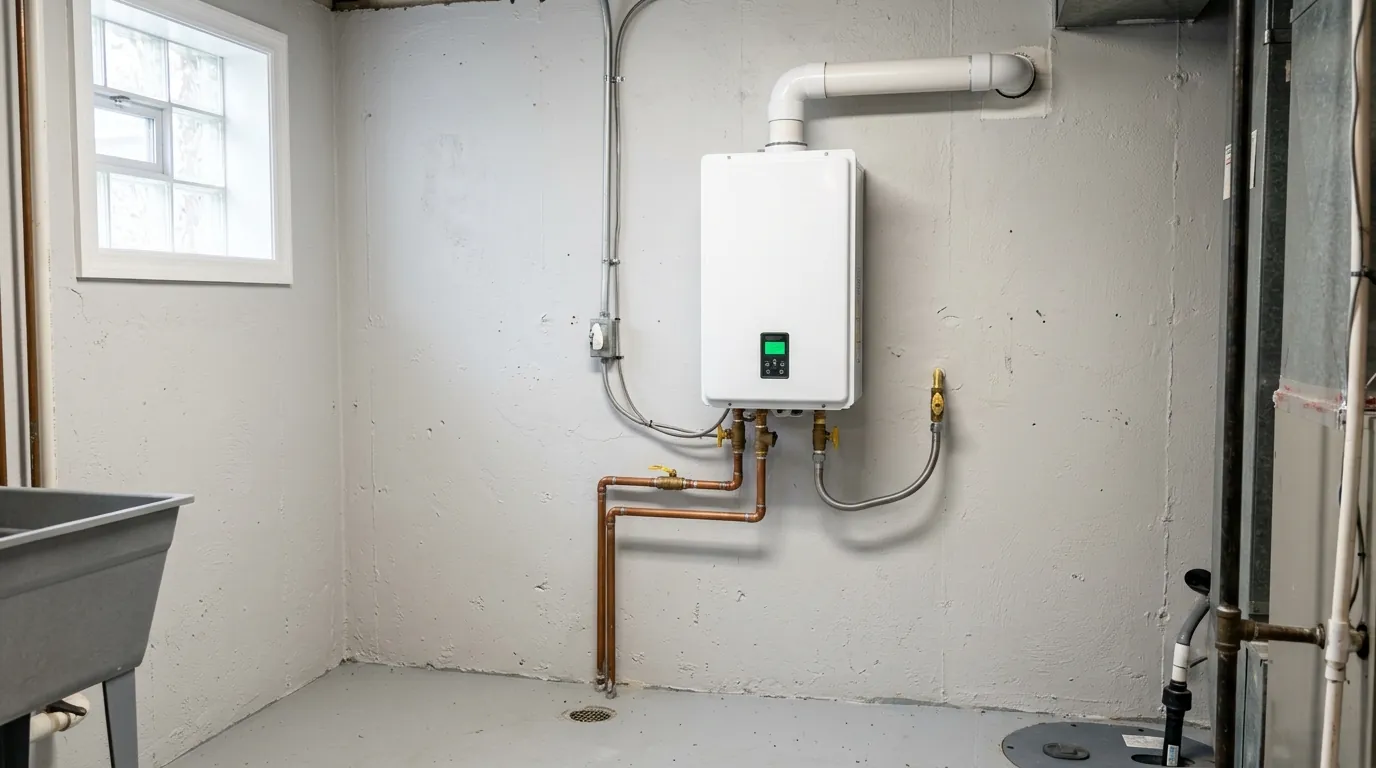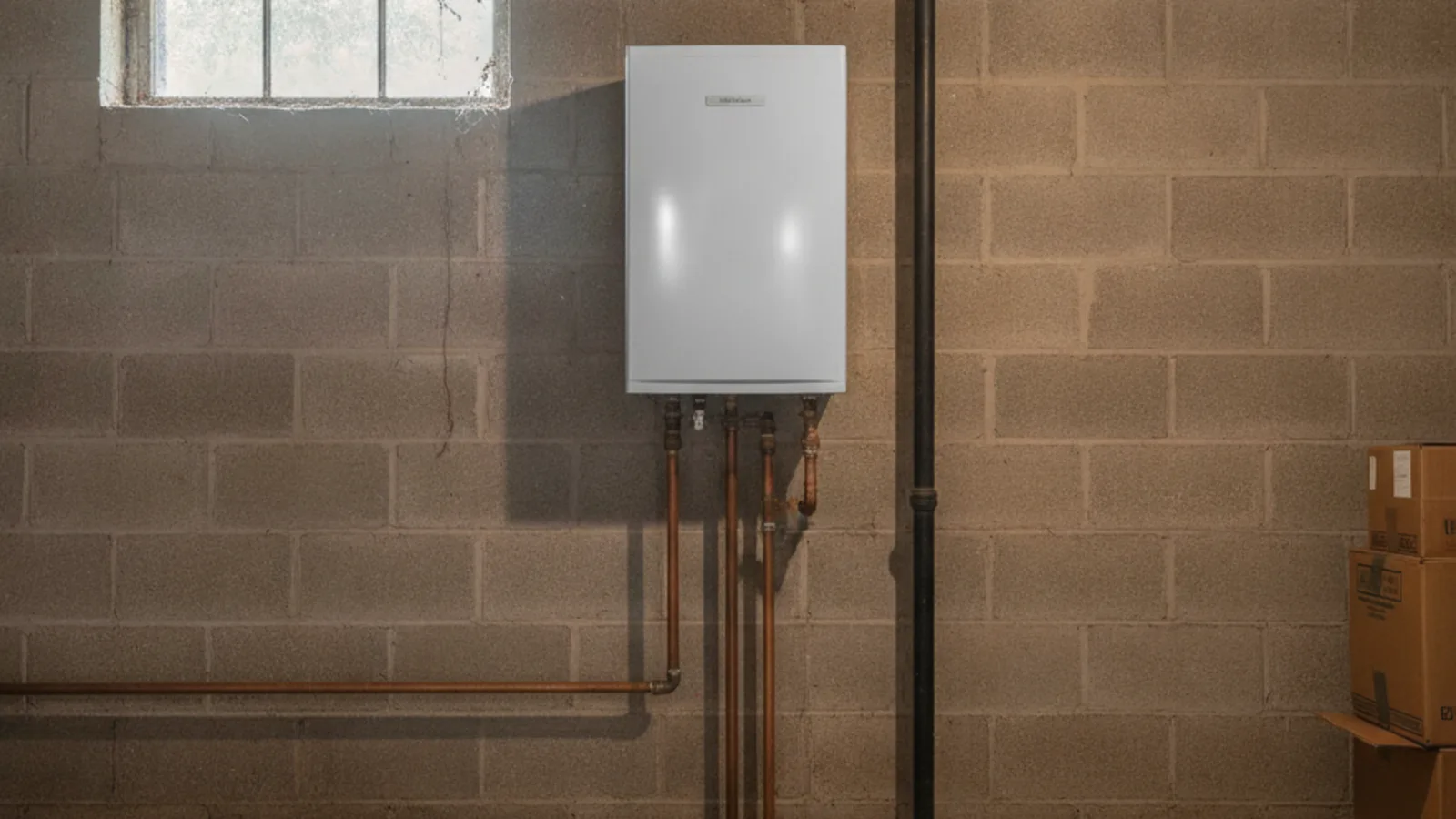

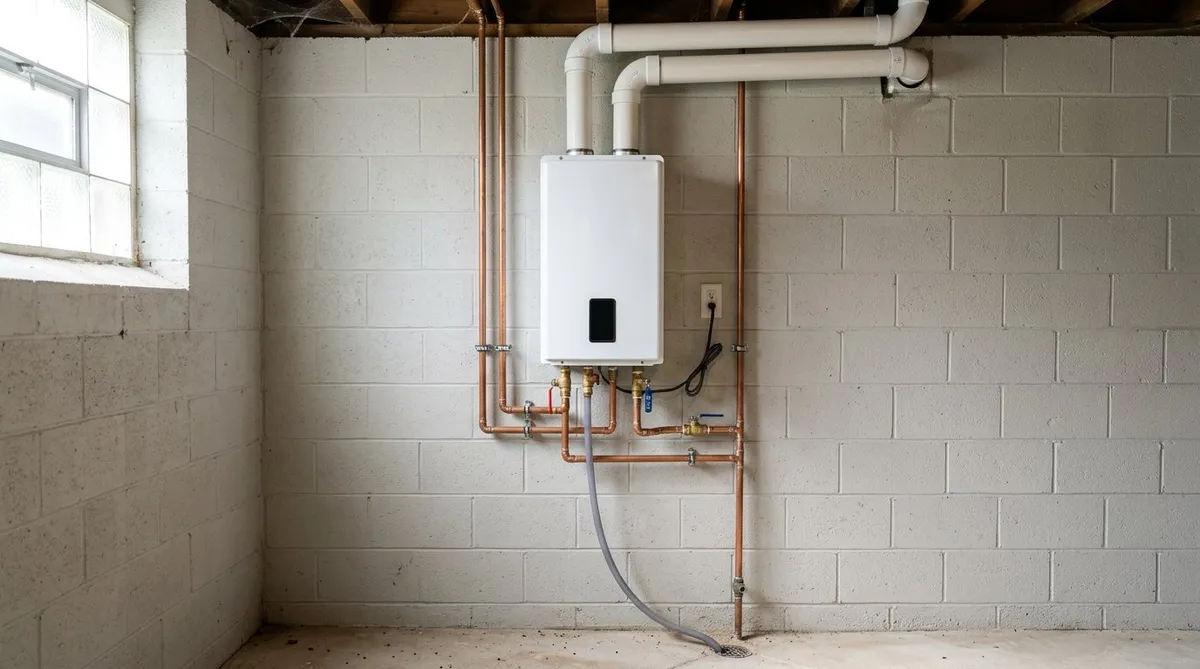
A tankless water heater is sized by two numbers: the gallons per minute of hot water your home uses at its busiest moment, and the temperature rise, which is how many degrees the unit has to lift the incoming water to reach about 120°F. In Delaware the right size is the one that still covers your busiest morning in January, when the water coming into the house is at its coldest.
Tankless Sizing Starts With Flow, Not Gallons
A tank water heater is sized by how much hot water it stores, usually 40 or 50 gallons in a Wilmington home. A tankless unit stores nothing. It heats water as it passes through, so the question is not "how many gallons" but "how many gallons per minute, and how much hotter."
Every tankless unit has a chart from the manufacturer showing how many gallons per minute (gpm) it can deliver at each temperature rise. The bigger the rise, the lower the flow. The same unit that runs two showers comfortably in September can only keep up with one and a bit in February, because it has to lift colder water further.
The U.S. Department of Energy's Building America Solution Center puts it simply: "Sizing is based on the practical maximum flow rate needed at any one time." So sizing comes down to three steps: find your peak flow, find your winter temperature rise, then pick a unit whose chart covers both.
Step 1: Count the Taps That Run at the Same Time
Peak flow is not every fixture in the house added together. It is the hot water that realistically runs at once on your busiest day. For most homes that is a weekday morning or the hour after dinner.
Walk through it honestly:
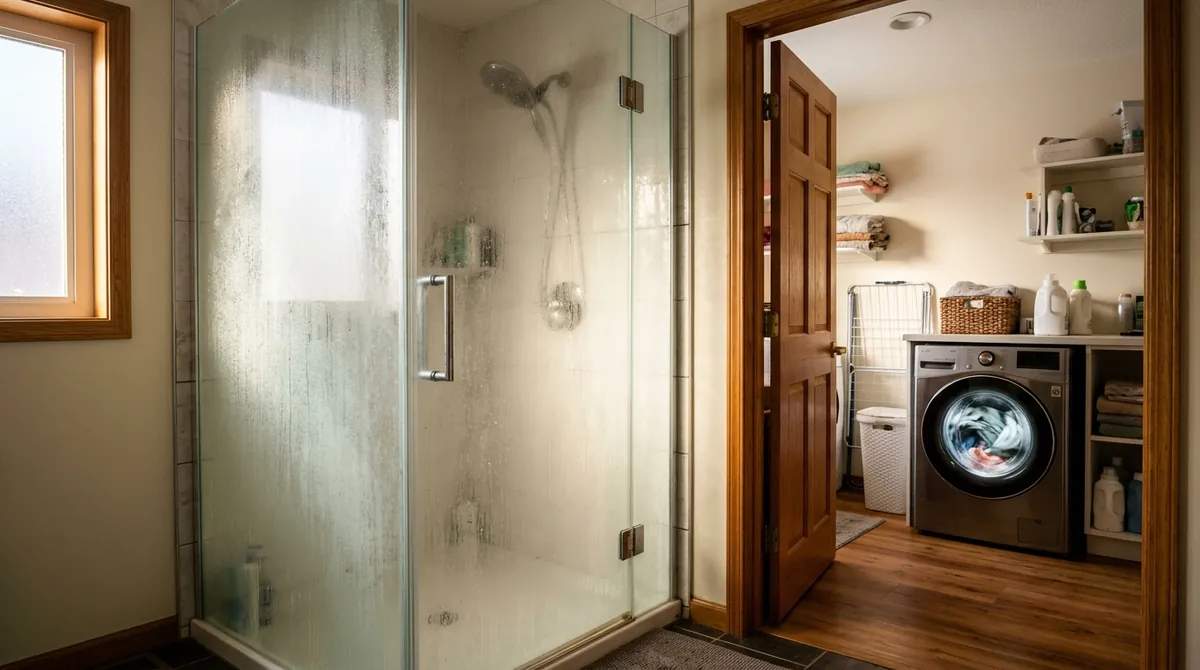
- Showers. Count the showers that run at the same time, not the number of bathrooms. A family that staggers showers needs far less than one where two run back to back at 7am.
- Kitchen and laundry. A dishwasher or a warm wash cycle running while someone showers adds to the peak.
- Bathtubs. A tub fills fast and draws a lot of hot water at once. A large soaking tub can decide the size on its own.
- Sinks. Bathroom sinks draw little and rarely change the answer.
The Building America example home lands on a practical peak of 4.5 gpm with one shower running alongside other household uses. It also notes that a shower rated at 2 gpm only draws about 1.5 gpm of hot water, because it is mixed with cold to reach a comfortable temperature. That is why we ask how your household actually uses water, not just how many bathrooms you have.
Step 2: Winter Water Sets the Temperature Rise
Temperature rise is the difference between the water coming into your home and the temperature you want out of the tap. The Building America guide uses 120°F as the target, noting that "typical hot water supply temperatures are near 120°F."
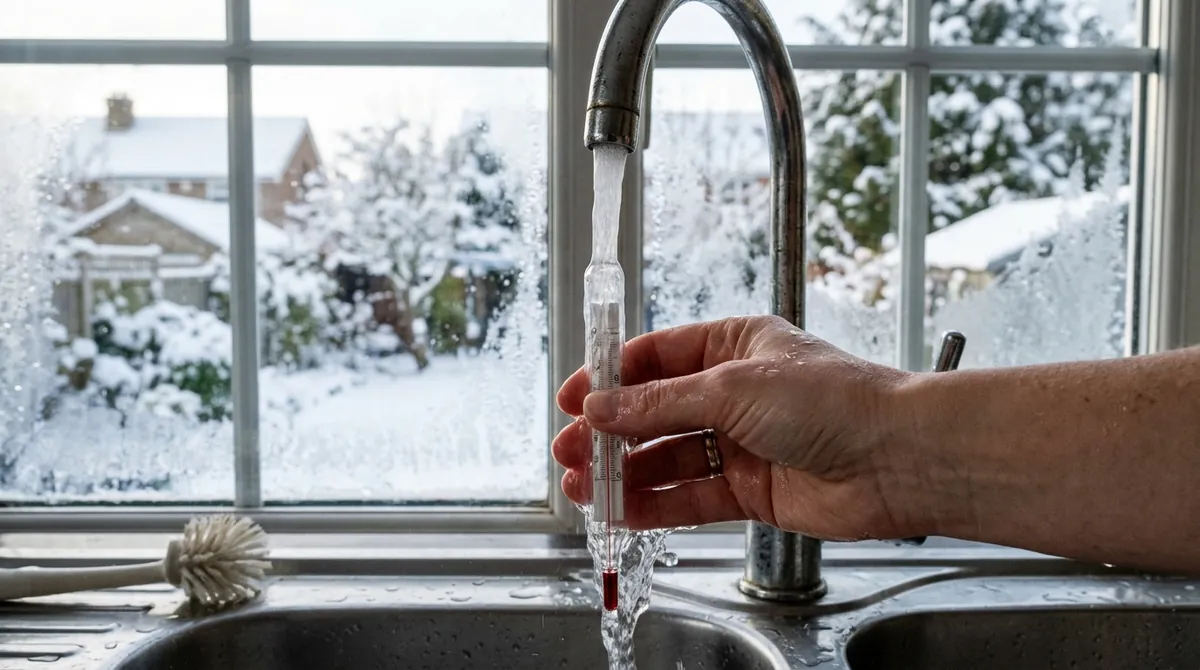
The incoming side changes with the seasons. The guide's own example uses Seattle, where ground water averages about 52°F, giving a 68°F rise. In Delaware, the water in your pipes in late January is noticeably colder than in September, so the rise is bigger in winter. To illustrate the math: if your water came in at 50°F, a 120°F target would need a 70°F rise.
This is the single most common sizing mistake we see on tankless units in New Castle County. A unit picked for an average day does fine for most of the year, then the first cold snap arrives and the shower turns lukewarm whenever the dishwasher kicks on. Nothing is broken. It was sized for the wrong month. We cover that local problem in more detail in our tankless vs tank comparison for Delaware homes.
Step 3: Match the Unit to Both Numbers
With a peak flow and a winter rise in hand, the right unit is one whose manufacturer chart shows it can deliver that flow at that rise. Using the Building America example, a home with a 4.5 gpm peak and a 68°F rise needs a unit rated for at least 4.5 gpm at 68°F.
In practice, homes in our area tend to fall into three rough groups:
| Household | Typical peak use | What it usually points to |
|---|---|---|
| One or two people, one bathroom | One shower plus a sink | A smaller gas unit, or electric in the right home |
| Family, two bathrooms | Two showers, or one shower plus laundry or dishwasher | A whole-house gas unit sized for winter flow |
| Larger home, three or more bathrooms or a big tub | Several showers or a tub filling at once | A large gas unit, or two units linked together |
These groups are a starting point, not a quote. The final size comes from your peak flow, your winter rise and the specific model's chart.
Gas or Electric Tankless: Why the Fuel Changes the Size
Fuel makes a big difference to how much hot water a tankless unit can produce. The Building America guide notes that electric tankless units "provide less hot water flow than gas-fired units."
In a Delaware winter that gap matters. A gas unit can usually handle a whole house. An electric tankless unit large enough to do the same needs a very large electrical supply, which many older Wilmington homes do not have. Electric tankless tends to suit smaller households or a single point of use.
Gas units bring their own requirements, covered in the next section. If your home has no gas service, a high-capacity electric tank or a heat pump water heater may be the better fit, and we will tell you so.
What Else Has to Fit Besides the Unit
A correctly sized gas tankless unit burns far more gas at once than the tank it replaces. The Building America guide tells installers to "confirm that the home has sufficient gas supply to allow the installation of the selected tankless water heater without impacting other gas appliances." In practice that means checking three things before quoting:
- Gas line and meter. The line that fed a 40-gallon tank is often too small for a whole-house tankless unit, especially on long runs in city rowhomes. Upsizing the line is sometimes part of the job.
- Venting. Tankless units need their own vent, usually PVC or stainless steel. They cannot share an old masonry chimney the way many atmospheric tanks do.
- Condensate. High-efficiency condensing units produce acidic water that needs a drain path.
A bigger unit can mean a bigger gas line and vent, which is why sizing and the site check happen together. Our guide to a tank to tankless conversion walks through each part of the install.
Need water heater service in Wilmington?
Serving Wilmington with same-day availability and flat-rate pricing confirmed before work begins.
Oversizing Is Not a Safe Bet Either
It is tempting to buy the biggest unit available and stop worrying. That usually costs more without helping. A larger unit needs more gas, possibly a larger line and meter, and it costs more up front. If your real peak is one shower and a dishwasher, the extra capacity sits unused all year.
The goal is a unit that covers your real winter peak with a little margin, not one sized for a hotel.
When a Tank Still Makes More Sense
Tankless is not the right answer for every home. A standard tank is often the better buy when:
- The household rarely runs out of hot water with the current tank.
- The gas line, meter or venting would need major work for a tankless unit.
- The home is on hard water and nobody wants yearly descaling. Tankless units need it, and skipping it shortens their life. Our post on how often to flush a tankless water heater covers why.
- Budget matters more than endless hot water. Our gas and electric tanks are published at flat installed prices, while tankless is priced in-home after we see the setup.
If you are unsure what size tank you would need instead, our water heater sizing guide covers tanks.
Questions to Answer Before You Call
You will get a faster, more accurate answer if you know:
- How many showers run at the same time on your busiest morning
- Whether you have a large soaking tub
- Whether the home has natural gas, propane or electric only
- Where the current water heater sits and how far it is from an outside wall
- Whether you are on city water or a well
Frequently Asked Questions
Can I size a tankless water heater by the number of bathrooms?
Only roughly. Bathrooms tell you what could run, not what does. Two bathrooms where showers never overlap need much less than two bathrooms used at the same time every morning.
Why does my tankless unit run lukewarm only in winter?
The incoming water is colder, so the unit has to lift it further. If it was sized for average conditions, it cannot hold the same flow in January. A unit sized for winter does not have this problem.
Will a bigger tankless unit fix low water pressure?
No. A tankless unit heats the water that comes in. It does not add pressure. Low pressure has a different cause and needs a different fix.
Do you size tankless units for homes on well water?
Yes. Well water is often harder, which affects maintenance more than size. We plan for yearly descaling and fit service valves so it is simple.
Get Your Tankless Unit Sized for Your Home
The right tankless size depends on how your household uses hot water and how cold your water gets in January, and both are easiest to judge in the home. Call Water Heater Now at (302) 240-2818. We check your gas supply, venting and peak use, then give you a flat price before any work starts. See our tankless water heater installation service for what is included.
---
Source, verified November 4, 2026: U.S. Department of Energy Building America Solution Center (Pacific Northwest National Laboratory), Gas-Fired Tankless Water Heaters.