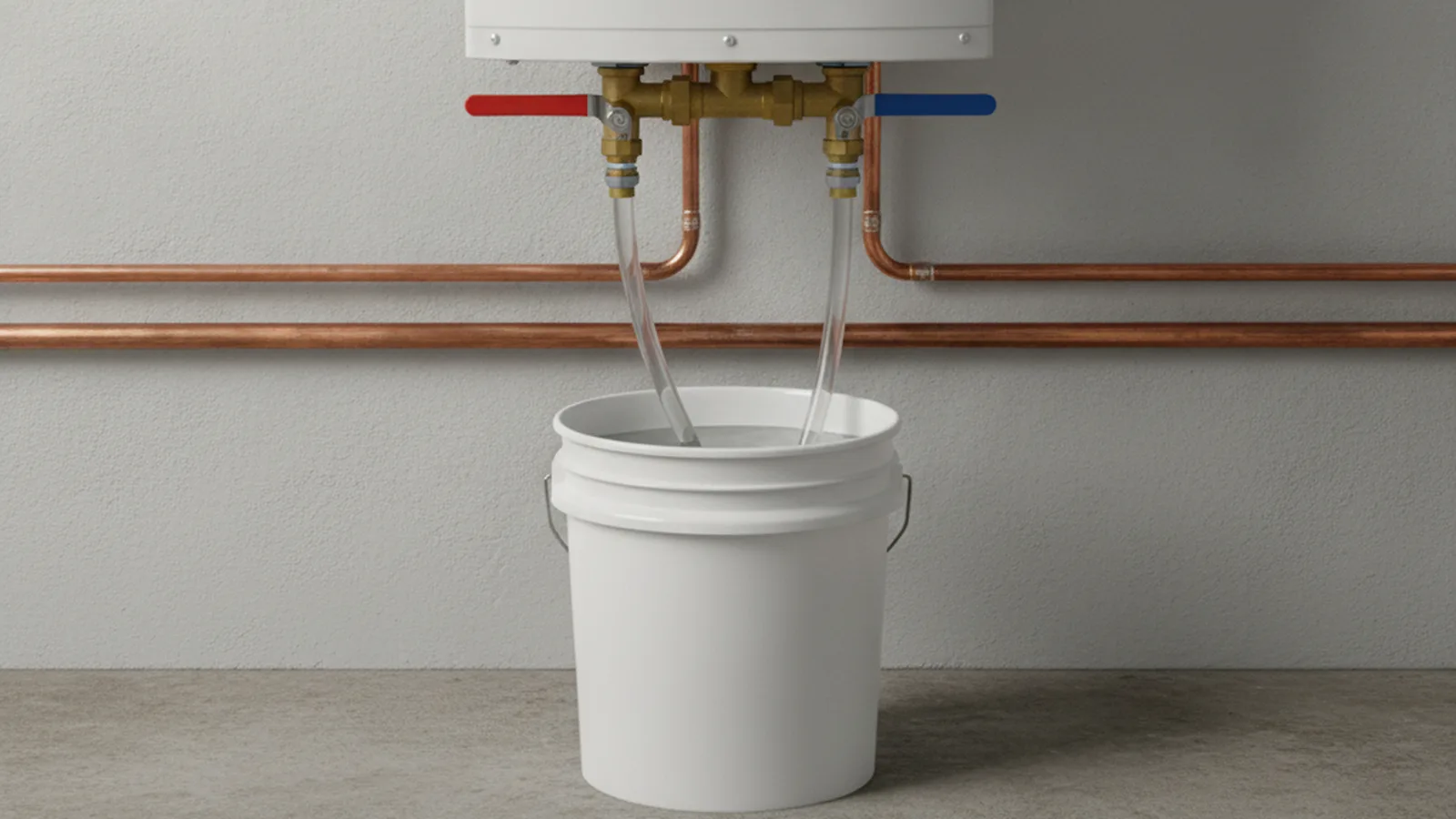

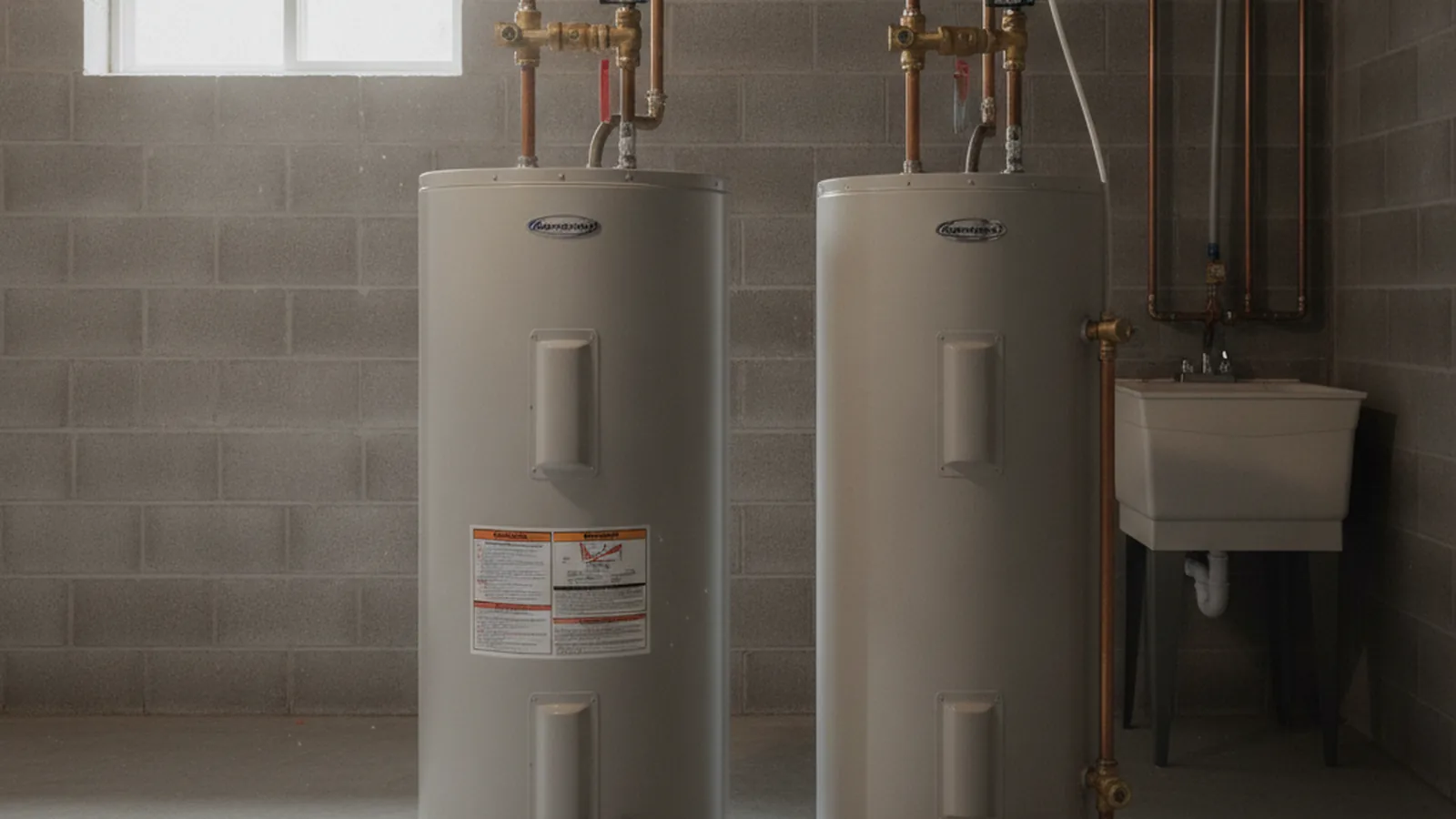
The number people ask about is gallons. The number that actually predicts whether you run out of hot water is the first-hour rating, and the two are not interchangeable.
A 50-gallon tank does not deliver 50 gallons of hot water. It delivers what it holds, blended with incoming cold as it drains, plus whatever it can reheat during that hour. That combined figure is the first-hour rating, and it is printed on the yellow EnergyGuide label on every new unit.
Size From the Peak Hour, Not the Day
Daily hot water use is not the constraint. The constraint is the busiest hour, which in most households is a weekday morning.
Work out roughly what runs in that hour:
- Shower: about 10 to 20 gallons each
- Bath: about 20 gallons
- Dishwasher: roughly 6 gallons per cycle
- Clothes washer: roughly 7 to 25 gallons depending on the machine and setting
- Hand washing and shaving: a few gallons
Two back-to-back showers, a dishwasher running and someone at the kitchen sink is a realistic Delaware morning and adds up faster than people expect. Match the first-hour rating to that total, with a little margin.
Why Bigger Is Not Automatically Better
An oversized tank keeps a larger volume of water hot around the clock whether or not anyone uses it. Those standby losses show up on every bill for the life of the unit, which is a decade or more.
An oversized tank also costs more to buy, takes up more space in a basement or utility closet, and in an older home may not fit the existing alcove, venting or connections without additional work.
There is a real cost to undersizing too, and it is more obvious: the last person to shower gets cold water. The point is that the answer is a fit rather than a maximum.
Gas and Electric Recover Differently
This matters more than the gallon figure for many households.
A gas heater reheats considerably faster than a comparable electric one. That means a 40-gallon gas unit can outperform a 40-gallon electric unit during sustained demand, because it replaces what is drawn faster.
The practical consequence: switching from gas to electric at the same tank size frequently produces complaints about running out of hot water, even though nothing else changed. If you are changing fuel type, size on first-hour rating rather than matching the old tank's capacity.
Our post on an electric water heater not heating covers how electric units fail differently, which is a related consequence of the same design.
Need water heater service in Wilmington?
Serving Wilmington with same-day availability and flat-rate pricing confirmed before work begins.
Where Tankless Changes the Question
Tankless units are not sized by capacity at all. They are sized by flow rate, in gallons per minute, and by temperature rise, which is the difference between the incoming groundwater temperature and the temperature you want.
That second factor is why tankless sizing is climate-dependent. Delaware groundwater is cold enough in winter that a unit sized for mild conditions will struggle in January, producing the familiar complaint of good performance in summer and disappointing performance in the cold months.
Our post on tankless versus tank water heaters in Delaware covers the wider comparison, and tankless installation sizing should always be done against winter conditions rather than an annual average.
Things That Change the Answer
- A household that is growing. Sizing for today when a teenager is two years away is a false economy.
- A large soaking tub, which can exceed a small tank in a single fill.
- A recirculation line, which improves wait times and adds standby loss.
- Well water with heavy mineral content, common in parts of the region, which reduces effective capacity over time as sediment accumulates. Our post on preventing sediment buildup covers that.
- Low incoming pressure or undersized supply lines, which limit what any heater can deliver.
The Short Version
Most homes with one bathroom manage on a smaller tank. Two bathrooms and a family of four is usually where the standard sizes sit. Three or more bathrooms, or simultaneous use, is where either a larger first-hour rating or a tankless unit starts to make sense.
Those are starting points, not answers. The actual answer comes from your morning routine.
Talk to a Licensed Plumber
Water Heater Now handles water heater installation across Wilmington, New Castle County and the surrounding area. Call (302) 240-2818 or use the contact page and we will size it against how your household actually uses hot water.