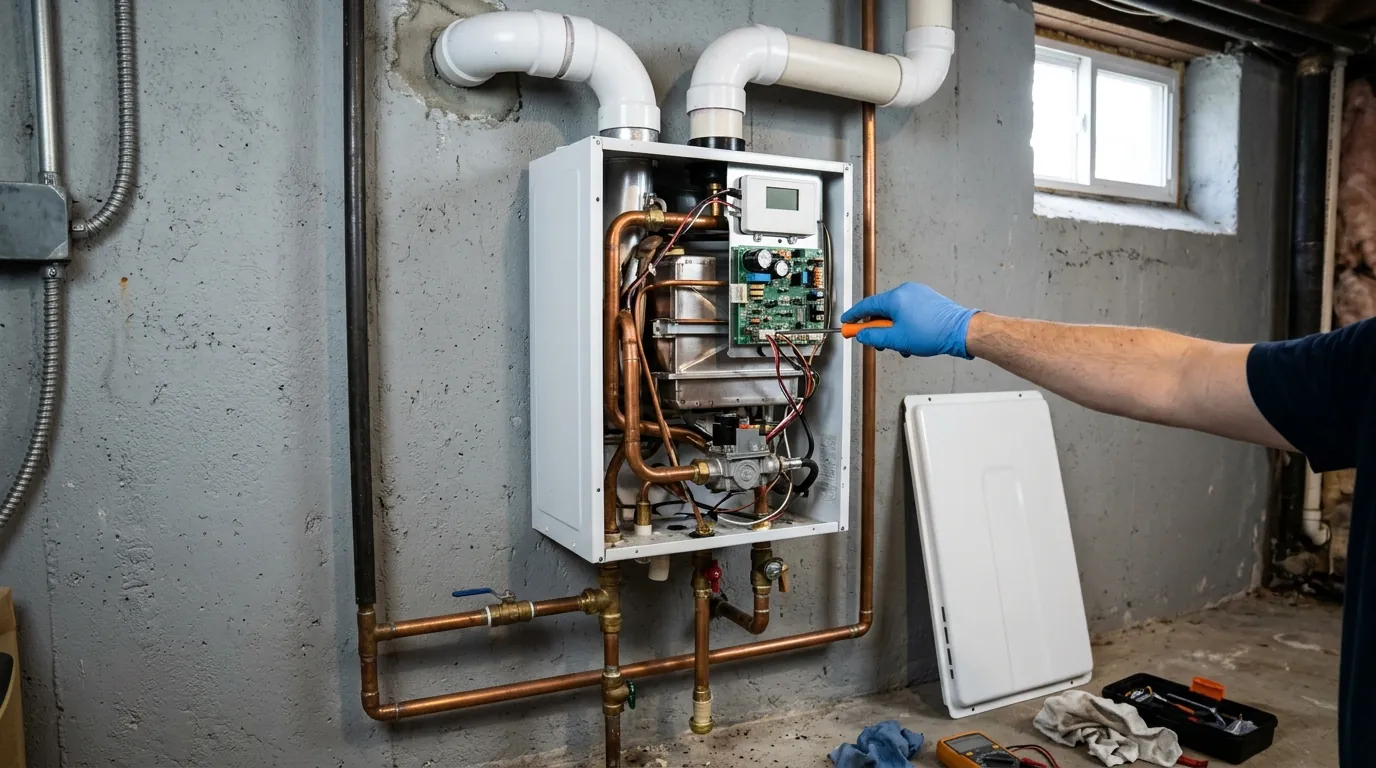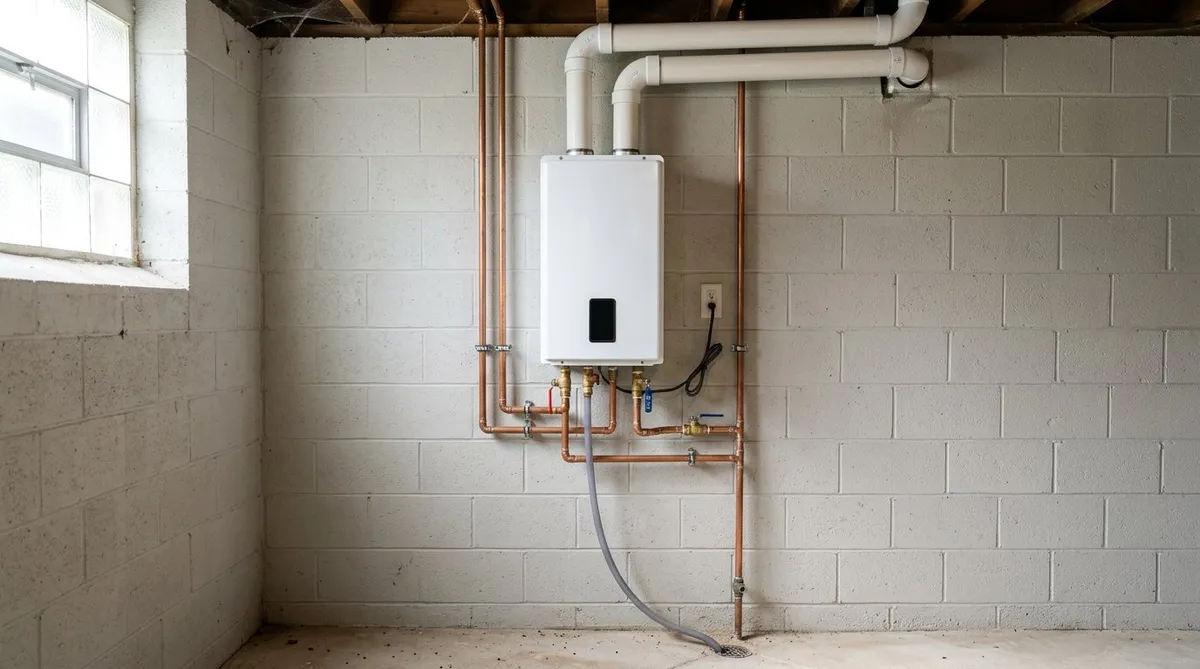

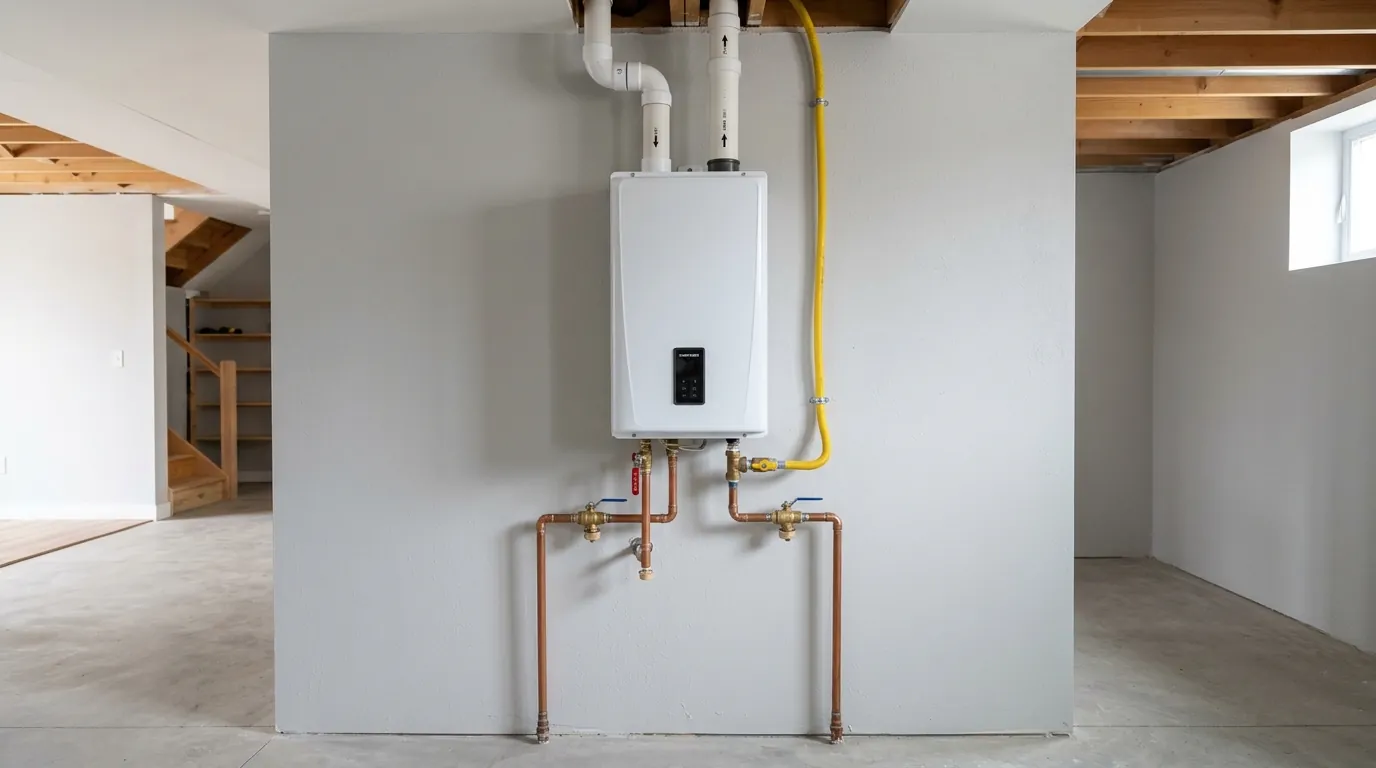
For most Delaware homes that have natural gas or propane and two or more bathrooms, a gas tankless water heater is the better fit, because it delivers more hot water at once in winter. Electric tankless suits smaller homes, single bathrooms and houses with no gas supply, as long as the home's electrical service can carry the load.
The Question Most People Are Really Asking
When homeowners ask us "gas or electric tankless?", the real question is usually "which one will keep up with my house in January, and what will it take to install?" Both types heat water only when a tap is open, both save the floor space of a tank and both last longer than a tank. Where they differ is how much hot water they can make at once and what your home needs to support them.
If you are still deciding between tankless and a tank at all, start with our tankless vs tank water heater guide. This post assumes you have already decided on tankless.
Gas Tankless: More Hot Water, More Installation Work
A gas tankless unit uses a powerful burner that fires the moment hot water starts to flow. The Pacific Northwest National Laboratory's Building America guide puts it in numbers: residential tank burners are often 30,000 to 50,000 Btu/h, while tankless units typically have burner capacities of 120,000 to 200,000 Btu/h. That much heat is why a gas unit can run two showers and a kitchen tap at once in winter.
It is also why gas tankless needs more from the house:
- A gas line sized for it. The existing line to a tank heater is often too small for a burner that size, so part of the line may need upsizing back toward the meter. Our tank to tankless conversion guide walks through that step.
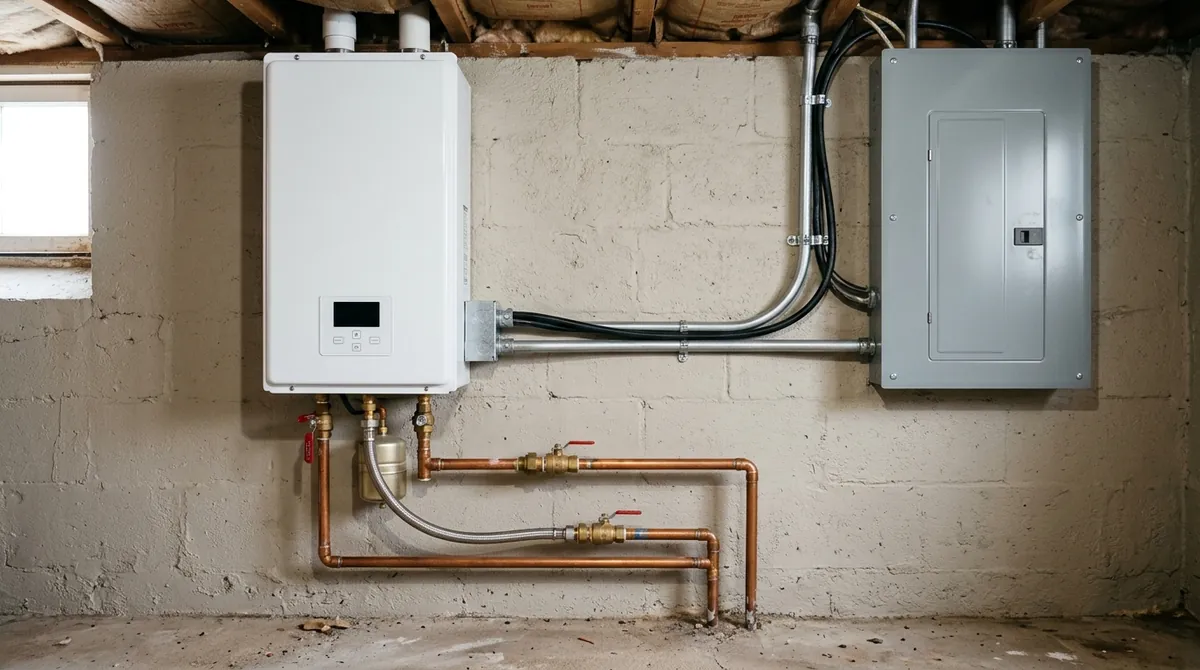
- Its own vent. A tankless unit cannot share an old chimney the way many tank heaters do. Non-condensing units need a stainless steel vent. Condensing units, which pull more heat out of the exhaust, run cooler and can usually vent through PVC, often straight out the side of the house.
- A condensate drain for condensing models, because the exhaust produces acidic water that has to go to a drain.
- A power outlet. Gas tankless units still need electricity for their controls and fan.
On efficiency, the same guide gives gas tankless units an energy factor of 0.82 to 0.94, depending on whether the unit is standard or condensing, against 0.57 to 0.70 for gas tank heaters.
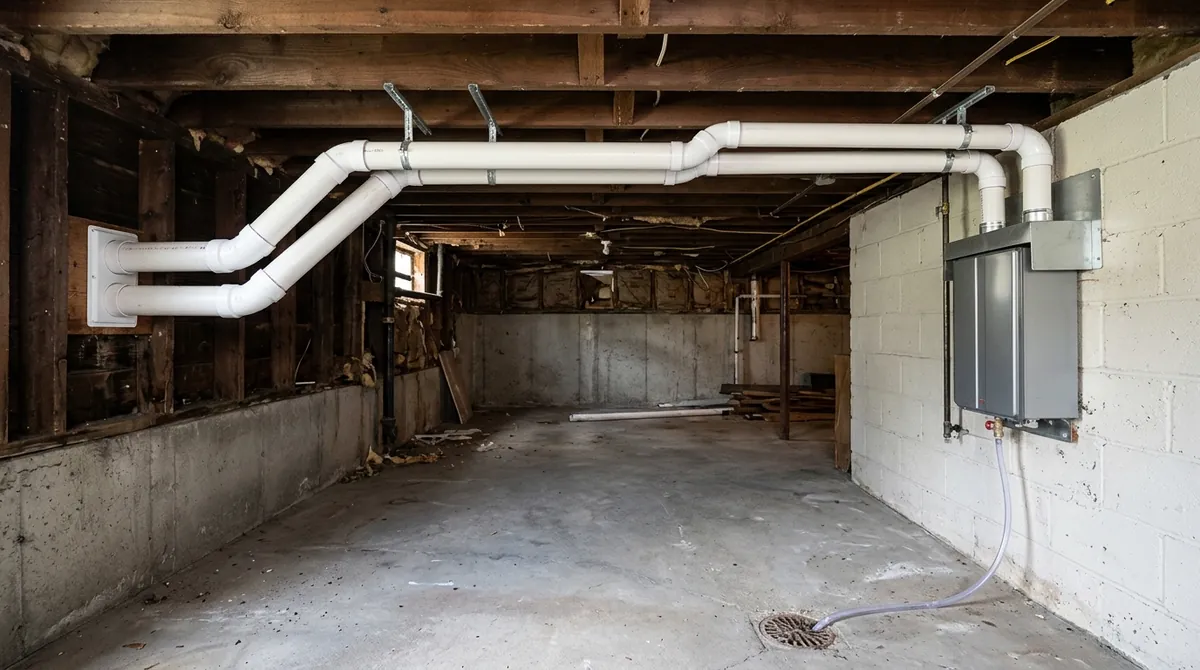
Electric Tankless: Simpler to Fit, Limited by Your Electrical Service
An electric tankless unit heats water with elements instead of a burner. It needs no gas line, no vent and no condensate drain, which makes it simpler and smaller to install. The PNNL guide confirms that electric tankless water heaters require no venting.
The limit is electricity. To heat water as fast as it flows, an electric tankless unit draws a very large amount of power while a tap is open. In practice that means:
- Heavy dedicated circuits. Whole-house electric tankless units usually need several large breakers and heavy wiring of their own.
- Room in the panel and enough service. Many older Wilmington homes have electrical service that cannot carry a whole-house electric tankless unit on top of everything else without an upgrade. We check this before quoting, and some homes need an electrician first.
- Less hot water at once in winter. For the same house, an electric unit generally delivers less flow than a gas one when the incoming water is cold. Our guide on what size tankless water heater you need explains how winter water changes the numbers.
The PNNL guide also notes that because they heat on demand, electric tankless units can create high peak loads for electric utilities, and where power costs more at peak times they can be expensive to run.
Hot Water in a Delaware Winter
This is where the choice is usually made. A tankless unit's output depends on how much it has to raise the water temperature. Water coming into Delaware homes is much colder in January than in August, so every tankless unit delivers less hot water in winter than its summer rating suggests.
A gas unit has more heat to spare, so it handles a cold morning with two showers running better. An electric unit sized for the same house may manage one shower comfortably and struggle with two. For a one-bathroom home, a condo or a single point of use such as a far-off bathroom, that may be fine. For a family home with two or three bathrooms, gas is usually the safer choice.
Running Costs
Which one is cheaper to run depends on your local gas and electric rates, how much hot water you use and whether the gas unit is condensing. Both types avoid the cost of keeping a full tank hot all day. The PNNL guide says tankless water heaters can cut energy costs by 5% to 40% compared with a tank heater using the same fuel.
The bigger cost difference is usually at installation. Electric tankless is cheaper to fit where the electrical service already has the capacity. Gas tankless costs more to fit where the gas line needs upsizing and a new vent is required. Where an electric install needs a service upgrade, that changes the picture. Tankless prices depend on the home, so we price tankless installs in person rather than over the phone.
Need water heater service in Wilmington?
Serving Wilmington with same-day availability and flat-rate pricing confirmed before work begins.
Lifespan and Upkeep
Both types outlast a tank. The PNNL guide says tankless water heaters are generally considered to last up to 20 years, against 10 to 15 years for tank-type heaters.
Both need regular descaling, which matters a lot on the hard water common across Chester County, PA and Cecil County, MD wells. Gas units also need their burner, vent and condensate drain checked. Electric units have fewer parts to service, but their elements still scale up on hard water. Our guide on how often to flush a tankless water heater covers the schedule.
Which One Fits Your Home
| Your home | Usually the better fit |
|---|---|
| Natural gas or propane, two or more bathrooms | Gas tankless |
| Family home where showers overlap in the morning | Gas tankless |
| No gas service, one bathroom or a small home | Electric tankless |
| A single far-off bathroom or a point-of-use need | Electric tankless |
| Older home with limited electrical service and gas available | Gas tankless |
| No gas, and the electrical service cannot be upgraded | Stay with a tank, or consider a heat pump water heater |
If neither tankless option fits, a tank can still be the right answer. Our guide to heat pump water heaters in Delaware covers an efficient electric option that keeps a tank.
Frequently Asked Questions
Is gas or electric tankless more efficient?
Electric units turn almost all their energy into heat at the unit, while gas units lose some up the vent. But efficiency at the unit is only part of it: running cost depends on your gas and electric rates, and gas units deliver more hot water in winter. For most Delaware homes with gas, gas tankless is the more practical choice.
Can I switch from a gas tank to an electric tankless unit?
Yes, if your electrical service can carry the load. Many homes need panel work or a service upgrade first, so we check the panel before recommending it.
Do I need a new vent for a gas tankless water heater?
Usually yes. A tankless unit cannot share an old chimney flue with a furnace the way many tank heaters do. Condensing units can usually vent through PVC out a side wall.
Will a tankless water heater work during a power outage?
Electric units will not. Most gas units will not either, because their controls and fan need power.
Get a Tankless Recommendation for Your Home
The right choice depends on your gas line, your electrical panel and how your household uses hot water, and we check all three on site. Call Water Heater Now at (302) 240-2818 to book a visit. We answer 24/7, offer same-day appointments and give you a flat price before any work starts. Our tankless water heater installation covers homes across New Castle County, Chester County, PA and Cecil County, MD. Licensed and insured, Delaware Master Plumber Licence PL-0002475.
---
Source, verified November 25, 2026: Pacific Northwest National Laboratory, Building America Solution Center, Gas-Fired Tankless Water Heaters.