
If your hot water runs out sooner than it used to, the tank is usually not dead. The common causes are colder winter water coming into the tank, a thermostat set too low or failing, a burned-out lower element on an electric heater, sediment taking up room in the tank, or a broken dip tube, and most of these are a repair, not a replacement.
Not Enough Hot Water, or Not Hot Enough?
Start by noticing which problem you have, because they point to different parts.
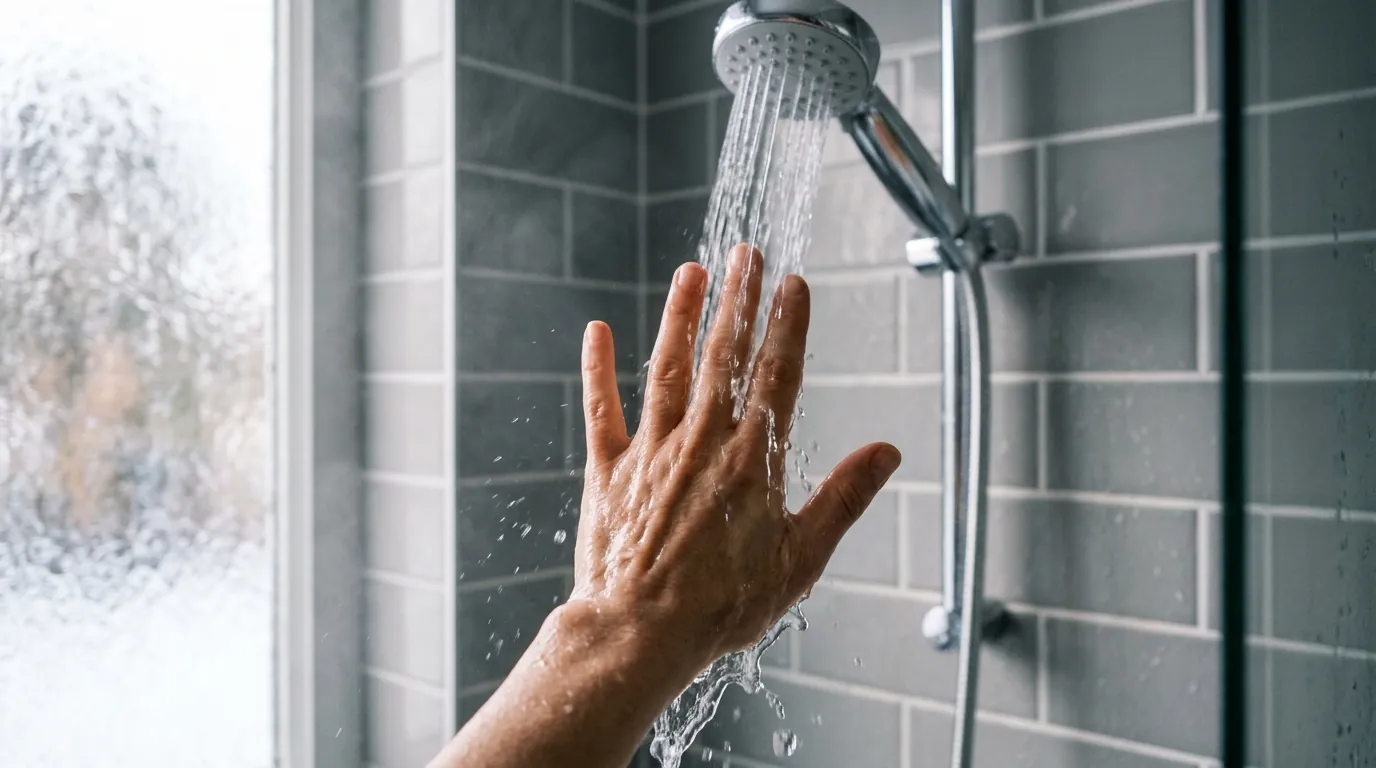
- The water starts hot, then runs out fast. You get a few minutes of a good shower, then it turns lukewarm. That usually means the tank is not holding as much hot water as it should: a failed lower element, sediment, a broken dip tube or a tank that is now too small for the house.
- The water is never properly hot. Every tap runs lukewarm. That points to the thermostat setting, a failed thermostat, the gas burner or the upper element.
- No hot water at all. That is a different job. Start with our guides for an electric water heater not heating or a gas water heater not heating.
GE Appliances lists the same short set of causes in its own support guide for "not enough or no hot water": the temperature set too low, cold winter inlet water, a faucet left open or leaking, long or uninsulated hot water pipes, a damaged dip tube, a tripped breaker or blown fuse, and hot and cold connections piped the wrong way round. The rest of this guide goes through the ones we find most often in Wilmington-area homes.
Cold Winter Water Makes Every Tank Feel Smaller
This one is not a fault, and it is the most common reason for a call in November and December. Your water heater has to lift incoming water up to its set temperature. In summer the water coming in from the street or the well is mild. In a Delaware winter it is much colder, so the same tank takes longer to recover and the hot water at the shower gets diluted with more cold to reach a comfortable temperature.
The result is that a tank which was fine in August can run short in January. GE's guide calls this normal and points to a higher setting as the fix. If your heater has always been borderline for your household, winter is when you notice. A full house over the holidays adds to it: more showers back to back, and the dishwasher running in between.
What helps: spacing showers out a little, running the dishwasher and laundry at a different time of day, and checking the thermostat setting below. If the tank was simply never big enough, see the sizing section further down.
The Thermostat Is Set Low, or Has Failed
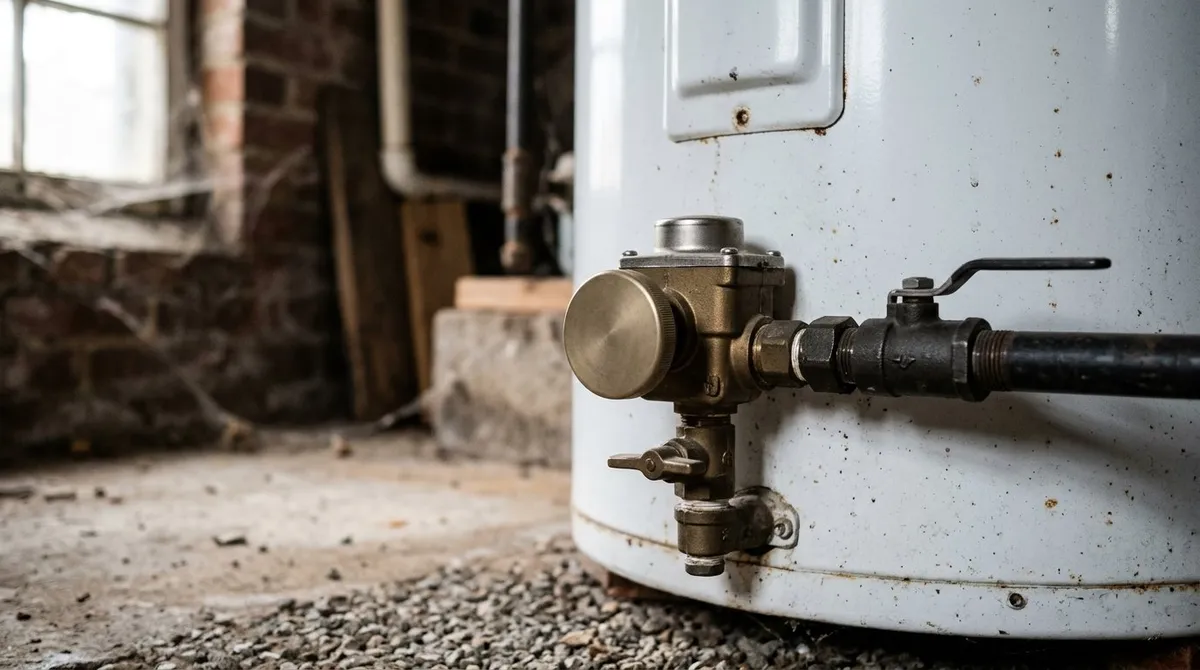
Check the setting first. On a gas tank, the control knob is on the front of the gas valve near the bottom. On an electric tank, the thermostats sit behind the access panels and should only be adjusted with the power off at the breaker.
For most homes we recommend about 120°F, the setting the U.S. Consumer Product Safety Commission urges households to use to prevent scalds. Our guide to what temperature a water heater should be set to explains the trade-offs, including when a higher setting with a mixing valve makes sense. Turning the setting well above that to stretch a small tank is a scald risk, especially with children or older relatives in the home.
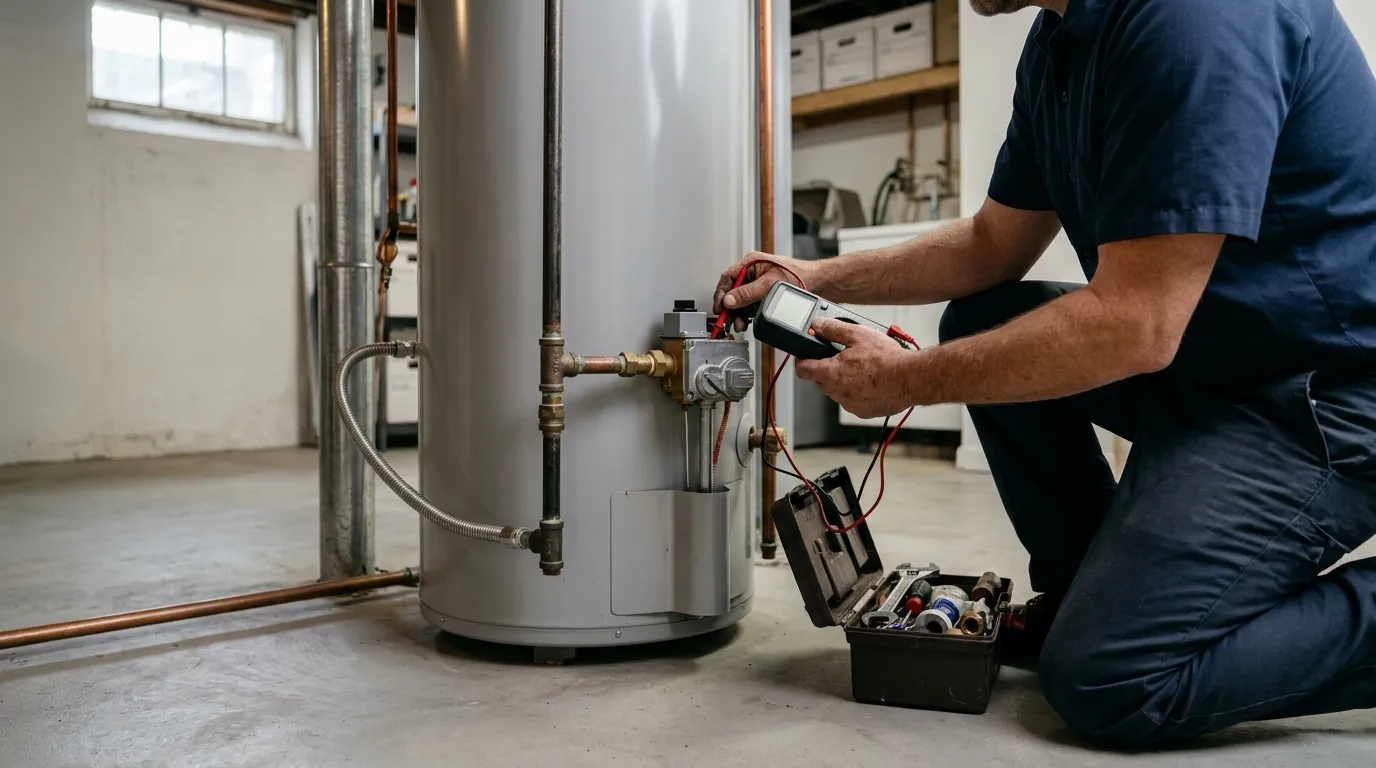
If the setting is right and the water still never gets properly hot, the thermostat itself may have failed. On an electric tank, a thermostat that will not switch power down to the lower element gives exactly the "starts hot, runs out fast" pattern. Testing it means working near live wiring, so that is a job for a licensed plumber.
A Burned-Out Lower Element on an Electric Tank
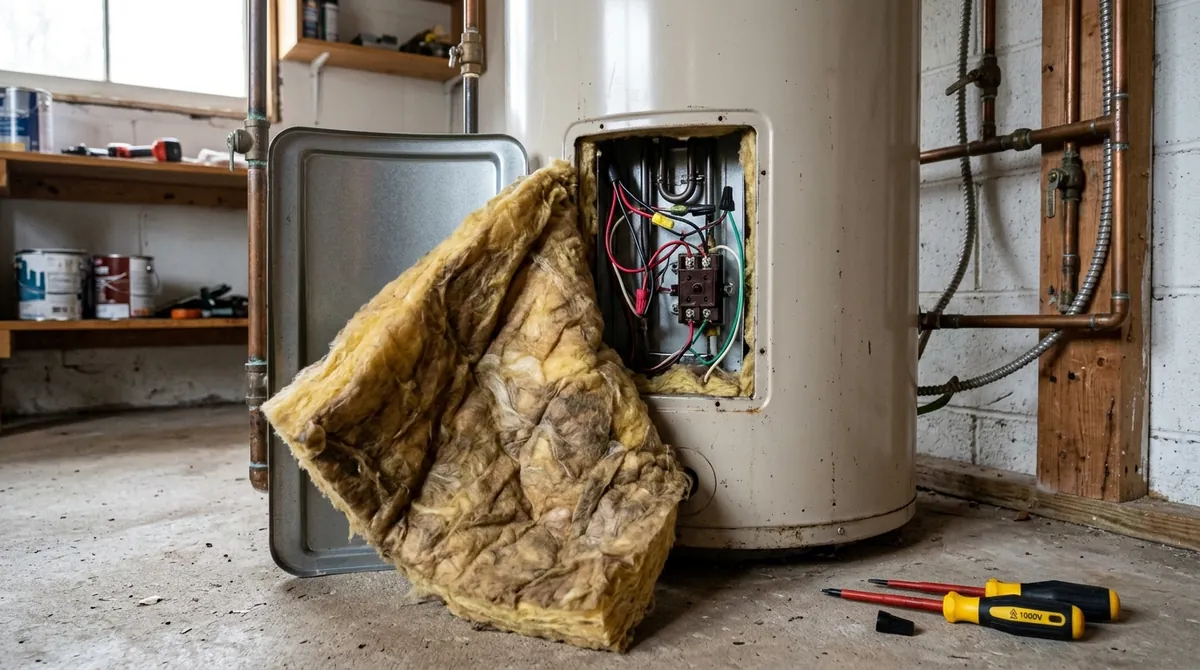
An electric tank water heater usually has two elements. The upper one heats the top of the tank first, then the thermostat hands power to the lower one, which heats the bulk of the water. If the lower element burns out, you still get a small amount of hot water from the top of the tank, then it runs cold.
Hard water and sediment are a common reason elements fail early, because the element ends up buried in mineral scale and overheats. Replacing an element is a normal repair: the tank is drained, the old element is unscrewed, a new one of the right voltage and wattage goes in, and the tank is refilled before the power goes back on. Turning the power on with a dry element destroys the new one instantly, which is one of the reasons we advise against doing it yourself.
Our guide to an electric water heater not heating covers the breaker and the red reset button, which are worth checking before you call.
Sediment Taking Up Room in the Tank
Minerals in your water settle to the bottom of the tank as sediment. On a gas tank, that layer sits between the burner and the water, so heat takes longer to get through and the tank recovers slowly. On an electric tank, it can bury the lower element. Either way, sediment takes up space that should be hot water.
Homes on private wells, which are common across Chester County, PA and Cecil County, MD, often have harder water, so sediment builds up faster there. Popping or rumbling while the heater runs is the usual sign, as our guide to water heater noises explains.
A flush clears it if it has not hardened. On a tank that has gone years without one, a flush may only help part of the way. A yearly water heater maintenance visit keeps it from getting that far.
A Broken Dip Tube
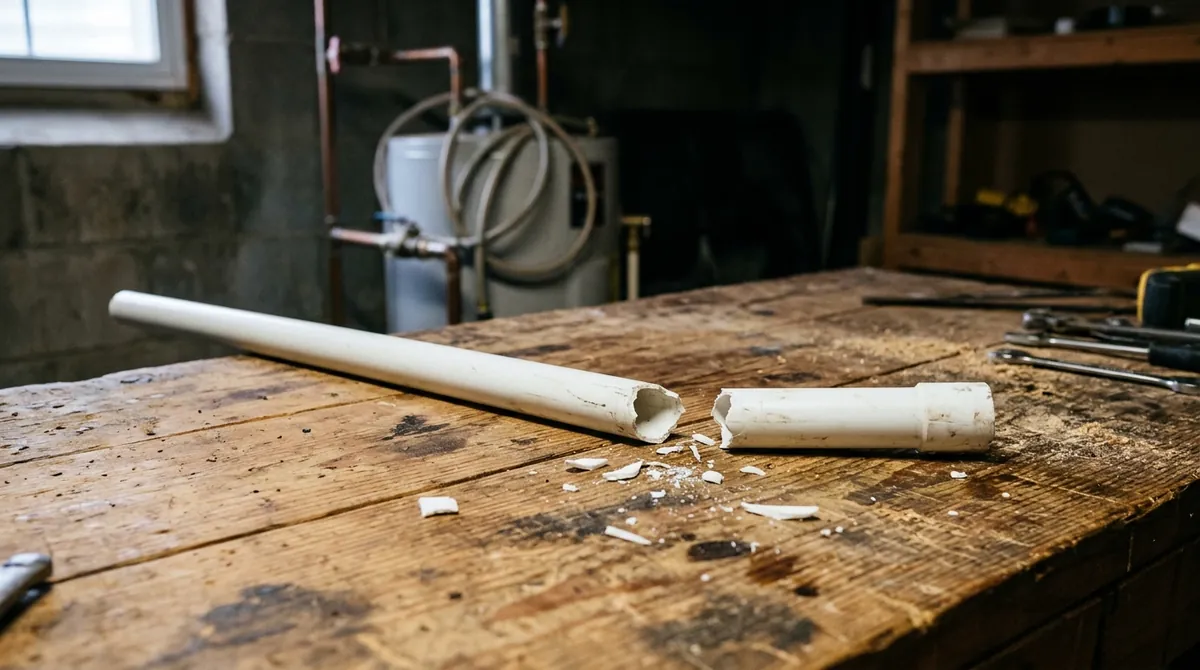
Cold water enters a tank water heater at the top, then runs down a long plastic dip tube to the bottom, where it gets heated. The hot water is drawn off from the top. If the dip tube cracks or breaks off, cold water pours in at the top and mixes straight into the hot water you are drawing, so the tap runs lukewarm much sooner than it should.
Signs of a broken dip tube are hot water that turns warm quickly even though the tank is fully heated, and sometimes small white plastic flakes caught in faucet aerators or the shower head. GE's support guide sends this one straight to a plumber or installer. Replacing a dip tube is usually a straightforward repair on a tank that is otherwise in good condition.
Need water heater service in Wilmington?
Serving Wilmington with same-day availability and flat-rate pricing confirmed before work begins.
Gas Burner Problems
On a gas tank, a burner that is not getting enough gas or air heats the water slowly. A dirty burner, a partly blocked flue or a weak pilot can all reduce how much heat gets into the tank. You may notice a yellow, lazy flame through the sight glass instead of a steady blue one.
Do not try to adjust gas parts yourself. If you smell gas at any point, leave the house and call your gas utility from outside. Burner and gas valve work is covered in our guides to a gas water heater not heating and gas valve replacement.
A Tank That Is Too Small for the House Now
Sometimes nothing is broken. A 40-gallon tank that suited two people can run short once there are teenagers, a new large shower head, a soaking tub or a home office where someone showers at a different time. The number to look at is the tank's first-hour rating, not just its gallons. Our guide on what size water heater you need explains how to work it out.
If the tank is too small, the fix is a larger tank or a move to tankless, not a repair. That is the only cause on this list where replacement is the first answer.
What You Can Check Before You Call
These are safe for any homeowner:
1. Check every faucet is fully closed, including outdoor taps and the laundry sink. A dripping hot tap drains the tank slowly all day. 2. Look at the thermostat setting on a gas tank. Leave electric thermostats alone unless the breaker is off. 3. Check the breaker for an electric tank. A half-tripped breaker can cut one leg of power. 4. Think about timing. Did it start when the weather turned cold, or when someone new moved in? 5. Look around the base of the tank for water. A leak is a separate and more urgent problem, covered in our guide on what to do when a water heater leaks.
If none of those explain it, it is time for a diagnosis.
Repair or Replace?
Most "not enough hot water" calls end in a repair: an element, a thermostat, a dip tube or a flush. Replacement makes more sense when the tank is leaking, when it is past about ten years old and already needing parts, or when it was simply never big enough for the household. Our guide to the signs you need a water heater replacement goes through those in detail.
If replacement is the right call, our water heater installation prices are published: $2,198 installed for a 50-gallon electric tank and $2,498 installed for a 40-gallon gas tank, or $80 and $89 per month on approved credit. We give you the flat price before any work starts, whether it is a repair or a replacement.
Frequently Asked Questions
Why does my hot water run out faster in winter?
Because the water coming into the tank is colder, so the heater takes longer to bring it up to temperature and you mix less cold into the shower. A tank that was just big enough in summer can feel too small in January.
Can I just turn the water heater up?
A small adjustment can help, but setting the tank much higher than about 120°F raises the risk of scalds. If you need more than a small change to get through a shower, something else is usually wrong.
How do I know if the dip tube is broken?
The usual signs are hot water that turns lukewarm quickly even after the tank has had time to heat, and sometimes small white plastic flakes in faucet aerators or shower heads. A plumber can confirm it.
Does a tankless water heater run out of hot water?
No, but it can struggle to keep up if too many taps run at once or if it is undersized for winter water. See our guide on what size tankless water heater you need.
Get Your Hot Water Back in Wilmington
If your hot water is running out faster than it should, call Water Heater Now at (302) 240-2818. We answer 24/7, offer same-day appointments and give you a flat price before any work starts. Our water heater repair in Wilmington covers gas, electric and tankless units across New Castle County, Chester County, PA and Cecil County, MD. Licensed and insured, Delaware Master Plumber Licence PL-0002475.
---
Source, verified November 25, 2026: GE Appliances, Water Heater: Not Enough or No Hot Water.